Last updated November 17, 2026


Free written scope consultation - allowances, timeline, and change-order rules on paper before a single trade is scheduled
The Complete Bathroom Remodeling Guide for Santa Clara Homeowners
The median bathroom remodel in Santa Clara runs $18,000 to $35,000 for a full gut, roughly 30% above the national figure. The gap isn’t labor quality. It’s subcontractor travel time, permit fees, and disposal costs that Bay Area contractors absorb and pass on line by line. Santa Clara also moves permits more slowly than most cities on the Peninsula, which means the homeowners who come out ahead are the ones who sequence their decisions before demo day, not after. This guide covers what a Santa Clara bathroom actually costs, how to read a bid line by line, which layout changes are worth the money, and what a written guarantee should protect.
Quick Answer
A full bathroom remodel in Santa Clara typically costs $18,000 to $35,000, with cosmetic refreshes running $8,000 to $15,000 and high-end primary baths reaching $55,000 or more. Permits and inspections add $600 to $2,200 depending on whether you move plumbing or electrical. The single biggest cost swing comes from layout: keeping the drain stack and supply lines in place saves $3,000 to $8,000 compared with relocating them.
Styles & brands we work with
- Kitchen remodeling
- Bathroom remodeling
- Home additions & ADU
- Roofing
- Windows & doors
- Driveway & pavers
- Fence
Table of Contents
- What does a bathroom remodel cost in Santa Clara?
- Santa Clara permits and the inspection sequence
- How to read a bathroom remodel bid
- Layout decisions that drive cost
- Tile, fixture, and vanity lead times in the Bay Area
- What a written guarantee should cover
- The correct order of decisions
- Common mistakes to avoid
What does a bathroom remodel cost in Santa Clara?
Bathroom remodel cost in Santa Clara lands in three broad bands. A cosmetic refresh (new paint, tile floor, vanity top on the existing cabinet, new fixtures) runs $8,000 to $15,000. A full gut with new tile, cabinets, and fixtures but no layout change runs $18,000 to $35,000. A primary bath with a curbless shower, freestanding tub, dual vanity, and relocated plumbing lands between $38,000 and $55,000, and can exceed that if you’re moving structural walls or expanding the footprint.
Here’s how those numbers break down on a typical $24,000 mid-range Santa Clara gut:
| Line item | Typical range |
|---|---|
| Demo and haul-away | $1,200 – $2,400 |
| Permits and inspection fees | $600 – $2,200 |
| Rough plumbing (in place) | $1,800 – $3,500 |
| Rough electrical and exhaust fan | $1,200 – $2,800 |
| Waterproofing and cement board | $1,400 – $2,800 |
| Wall and floor tile (material) | $2,000 – $5,500 |
| Tile labor | $3,500 – $6,500 |
| Vanity and countertop | $1,500 – $4,500 |
| Fixtures (faucet, shower, toilet) | $1,200 – $3,200 |
| Glass, mirror, accessories | $800 – $2,500 |
Notice that labor is roughly half the total and tile is the largest single line. In Santa Clara specifically, demolition disposal runs higher than most California cities because of tipping fees at the transfer stations serving the South Bay. Subcontractors also build travel time between jobs into their rates, and a plumber working Santa Clara and Sunnyvale the same day prices both jobs accordingly. That’s the 30% gap.
You’ll want to budget contingency too. Ten to fifteen percent of the total is standard for a bathroom because demo always reveals something: a corroded supply line, dry rot behind the shower valve, or a previous homeowner’s tile-over-tile shortcut. Written price before work starts matters here, because a bid that already anticipates the likely finds is a bid that won’t balloon on demo day.
Santa Clara permits and the inspection sequence
Santa Clara requires a building permit for any bathroom remodel that touches plumbing, electrical, or structural work. That covers most remodels. Cosmetic work (paint, floor tile over a sound substrate, a vanity swap that doesn’t move plumbing) usually doesn’t need a permit, but a licensed contractor should tell you which is which rather than guessing.
The detail most homeowners miss: the city requires the licensed plumber and electrician to be identified separately on the permit application when they’re subcontractors. If your contractor is pulling the permit, the plumber of record and electrician of record need to be named at application, not added later. If a contractor tells you the subs can be named after the fact, that’s a sign they don’t pull permits often.
Here’s the inspection sequence you should expect:
- Rough framing and rough-in inspection: after the walls are open and new plumbing and electrical are run, before any drywall or cement board goes up. Both trades are inspected at this stage.
- Waterproofing inspection (if required): the shower pan and wall membrane are examined before tile. Some Santa Clara inspections fold this into the rough-in; ask at permit intake.
- Final inspection: after tile, fixtures, and finish are installed and the exhaust fan is operational.
Santa Clara’s permit timing tends to run four to seven weeks from application to permit in hand for a standard bathroom. That’s slower than San Jose and slower than most of the county. If your project schedule assumes a two-week turnaround, you’re going to lose weeks before demo even starts. Build the permit window into the plan first, then sequence everything else around it.
Permits pulled and inspections passed are part of the fixed cost of a legitimate Bathroom Remodeling in Santa Clara project. A bid that doesn’t include them isn’t cheaper. It’s a bid that skips the step you’ll need when you sell.
How to read a bathroom remodel bid
Most bid surprises come from three words: allowance, as-selected, and TBD. Learn to separate fixed line items from allowances, and most ballooning disappears before it starts.
Fixed line items are a number the contractor commits to. Demolition, permit fees, labor, waterproofing, and installation should all be fixed. If a bid puts “labor, as needed” on a line, that line isn’t fixed.
Allowances are placeholder dollars for materials you choose later. A $1,500 tile allowance means the contractor budgets $1,500 for tile and charges you the difference if you pick something at $2,800. Contractors underbid allowances to keep the bottom line attractive, and homeowners find out at the tile showroom. The fix is simple: ask for the allowance amount on every material line, then ask what the actual material you’re likely to choose costs at the supplier. If those two numbers are more than 30% apart, the bid is low on that line.
Here’s what a clean bid includes in writing:
- A fixed price on labor, permits, and waterproofing
- An allowance amount on every material line, with the brand and product series specified
- The name of the plumber and electrician of record
- A schedule that includes the permit window
- A written workmanship guarantee and what it covers
- A change-order process: how changes are priced and approved before work continues
One more test. A bid that names specific brands: KraftMaid or Wellborn cabinetry, Kohler or Moen fixtures, Cambria, Silestone or Caesarstone counters, is a bid written by someone who installs those products and knows their lead times. A bid that just says “vanity, standard” is telling you they’ll source whatever’s cheapest on the day.
Layout decisions that drive cost
Layout is where a $22,000 bathroom turns into a $38,000 one. The drain stack is the pivot point. The large cast-iron or PVC drain running down through the floor carries every fixture on that side of the house. Moving the toilet or shower drain a few feet means cutting into the stack, re-sloping the lateral run at the correct pitch, and adding a vent. That’s where the $3,000 to $8,000 lives.
Keeping the drain and supply lines in place is usually the right call unless the existing layout is genuinely broken: a toilet wedged against the tub, a shower too small to use, a door that can’t open with the vanity in place. Those are worth fixing. The question is whether the improvement is worth the cost, and the answer is usually yes for a functional failure and usually no for a preference.
Worth the money in a Santa Clara bathroom:
- Moving the toilet a few feet to open up the room, if it solves a real traffic problem
- Curbless shower conversion in a primary bath, which often requires lowering the floor or raising the drain
- Removing a wall between a compartmentalized toilet room and the main bath, if it’s non-bearing
- Adding a second sink if the supply and drain can tie into the existing rough-in without moving the stack
Not worth the money unless the layout fails:
- Swapping the tub location for a shower in the same footprint (the drain is already there)
- Rotating the vanity 90 degrees just for a different look
- Adding a freestanding tub where a drop-in was already correctly placed
If you’re planning a larger project that touches this bathroom and the kitchen at once, the sequence question gets more complicated, and a General Contractor in Santa Clara can tell you which order keeps the house livable.
Tile, fixture, and vanity lead times in the Bay Area
A bathroom remodel is a sequence, and out-of-stock material at the wrong moment costs you weeks. The Bay Area supply chain runs longer than most of the country because most tile and cabinetry comes from out of state or overseas and clears through ports that are congested on unpredictable cycles.
Practical lead times to expect when ordering through Bay Area suppliers:
- Stock tile: in-store, same week, if it’s a current line. This is what you want for a fast schedule.
- Special-order tile: four to eight weeks from order to delivery. Imported lines can run ten to twelve if a shipment is delayed.
- Stock vanity: one to two weeks
- Semi-custom cabinetry (KraftMaid or Wellborn): six to ten weeks
- Countertops (Cambria, Silestone, Caesarstone): two to four weeks from template to install, longer for book-matched slabs
- Glass shower enclosure: three to five weeks from template to install, because it’s cut to the finished opening
- Freestanding tub: one to three weeks for stock models, six or more for imported
The order that keeps a Santa Clara bathroom on schedule: order tile and cabinetry first, template the countertop after the vanity is set, template the glass after tile is finished, and accept that the last 10% of the project (glass, mirror, trim) is the long tail. Build the material window into the schedule before demo. That’s what separates a ten-week bathroom from a sixteen-week one.
Products like a James Hardie exterior detail on the addition side of a project are worth ordering early too if you’re expanding the bathroom footprint, since that material runs on its own schedule. If you want to read how the supply-side sequencing plays out on a bigger scale, our Kitchen Remodeling in Santa Clara guide covers the cabinet lead times in more depth, since kitchens and baths share the same supplier base.
What a written guarantee should cover
A written guarantee on a bathroom should name specific systems, not just promise “satisfaction.” A bathroom is the most moisture-stressed room in the house. That’s why the parts most likely to fail are the parts behind the tile, and a guarantee that doesn’t reach behind the tile isn’t worth having.
What a real bathroom guarantee covers, line by line:
- Waterproofing: the shower pan, the wall membrane, and the transition to the surrounding drywall. Failure here causes the kind of hidden damage that costs tens of thousands.
- Tile installation: lippage (uneven tile edges), hollow tile, cracked tile from substrate movement, and grout failure at expansion joints.
- Fixture installation: leaks at supply connections, the valve body, the shower arm, and the drain. Not the fixture itself (that’s the manufacturer’s warranty) but the install. Kohler and Moen carry their own finish warranties alongside the install guarantee.
- Exhaust fan operation: a bathroom that doesn’t vent properly grows mold behind the walls. A guarantee should confirm the fan actually moves air.
- Vanity and cabinet install: doors that don’t align, drawers that bind, fastening that pulls from the wall.
Watch out for three exclusions that show up in bathroom guarantees and shouldn’t:
- “Cosmetic defects excluded”: grout cracking six weeks after installation is not cosmetic. Push back on any guarantee that excludes it. Grout failure is often the first sign of waterproofing failure underneath.
- “Damage from normal settling excluded”: walls don’t settle in twelve months enough to explain a crack at a bench or curb.
- “Owners responsible for periodic re-caulking”: a certain amount of caulk maintenance is legitimate, but a guarantee that hands the whole wet perimeter back to the homeowner is not.
A 365-day Done Right Promise means exactly what it sounds like: if any covered system fails in the first year, we come back and fix it at no charge. That’s what we mean by the Kingswell Guarantee. Every project we do carries a written version, and a written price comes before demo on every job.
The correct order of decisions
Bathroom decisions cascade. Choosing the tile after the shower valve is installed means the trim plate doesn’t fit. Choosing the vanity after the floor tile is laid means the tile pattern changes. Here’s the order that prevents rework on a Santa Clara bathroom remodel:
- Confirm budget and contingency. Total number, with 10-15% held back.
- Decide on layout and whether you’re moving the drain stack. Everything downstream depends on this.
- Get the bid, in writing, with fixed and allowance lines separated. Push back on vague allowances before signing.
- Pull the permit, naming the licensed plumber and electrician on the application. Expect four to seven weeks.
- Order long-lead materials: tile, cabinetry, special-order fixtures. This happens before demo, not after.
- Demo and rough-in. Rough inspection after plumbing and electrical are run.
- Waterproofing and tile. Waterproof inspection if required, then tile, then grout.
- Vanity and countertop template. Countertop fabricated and installed.
- Fixtures, glass, mirror, and trim. Final inspection and punch list.
Most of the pain in a Santa Clara bathroom comes from doing step 5 after step 6, or step 3 without step 2 having been settled. Getting the order right is worth more than any single product decision.
Common Mistakes to Avoid
- Approving a bid with a low tile allowance. A $1,200 allowance for tile on a 60-square-foot shower floor and walls is going to run short by thousands at the showroom. Ask what the tile you’re likely to choose actually costs.
- Choosing layout after demo. If you decide during demo that you want the drain moved, the plumber is already booked and the permit may need an amendment. Santa Clara’s permit timeline doesn’t forgive last-minute changes.
- Skipping the permit to save time or money. A bathroom remodel without permits becomes a disclosure issue at sale, and Santa Clara inspectors catch unpermitted work during resale inspections.
- Ordering the vanity last. Cabinetry lead times are six to ten weeks on semi-custom lines. If you order after demo, the bathroom sits open for two months.
- Treating grout cracks as cosmetic. A hairline crack at a wall joint is normal. A crack that widens across the shower floor within a year is a waterproofing signal and needs addressing under your guarantee, not a tube of caulk.
- Not confirming that the exhaust fan vents outside. Bathroom fans vented into the attic put all that moisture into your insulation. In Santa Clara’s climate, the fan runs year-round, so the moisture load is significant.
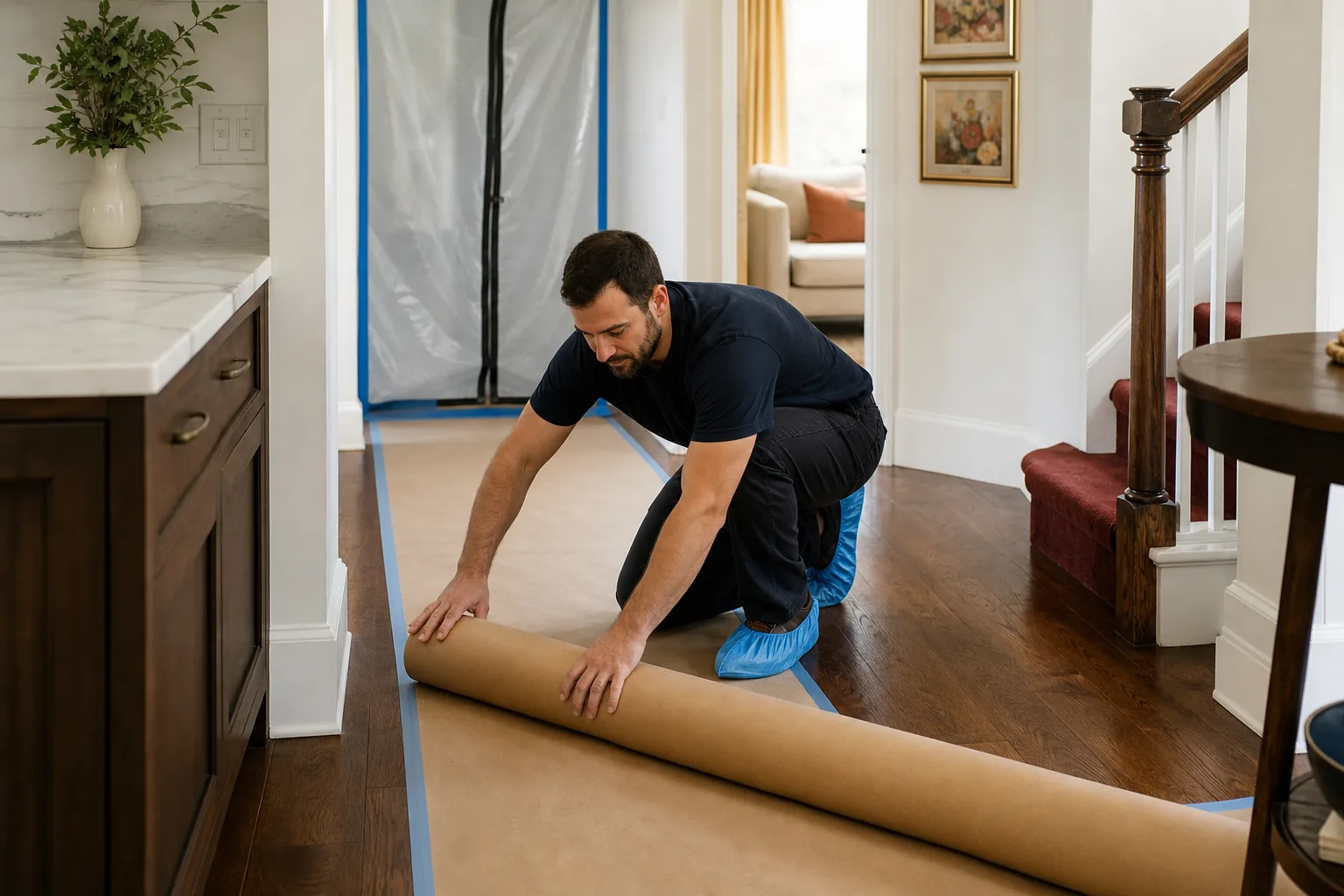
- Ignoring the rest of the house while the bathroom is torn up. If your bathroom sits next to a bedroom or hallway, plan the dust control and don’t assume it won’t matter. It does.
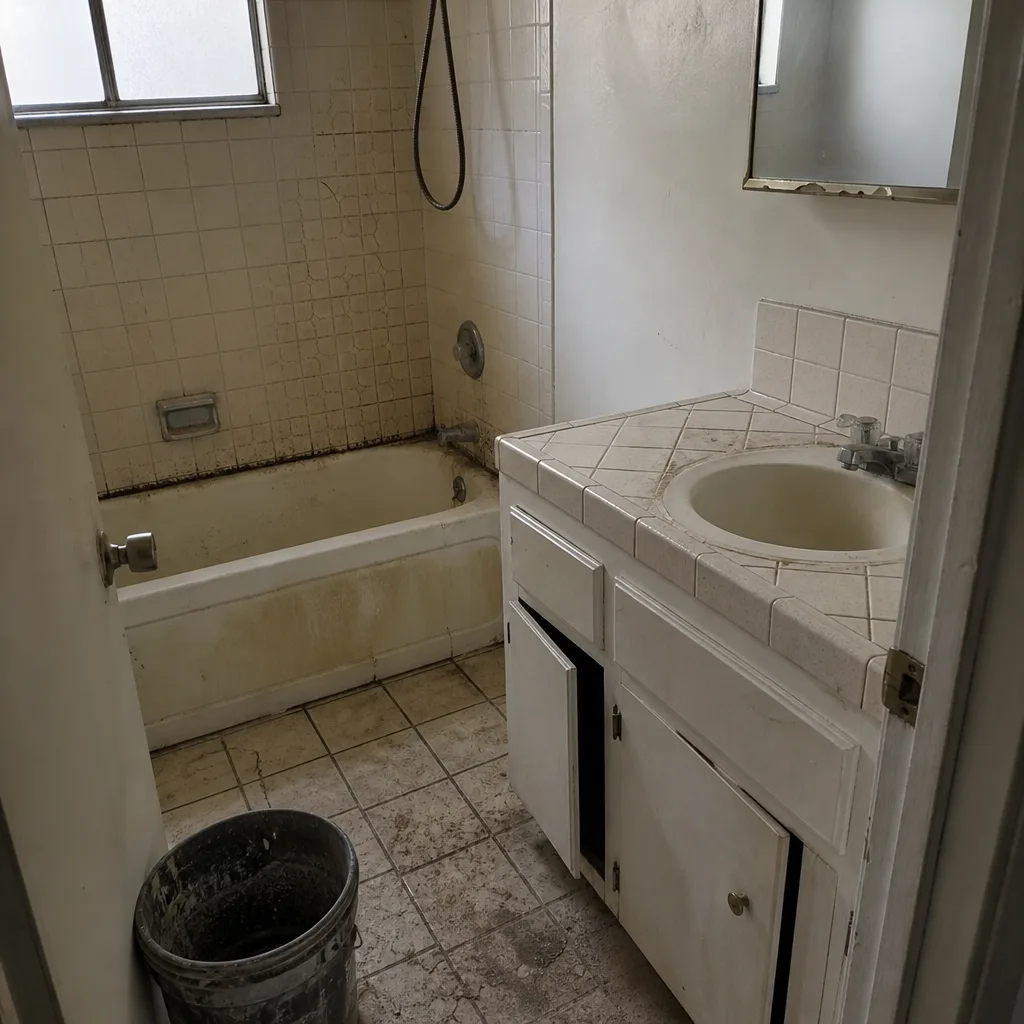
See the difference
 Before
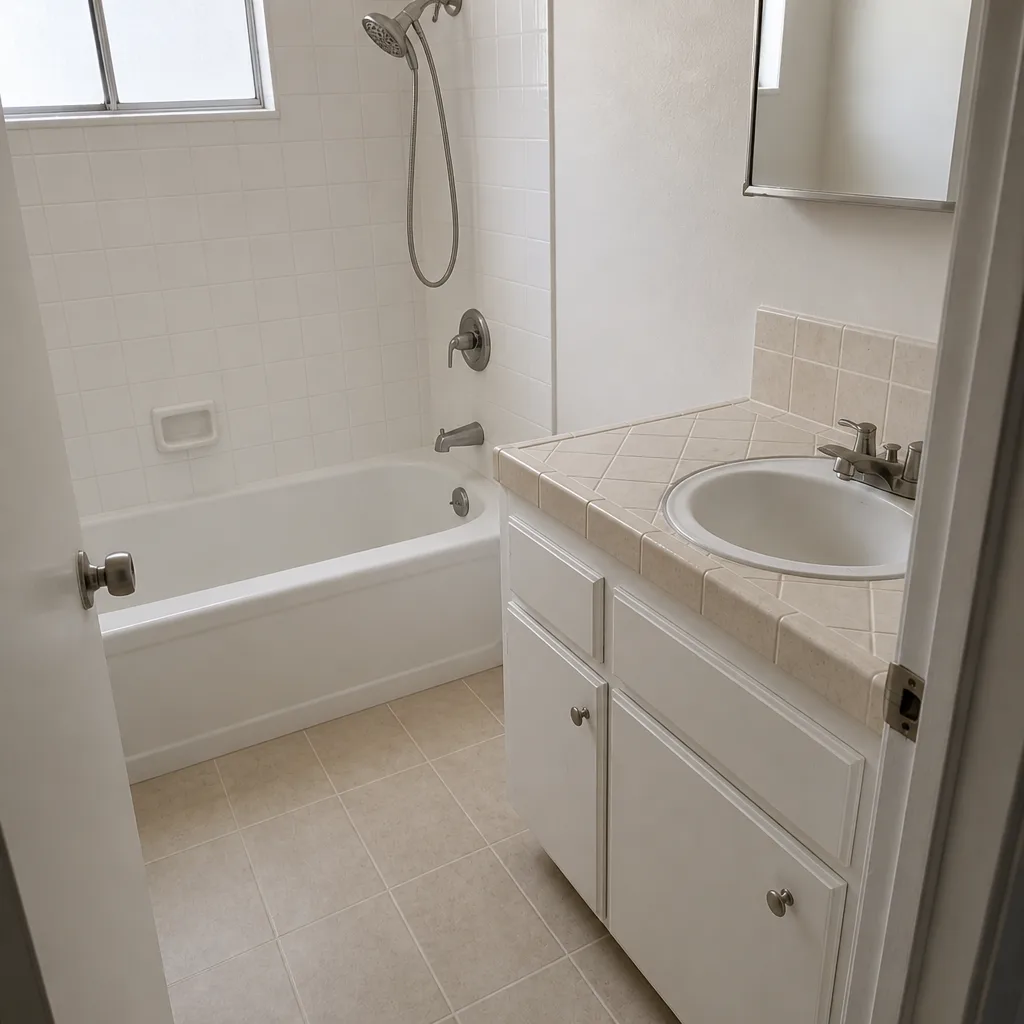 After
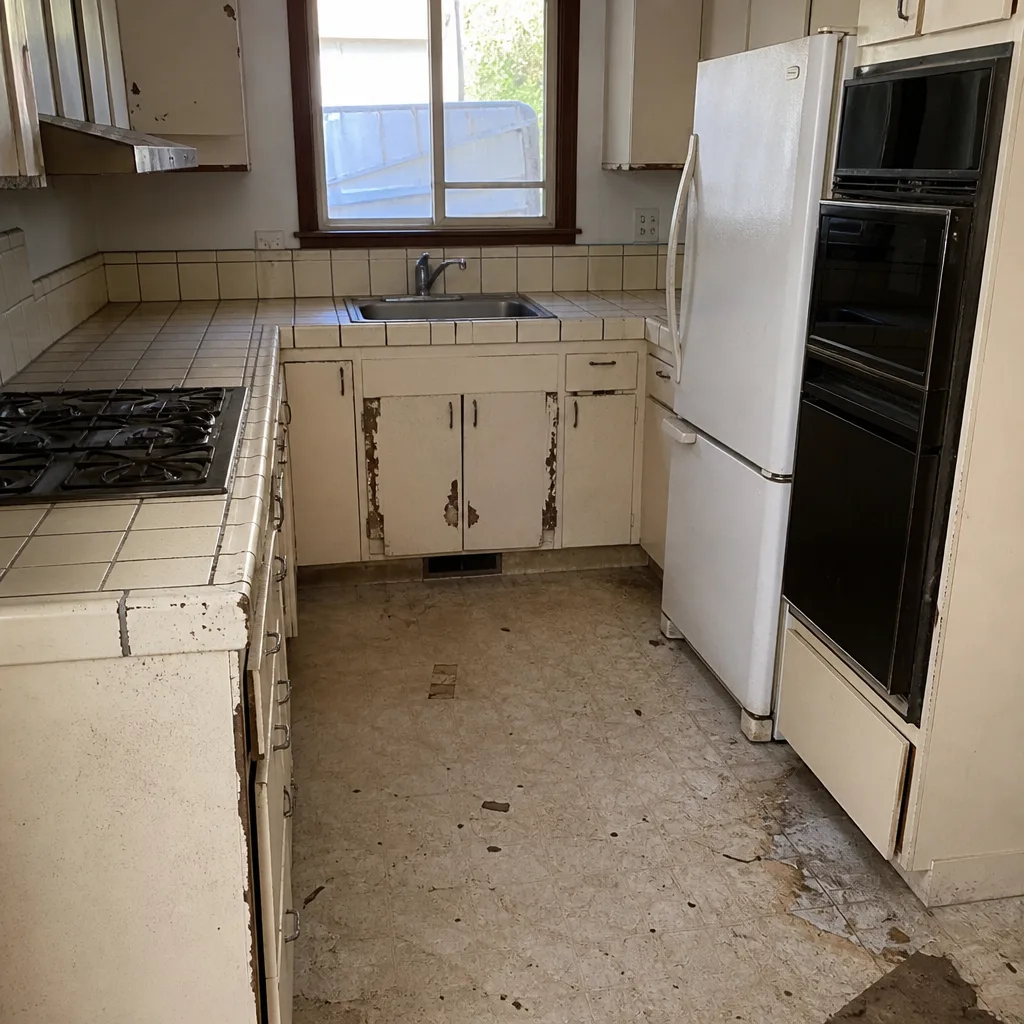 Before
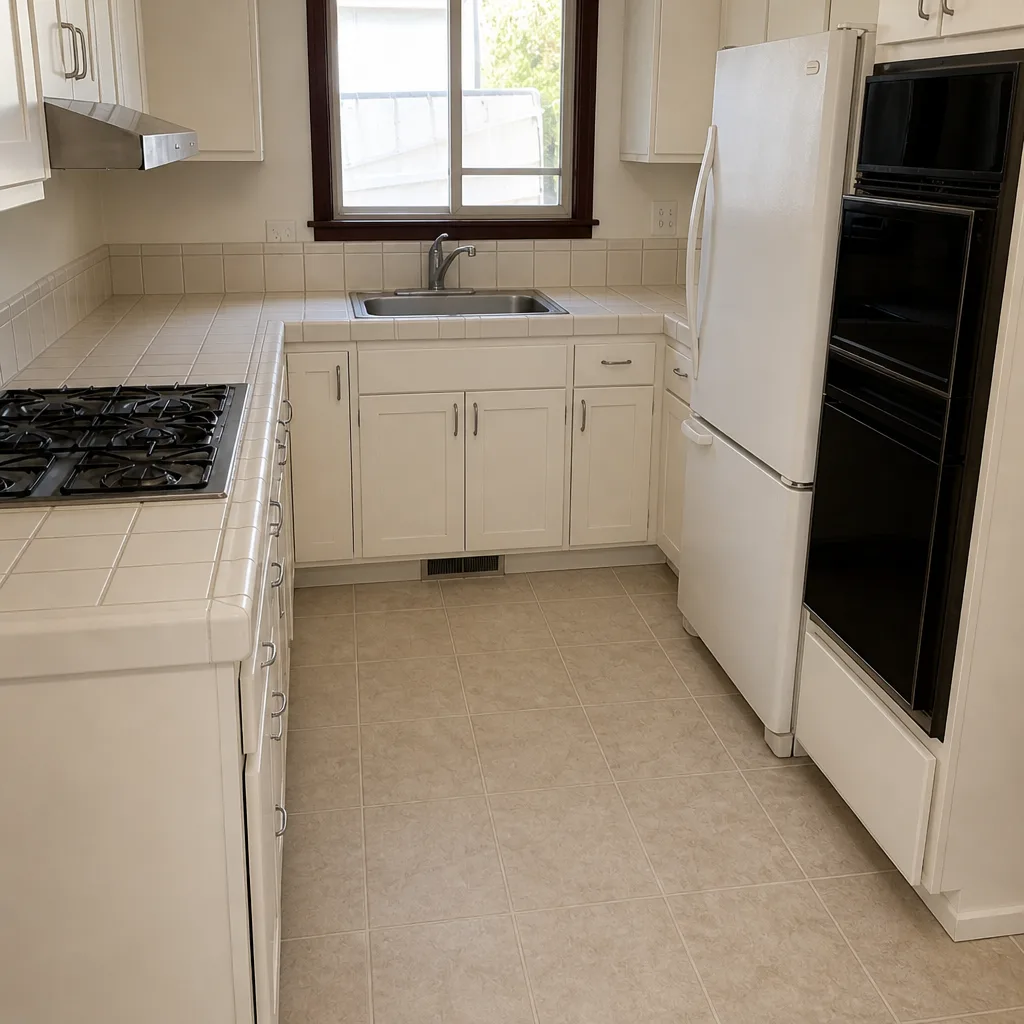 After
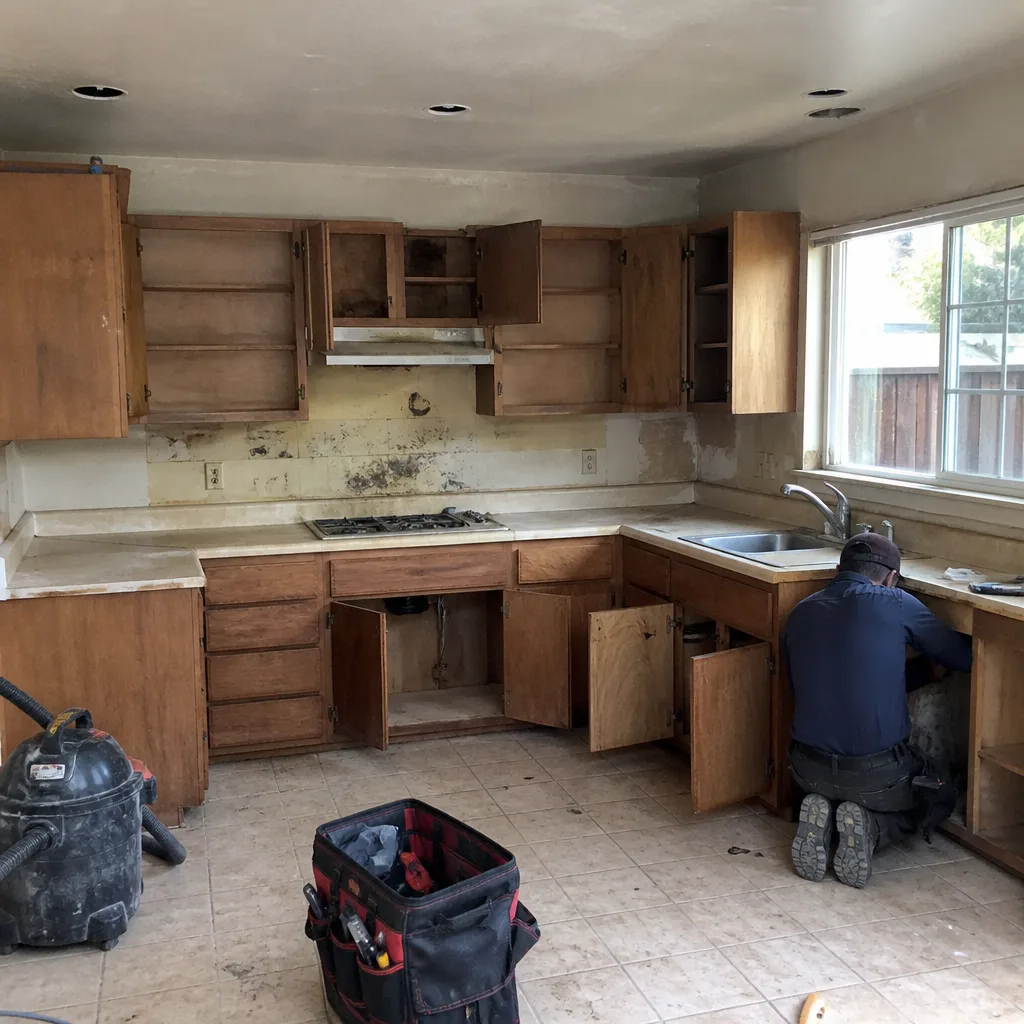 Before
 After
When to Call a Professional
Call a professional for anything behind the wall. Moving a drain stack, relocating a shower valve, electrical work for a new vanity circuit or exhaust fan, and waterproofing a shower are all work that a mistake in isn’t discovered until months later, when the damage is expensive. A bathroom where the floor tile is sound and the vanity is just dated is a different job from a bathroom with a slow leak at the shower pan or a soft spot in the subfloor. That second job needs a trained eye and a written scope before anyone swings a hammer. For a project of this size, we recommend getting a licensed contractor to walk it and put a real number in writing. Penhallow Remodeling Santa Clara offers free estimates in Santa Clara. Call (833) 400-6838 to schedule one.
Frequently Asked Questions
A full bathroom remodel in Santa Clara runs $18,000 to $35,000, about 30% above the national median, driven by permit fees, disposal costs, and Bay Area subcontractor travel time. A cosmetic refresh runs $8,000 to $15,000 and a high-end primary bath $38,000 to $55,000. Call (833) 400-6838 for a written estimate specific to your bathroom.
Yes, if the work touches plumbing, electrical, or structural elements, which is nearly every bathroom remodel. Santa Clara requires the licensed plumber and electrician to be named on the permit application, and permits typically take four to seven weeks to issue. Cosmetic work like paint and floor tile over a sound substrate usually doesn’t need one.
A mid-range full gut typically takes ten to fourteen weeks from permit application to final inspection, with four to seven of those weeks spent waiting on the permit. Cosmetic refreshes run two to four weeks. Special-order tile and semi-custom cabinetry are the two items that most often push the schedule longer.
It shouldn’t, if the bid is written correctly. Labor, permits, and waterproofing should be fixed. Material allowances can vary if you upgrade tile or fixtures mid-project, which is why the allowance amount needs to be on the bid in writing. Ask for a change-order process that prices any change before the work continues.
Keep at least one tub in the house if it’s your only one, because resale buyers with young children and appraisers both care. In a primary bath with another tub elsewhere, a curbless shower is usually the better use of space. Price out the drain relocation first; if it stays in place, the conversion is far less expensive.
A real bathroom guarantee covers waterproofing, tile installation, grout failure, and fixture installation for a defined period, plus the exhaust fan’s actual function. Push back on any guarantee that excludes “cosmetic” grout cracking or hands the whole wet perimeter back to you. The 365-Day Done Right Promise covers these items in writing for a full year. Call (833) 400-6838 to talk through a specific project.
The Bottom Line
A Santa Clara bathroom costs more than the national average, and it moves on a slower permit clock. Neither of those facts is negotiable, so the homeowners who come out ahead plan around them. Get the layout decided before the bid. Separate fixed line items from allowances in writing. Pull the permit with the plumber and electrician named. Order long-lead materials before demo, not after. And read the guarantee closely, because a bathroom’s real risk lives behind the tile. Do those five things and the project you sign up for is the project you get. For everything else in the house, start at our Penhallow Remodeling Santa Clara home and we’ll point you in the right direction.
Ready to price the work? Penhallow Remodeling Santa Clara gives you a written price before any work starts and a guarantee in writing on every project. Call (833) 400-6838 for a free estimate.
Written by the team at Penhallow Remodeling Santa Clara.