Last updated November 17, 2026








Free written scope consultation - allowances, timeline, and change-order rules on paper before a single trade is scheduled
Bathroom Remodeling Warning Signs Every Homeowner Should Know
A contractor who can’t hand you a written price at the first meeting will almost certainly hand you a verbal excuse when the bill comes in higher than what he said. That’s the uncomfortable truth about remodeling: the tile almost never tells you the job is going sideways. The paperwork does. We’ve walked into Santa Clara bathrooms where the finished work looked fine and the story behind it was a mess – no scope in writing, no lien waiver, a deposit that vanished into someone’s truck payment. This guide teaches you to read the job before the job starts. You’ll learn the structural signs, the contractor signs, and the mid-project signals that a remodel is drifting, plus a one-page checklist to run before you sign anything.
Quick Answer
The biggest bathroom remodeling red flags are the paperwork ones: no written scope or price, no license number on the proposal, a demand for more than half the job cost upfront, and no offer of a lien waiver. Structural warnings – a soft subfloor, efflorescence (the white powder that blooms on drywall), or a drain that gurgles – matter too, but they’re discovered during the job. The contractor red flags show up before the first hammer swings, and that’s where you have real leverage to walk away.
Styles & brands we work with
- Kitchen remodeling
- Bathroom remodeling
- Home additions & ADU
- Roofing
- Windows & doors
- Driveway & pavers
- Fence
Table of Contents
- Structural Warning Signs You Can Spot Before Demo
- Contractor Warning Signs on the Paperwork
- What a Lien Waiver Is (and Why Its Absence Is a Warning Sign)
- Mid-Project Signals the Job Is Drifting
- What a 365-Day Written Guarantee Actually Covers
- The One-Page Pre-Hire Checklist
- What a Bathroom Remodel Should Cost in Santa Clara
Structural Warning Signs You Can Spot Before Demo
These are the signals inside the bathroom itself – the ones that tell you the job will run bigger than the surface suggests. In Santa Clara, homes built in the 1950s and 1960s around neighborhoods like the Old Quad and Santa Clara University often still have original cast-iron drains and tile-over-mortar-bed floors, and both fail in predictable ways. Catching these early changes the scope, not the surprise.
- Soft or springy subfloor near the toilet and tub. Press down with your heel. Give means water has been reaching the substrate (the layer under your finished floor) for a while.
- Efflorescence on drywall or grout lines. That chalky white bloom is mineral salt pushed out by moisture. It’s a sign water is moving behind the wall, not just on the surface.
- A drain that gurgles or backs up slowly. In older Santa Clara bathrooms this often points to a partially collapsed cast-iron drain line, which is a plumbing scope item, not a cosmetic one.
- Tile that sounds hollow when tapped. Hollow spots mean the thinset has let go. A tile that’s already loose will keep coming loose.
- Recurring mold in the same corner. If you’ve cleaned the same spot three times, the moisture source wasn’t fixed the first two times.
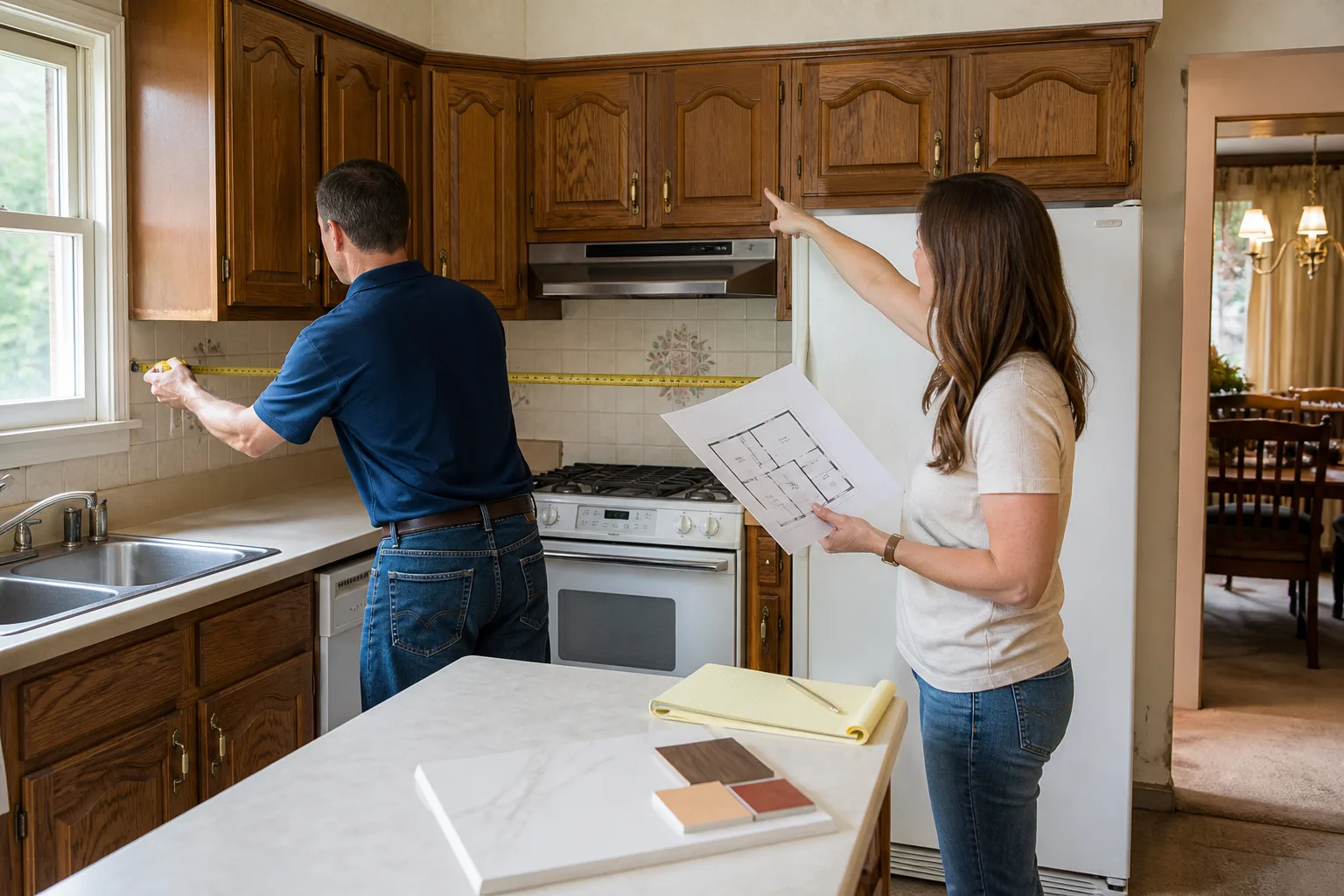
A good contractor checks these before quoting, because any of them can turn a cosmetic refresh into an open-wall repair. If a proposal arrives with no mention of inspection – no probing the subfloor, no look at the drain – the price you were given is a guess dressed up as a quote. Our bathroom remodeling in Santa Clara estimates begin with exactly that inspection, because the written number depends on it.
Contractor Warning Signs on the Paperwork
This is the section most homeowners skim past, and it’s the one that matters most. In our experience, the paperwork tells you the outcome. A proposal you can hold the company to has four things on it: a line-item scope, a written price, a license number, and payment terms that don’t put you in front of the risk.
The four paperwork red flags
- No license number anywhere on the proposal. In California, a contractor must carry a state license, and it has to appear on written contracts and ads. No number is a walk-away.
- No written scope. “Bathroom remodel” is not a scope. A real scope names the products, the sizes, the demolition limits, and what’s included versus excluded.
- Ask for 50% or more upfront. A large deposit before demo protects the contractor, not you. Standard progress billing ties payments to completed milestones.
- Verbal estimate only. The number that lives in someone’s head has no ceiling. A written price does.
The deposit question deserves a closer look. When a contractor asks for half the job cost before the first tile is pulled, your money funds their operations, not your bathroom. You want to know who’s actually walking into your home, too. We send background-checked, uniformed technicians on every job, and every project starts with a written price – so the number on day one is the number on the invoice. If you’re comparing bids and want to understand how a real written quote reads, the general contractor in Santa Clara page breaks down the process.
What a Lien Waiver Is (and Why Its Absence Is a Warning Sign)
A lien waiver is a signed document from your contractor and their material suppliers confirming they’ve been paid and won’t place a mechanic’s lien on your property. Most homeowners never learn about it until a supplier they’ve never met files a lien against the house they just remodeled. It’s a paperwork warning sign precisely because it’s invisible – no one tells you to ask.
Here’s the mechanic’s lien in plain terms. If your contractor doesn’t pay a supplier for the tile, or Subcontractor A for the plumbing rough-in, that unpaid party can attach a claim to your property even though you paid the general contractor in full. The debt runs to the house, not the person who stiffed them. A lien waiver, signed at each payment milestone, closes that door.
What to ask for
- Conditional lien waivers at each progress payment – they become effective once your check clears.
- A final unconditional waiver at the end, signed by the contractor and any subs, confirming everyone’s been paid.
- Supplier waivers for large material orders – cabinetry, countertops, tile.
A contractor who hesitates to offer a lien waiver is a warning sign. There’s no downside to the homeowner and no legitimate reason to refuse. If you’re working with a written-price contractor in Santa Clara, the lien waivers should be routine, not an argument. When you shop kitchen remodeling in Santa Clara (the same paperwork rules apply), read the payment schedule exactly this way.
Mid-Project Signals the Job Is Drifting
The job can start clean and still drift. Mid-project warning signs are usually about communication, and they show up as a slow erosion rather than one dramatic failure. When a crew stops showing up on time and stops explaining why, the schedule is quietly moving – and a moving schedule is where surprise costs breed.
- Repeated no-shows without a call. One missed morning happens. A week of it, with no honest update, tells you the job is no longer the contractor’s priority.
- Verbal change orders. “While we’re in there, it’s another thousand for this” is not a change order. A real one is written, priced, and approved before the work happens.
- Materials that don’t match the spec. If the spec said Cambria quartz and a different slab shows up, stop the job and check the paperwork. Brands we stand behind – Cambria, Silestone, Caesarstone – carry their own warranties, but only if the right product was installed.
- No arrival window. When “we’ll be there sometime Tuesday” becomes “we’ll be there next week,” the schedule is drifting. A real job has a defined arrival window each day.
- Dust and debris left in the same spot every day. A clean job site is a discipline, and its absence is a signal about everything else.
We ask homeowners to compare the written scope against what’s actually going in the room, week by week. If the two don’t match, that’s a conversation, not a compromise. It’s the same standard we apply to Penhallow Remodeling Santa Clara home projects from the first estimate to the final walkthrough.
What a 365-Day Written Guarantee Actually Covers
A 365-day written guarantee covers specific, named failures for a full year after the job closes, with a defined remedy – and it’s in writing. A verbal “we stand behind our work” covers nothing, because nothing is defined, no time frame exists, and no remedy is spelled out. That gap is a warning sign, and it’s the one homeowners feel most sharply six weeks after the crew leaves, when the grout cracks and the phone goes to voicemail.
Here’s the test. Ask three questions, and make sure the answer is in writing.
- What does it cover? Failed caulk, cracked grout, a leak at a newly installed fixture, a settling tile edge – a real guarantee names these.
- How long does it last? One year from substantial completion, in writing, with a calendar date.
- What happens if something fails? Who comes back, at what charge, and how fast. Our answer is a free second visit if a repair fails: no service call, no re-inspection fee. The 365-Day Done Right Promise means we make it right, backed in writing on every project.
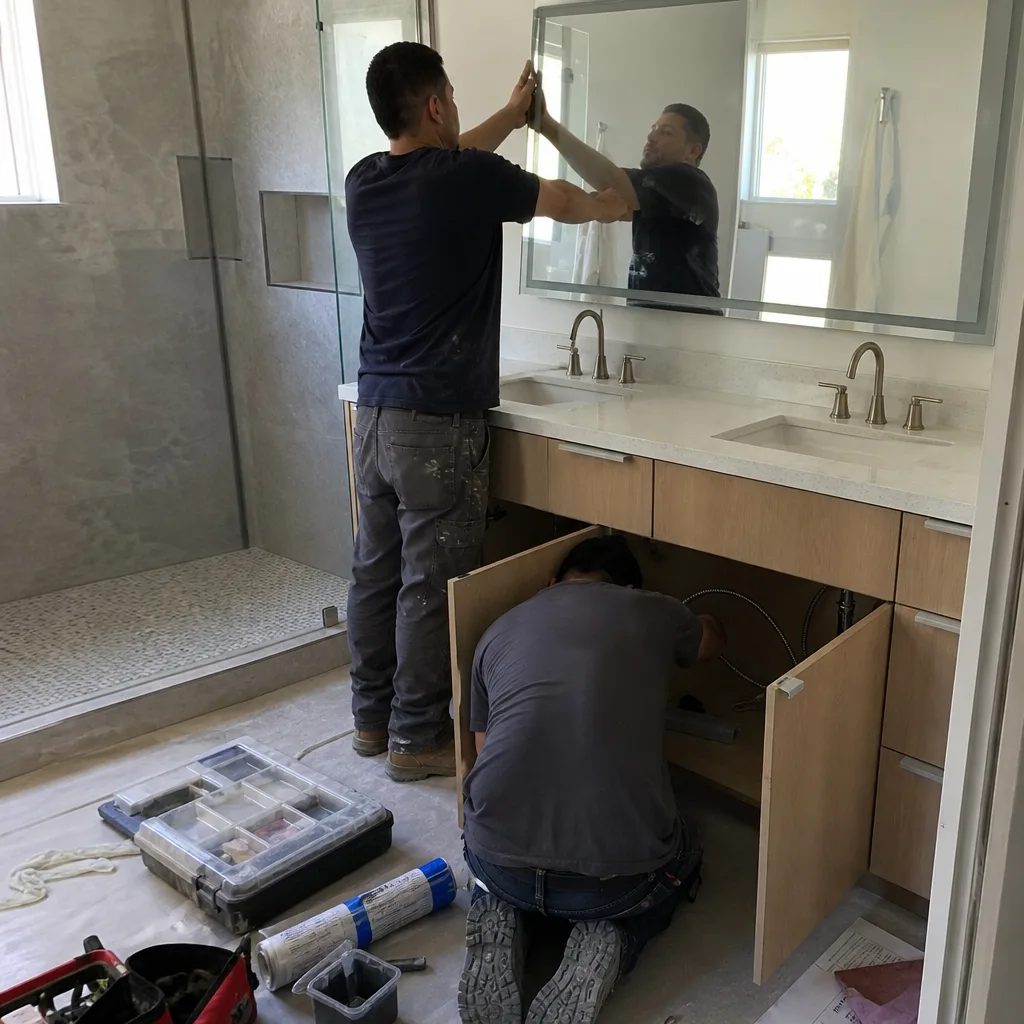
A guarantee should also sit alongside the manufacturer’s warranty, not replace it. We install Kohler and Moen fixtures and Cambria, Silestone, and Caesarstone countertops, each carrying its own manufacturer protection. Your written guarantee covers the workmanship layer. Between those two, you have real protection. If a contractor can’t tell you what theirs covers, you’ve found your warning sign. If you want to see how a written guarantee looks on a real project, our team’s approach to a Santa Clara bathroom remodel includes it on every job.
The One-Page Pre-Hire Checklist
Run through this before you sign anything. Each item takes a minute and each one is a real, tested checkpoint. Print it. Use it on every bid you’re comparing.
- License number on the proposal. Verify it with the state licensing board before you sign.
- Written line-item scope. Products named, sizes named, demolition limits named, inclusions and exclusions named.
- A written price, not an estimate range. You’re entitled to a number you can hold the contractor to.
- Payment schedule tied to milestones. Deposits small, final payment due after inspection passes.
- Lien waiver agreement. Confirm in writing that conditional and final waivers will be provided.
- Written arrival windows. A specific window each workday, not “sometime this week.”
- Permit responsibility stated. Who pulls it, who pays for it, who meets the inspector. (Santa Clara follows the city’s building permit process, and inspection is part of the job.)
- Guarantee in writing. What it covers, how long it lasts, what happens if a repair fails.
- Change-order process in writing. No verbal change orders, ever.
- Clean job site commitment. Written into the agreement, with a daily standard.
Nothing on this list is exotic. Every item exists to protect you from the thing that actually costs money: a job with no ceiling on price and no floor on accountability. That’s what The Kingswell Way names out loud: say the price before the work; show up in the window we gave; leave the place cleaner than we found it.
What a Bathroom Remodel Should Cost in Santa Clara
A bathroom remodel in Santa Clara typically runs $18,000 to $55,000 depending on layout, tile, cabinetry, and whether the plumbing and subfloor can stay. A cosmetic refresh – new vanity, tile, fixtures without moving plumbing – sits near the bottom. A full gut with a layout change, new drains, and custom cabinetry moves toward the top. Those ranges have held through recent market shifts; the drivers are labor, tile selection, and how much of the wet wall has to be opened.
- Cosmetic refresh (vanity, tile, fixtures): $18,000 – $28,000
- Full remodel, same footprint: $28,000 – $42,000
- Layout change with plumbing relocation: $42,000 – $55,000+
- Structural repair discovered mid-job (subfloor, drain): priced separately, in writing, before work continues
A written price is the only number that lets you plan. A verbal estimate range on a Santa Clara bathroom lets the contractor adjust without telling you why. Every homeowner deserves to see the number in writing before work starts.
Common Mistakes to Avoid
- Hiring from a verbal estimate. A number you can’t hold anyone to isn’t a price – it’s a starting point with no ceiling.
- Paying 50% upfront. Large deposits protect the contractor, not you. Tie payments to completed milestones and a passed inspection.
- Skipping the lien waiver. Most homeowners never learn what a mechanic’s lien is until a supplier files one. Ask for waivers at every payment.
- Approving a verbal change order. If it’s not written and priced before the work happens, it’s not approved.
- Assuming the subfloor is fine because the tile looked fine. In older Santa Clara homes, the visible tile is the last thing to fail, not the first.
- Comparing bids by bottom line only. The cheapest bid is often the one with the thinnest scope and the smallest deposit-to-work ratio. Compare what’s in writing.
- Accepting “we stand behind our work” as a guarantee. Ask what it covers, how long it lasts, and what happens when a repair fails. If the answer isn’t in writing, it isn’t coverage.
See the difference
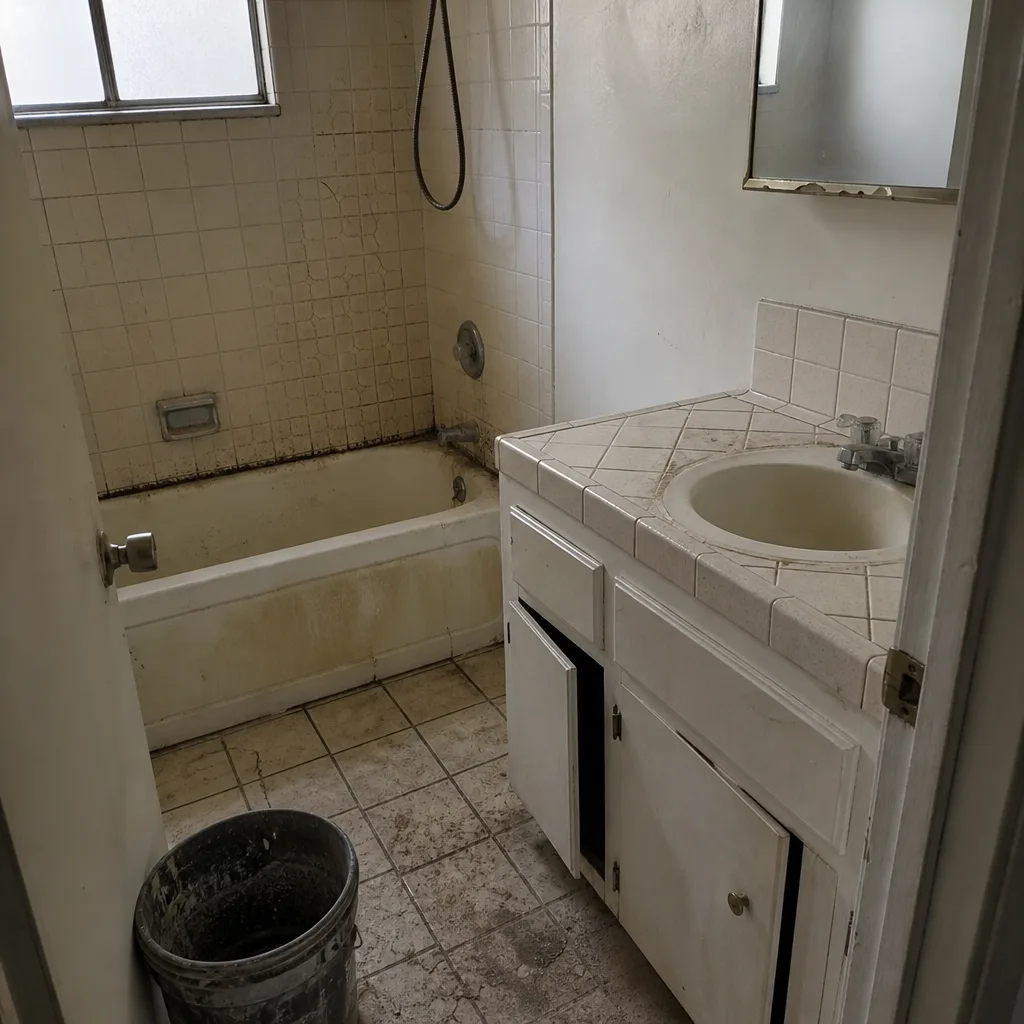 Before
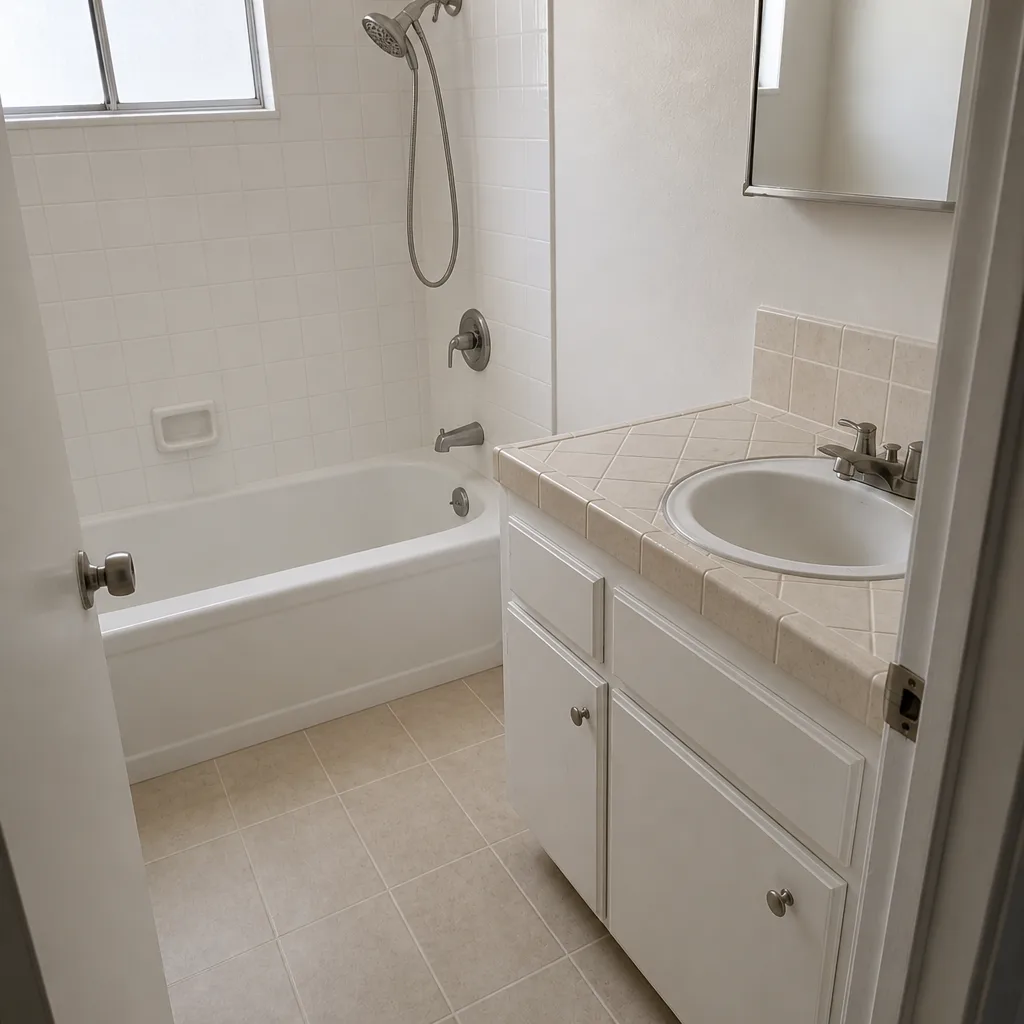 After
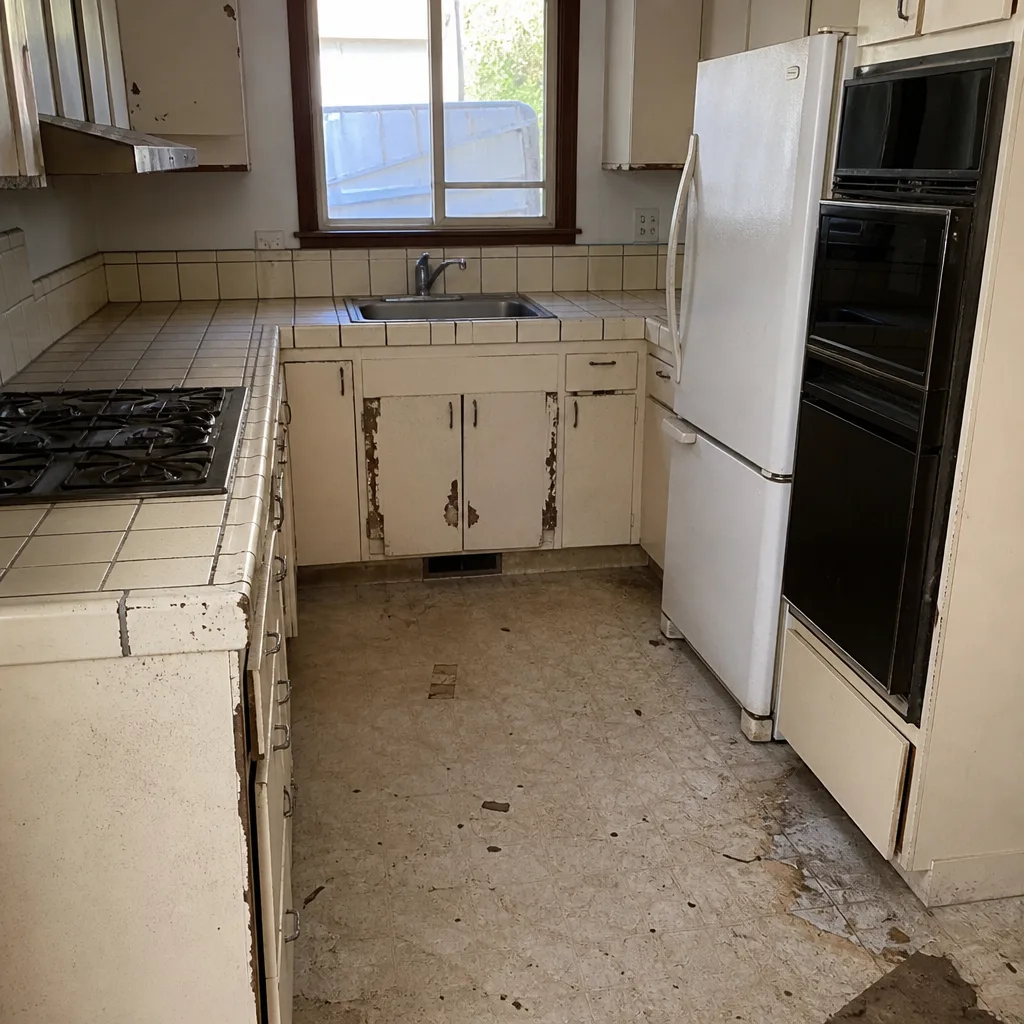 Before
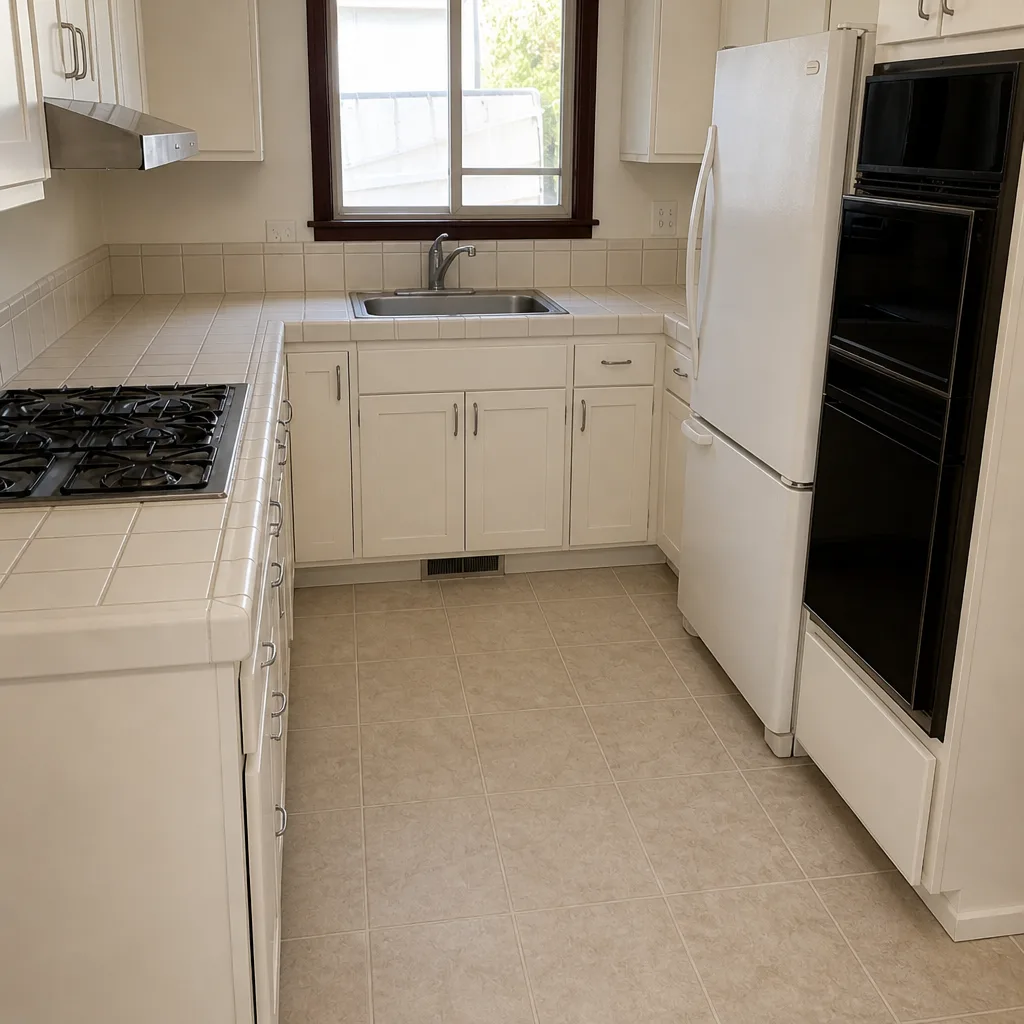 After
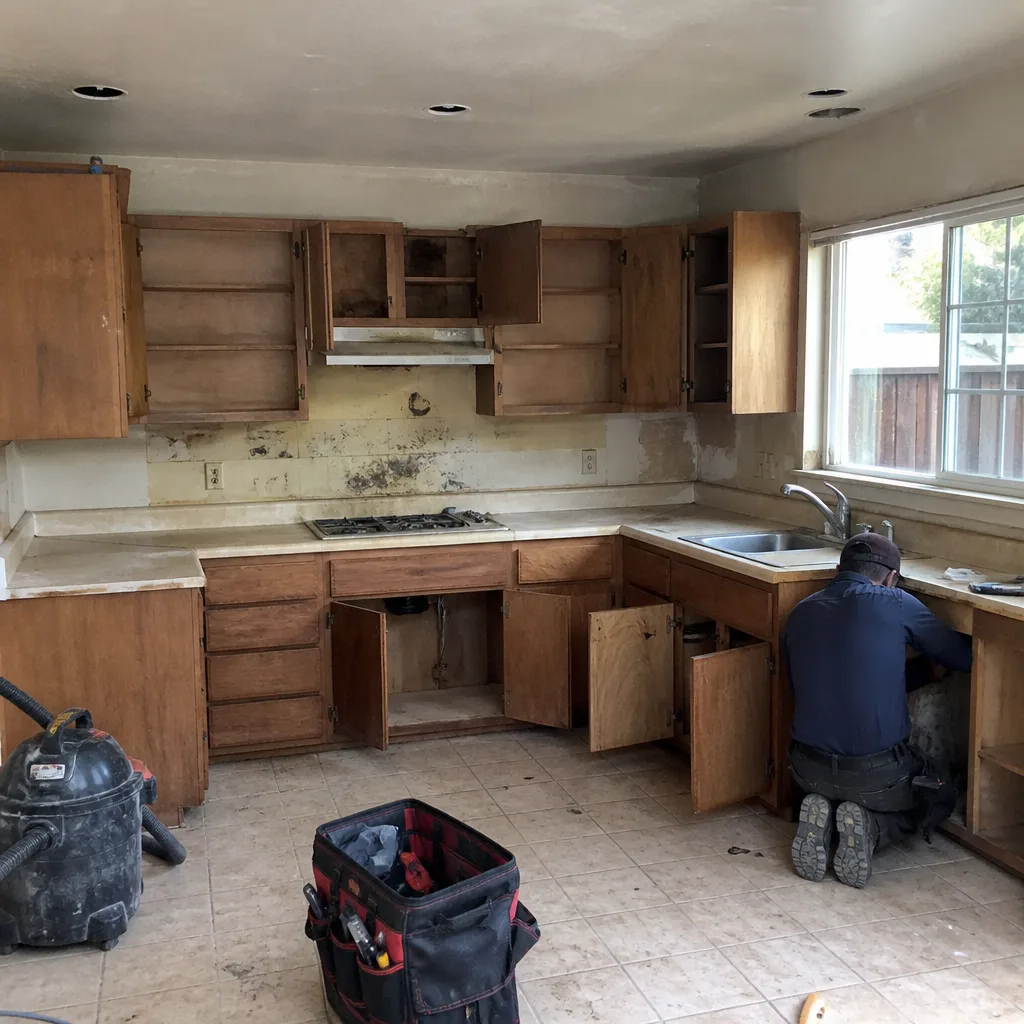 Before
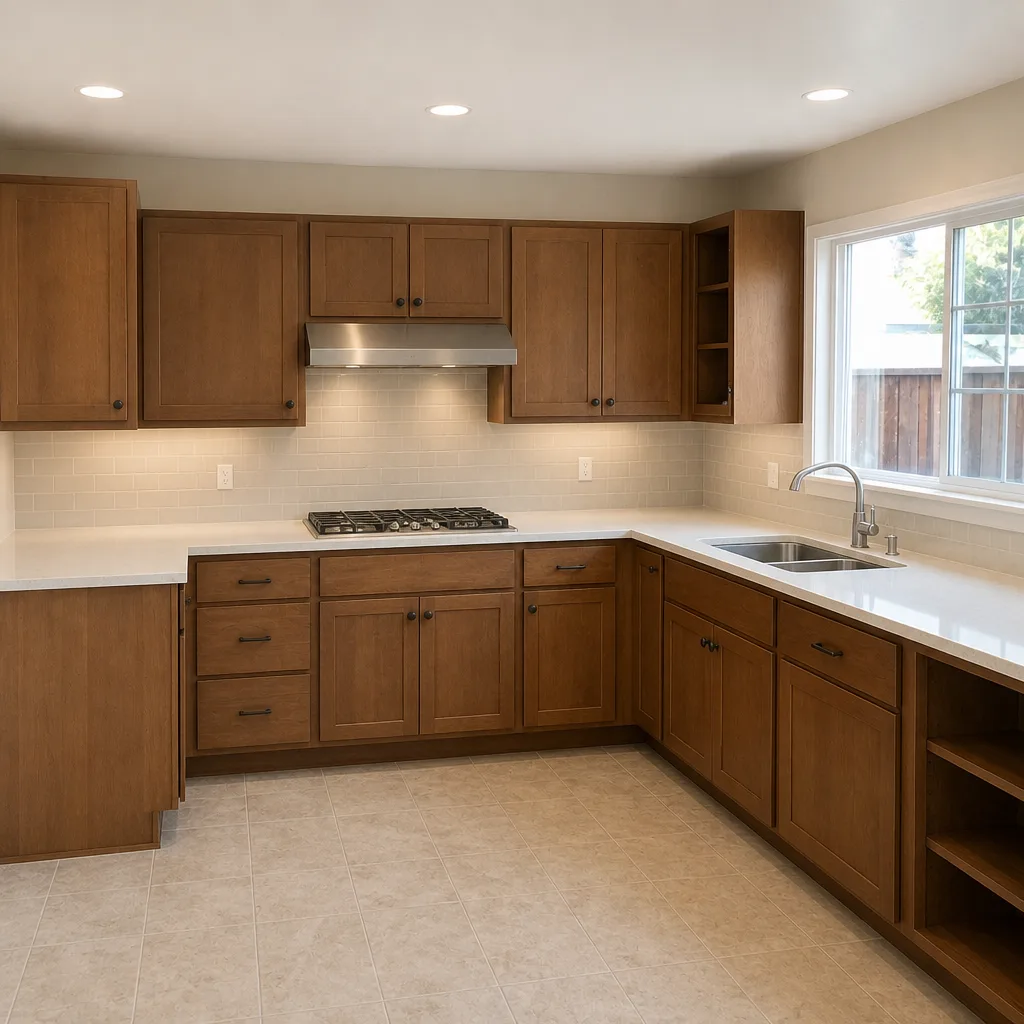 After
When to Call a Professional
Call a professional if any of these is true: your subfloor gives underfoot, your drain gurgles, you’ve cleaned the same mold spot three times, a bid came in without a license number, or someone is asking for half the money before demo. These aren’t cosmetic delays. Each one is a decision point where the wrong path gets expensive. If you’re already mid-project with a company that’s gone quiet, a second set of eyes on the written scope is worth the call. Penhallow Remodeling Santa Clara offers free estimates in Santa Clara – call (833) 400-6838. A live person answers the phone, not a voicemail prompt, and you’ll get a written price and a written guarantee before work starts.
Frequently Asked Questions
No written price is the biggest red flag. A contractor who can’t put the number in writing at the first meeting has no ceiling on the final bill, and you have no way to hold anyone accountable when it changes. Call (833) 400-6838 if you want a written estimate to compare against what you’ve been given.
Press on the subfloor near the toilet and tub, tap the tile for hollow sounds, and check the grout and drywall for chalky white efflorescence. A slow-gurgling drain is another sign. Any of these means the job is bigger than the cosmetic surface, and a contractor should inspect for them before quoting. In Santa Clara’s older homes, the wet wall behind the tub is where the surprises hide.
A lien waiver protects you from a mechanic’s lien filed by a supplier or subcontractor the general contractor didn’t pay. You can pay the contractor in full and still have a supplier attach a claim to your home. A contractor who won’t provide conditional waivers at each payment milestone is a warning sign.
It covers named failures – cracked grout, a leak at a new fixture, failed caulk, a settling tile edge – for a full year from the close of the job, with a defined remedy in writing. Our 365-Day Done Right Promise includes a free return visit if a repair fails, with no service call and no re-inspection fee. Ask any contractor exactly what theirs says in writing before you sign.
A bathroom remodel in Santa Clara typically runs $18,000 to $55,000 depending on layout changes, tile, cabinetry, and whether the plumbing and subfloor can be left in place. Cosmetic refreshes sit near the low end, and full remodels with a layout change sit near the top. Call (833) 400-6838 for an exact quote – estimates are free.
Not when the scope is written and the price is in writing. The only legitimate price change is a written change order you approve in advance before the work happens. Verbal change requests are the single most common way a Santa Clara bathroom remodel drifts over budget. Call (833) 400-6838 for a written line-item price before any work starts.
The Bottom Line
The warning signs that a bathroom remodel is going wrong almost never live in the tile. They live in the paperwork – no written scope, no written price, no license number, no lien waiver, no guarantee in writing. Read all five before you sign anything. Then check the room itself for soft subfloor, efflorescence, and a gurgling drain, and make sure the bid you’re comparing accounts for what those signals mean. A written price and a written guarantee, from background-checked technicians in uniform, is what you’re entitled to. That’s true in Santa Clara and it’s true anywhere. If the bid you’re holding can’t meet that standard, call (833) 400-6838 and get a written estimate to compare side by side.
Written by the team at Penhallow Remodeling Santa Clara.