
Last updated November 17, 2026





Free written scope consultation - allowances, timeline, and change-order rules on paper before a single trade is scheduled
Kitchen Remodeling Troubleshooting: Common Problems and How to Fix Them
The cabinet gap that appeared three weeks after install. The countertop that rocks by two degrees when you press the corner. The outlet you paid for that ended up directly behind the refrigerator. Almost every one of these kitchen remodel problems has a paper trail, or a missing one, that explains it. In our experience across Santa Clara, the work rarely goes sideways because a tradesperson forgot how to use a level. It goes sideways because the scope wasn’t pinned down in writing before the cabinets were ordered. This guide walks through the problems that show up before install, during install, and months after completion, what a written guarantee should actually cover in each case, and how to invoke it without burning the relationship with your contractor.
Quick Answer
Most kitchen remodel problems fall into three timing buckets: pre-install errors (bad measurements, wrong SKU ordered), mid-install surprises (out-of-plumb walls, hidden structural issues), and post-completion complaints (cabinet gaps, cracking grout, appliance fit). The fix depends on which bucket you’re in and whether the issue was covered in the written scope. Call your contractor back under the guarantee for defects in their work, negotiate when the problem is a shared surprise, and expect to pay when the cause was outside anyone’s control (foundation movement, code changes, products you supplied).
Styles & brands we work with
- Kitchen remodeling
- Bathroom remodeling
- Home additions & ADU
- Roofing
- Windows & doors
- Driveway & pavers
- Fence
Table of Contents
- Categorizing Kitchen Remodel Problems by When They Appear
- Pre-Install Problems: Measurement Errors and Wrong SKUs
- Mid-Install Surprises: Out-of-Plumb Walls and Structural Finds
- Cabinet Shimming and the Out-of-Level Floor Cascade
- Countertop Seam Placement Disputes
- Post-Completion Issues: Gaps, Grout Cracking, and Appliance Fit
- What a Written Guarantee Actually Covers
- Decision Tree: Warranty Call-Back, Negotiation, or Out of Scope
Categorizing Kitchen Remodel Problems by When They Appear
The first useful move in diagnosing any kitchen remodel issue is to figure out the timeline. When did the problem become visible? That single question narrows the cause and the remedy faster than anything else.
We group problems into three windows. Pre-install covers everything that happened before the first cabinet was hung: field measurements, SKU confirmation, appliance dimensions locked in. Mid-install covers the surprises that show up once demo is done and the walls are open, like a stud bay that’s two inches out of plumb or a hidden drain line that forces the sink to shift four inches. Post-completion covers the complaints that emerge after final walkthrough: gaps, cracking grout, doors that swing open on their own.
Why does the timeline matter? Because it maps directly onto responsibility, and responsibility determines who pays. A wrong SKU ordered pre-install is the contractor’s number to eat. A hidden cast-iron drain discovered mid-install is a change order that both parties negotiate because nobody could have known. A grout line that cracks over a Santa Clara slab home three months after completion could be a workmanship defect, or it could be seasonal soil movement from the clay soil we deal with throughout the South Bay.
Note the pattern: two of those three scenarios depend on what was written down. If your written scope specifically excludes latent conditions, the mid-install surprise becomes a documented change order instead of a fight. If the written guarantee lacks a term for post-completion cracks, you’re negotiating from memory. The paper trail is the whole point.
Pre-Install Problems: Measurement Errors and Wrong SKUs
The wrong-SKU problem is the most avoidable failure in kitchen remodeling, and it happens constantly. A KraftMaid cabinet in “canvas” ordered instead of “oatmeal.” A Kohler sink specified with the wrong apron depth. A Caesarstone color that turns out to be a different slab from the small swatch on the showroom wall.
These are contract failures, not construction failures. The work was executed fine; the wrong thing was built. That’s why the fix almost always sits with the contractor and not with you. If the written scope named the SKU and the contractor ordered something else, the replacement is on them. If the scope was vague (“white shaker”), you have a harder conversation ahead.
The measurement piece is less clear-cut. Field measurements are taken before demo in most remodels, which means a wall that looks flat once the drywall comes off can shift a cabinet run by half an inch. In older Santa Clara neighborhoods, particularly homes built in the 1950s and 1960s with settled slab foundations, this is routine. What separates a well-run job from a painful one is whether your contractor built in a re-measure after demo into the written scope.
What to check on your own written scope before cabinets are ordered:
- Every appliance model number is listed and cross-checked against the spec sheets (especially the rough-in dimensions, not just the visible width).
- Cabinet colors and styles are named by SKU or exact style name, not by generic descriptors.
- Countertop material and slab number are noted (Cambria and Silestone have specific slab numbers and dye lots).
- The written scope states who pays if a measurement error requires reordering, and who eats the lead time.
- There’s a documented re-measure step after demo, before the order is finalized.
If you’re already past the order stage and the wrong item arrived, the fastest resolution is a written callback from your contractor that references the scope line by line. This is exactly the kind of situation the Penhallow Remodeling Santa Clara home framework is built around: the written number on day one is the number on the invoice, which means reorders caused by contractor error shouldn’t come with a new line item.
Mid-Install Surprises: Out-of-Plumb Walls and Structural Finds
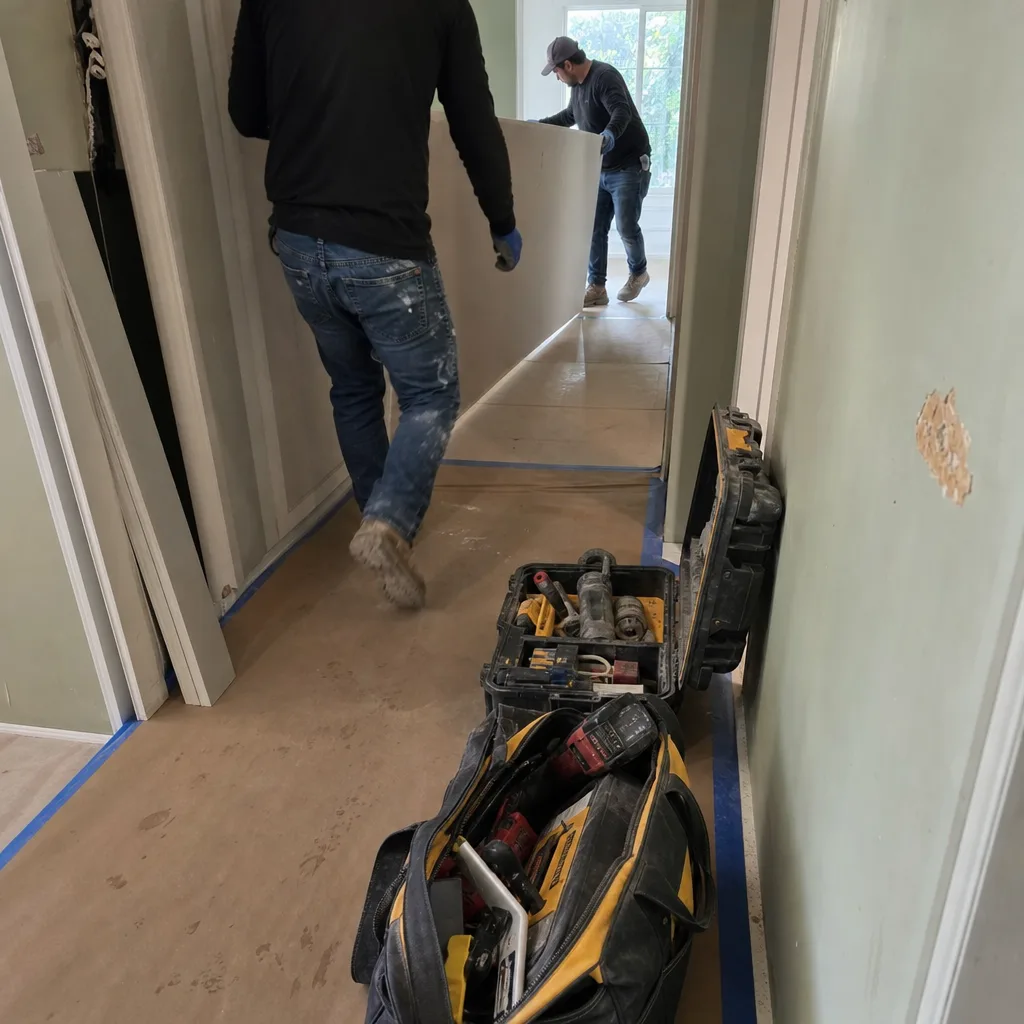
Demo day reveals the house. In our Santa Clara work, that reveal almost always includes something: an out-of-plumb kitchen wall that a previous owner covered with furring strips instead of being re-framed, a vent stack routed through the cabinet run, or a load-bearing wall that wasn’t in the original drawings. These are the moments when the remodel either gets easier or much harder, and the deciding factor is what the written scope said about hidden conditions.
The honest version of the story: none of these are “problems with the work.” They’re problems with the house. A contractor who treats them as defects fights you over them. A contractor who treated them as anticipated finds in the written scope simply writes a change order with a line-item price, shows you the photo evidence, and continues.
For out-of-plumb walls specifically, there are usually three fixes with very different price tags:
- Fur out the wall (add thin framing to bring it plumb). Cheapest, loses 1-2 inches of floor space, hides behind the cabinet base.
- Re-frame the wall properly. More expensive, less square footage lost, requires a permit in most Santa Clara jobs because it touches structure.
- Custom-fit the cabinets to the wall as it sits. Highest cost, no structural work, but every cabinet door and drawer will need adjustment.
Structural finds need a licensed structural evaluation before anyone picks up a screw gun, and in Santa Clara that typically means a separate permit pull. Don’t let a contractor install cabinets around a question mark. Ask for the inspection.
The right moment to discuss this is before you sign, not mid-install. Ask directly: “What’s the process if we find something in the walls that wasn’t in the original scope?” A written answer to that question is worth more than a lower quote. That’s also why we recommend reading the general-contractor contract carefully in any General Contractor in Santa Clara project before work begins.
Cabinet Shimming and the Out-of-Level Floor Cascade
Cabinet shimming is the single most misunderstood fix in kitchen remodeling. Here’s what actually happens. Upper cabinets hang off walls. Lower cabinets sit on floor. If the floor isn’t level (and on Santa Clara slab homes, it rarely is), every lower cabinet needs a shim to sit at the same height as its neighbor. Every shim changes the relationship between the base cabinet, the countertop, and the upper cabinets above it.
A floor that’s out of level by 3/8-inch from one end of a cabinet run to the other doesn’t just create one problem. It creates a cascade:
- The base cabinets won’t sit flush, so each one gets an individual shim stack of a different height.
- The countertop now sits on a slightly tilted plane, which shows up as a visible seam gap.
- Upper cabinets hung off a level line look fine individually but sit at a different distance from the counter along the run.
- Backsplash tile has to cover the variable gap, so tile cuts get creative and the pattern gets compromised.
- Under-cabinet lighting and hood vent placement all shift from the original plan.
The proper fix is one of two things: pull the base cabinet run up to a common level (fast, invisible, adds a shim reveal behind a toe-kick), or grind and float the subfloor to correct the slope (expensive, disruptive, the “right” fix). Expect somewhere between $400 and $1,800 to level a typical 12-foot cabinet run in Santa Clara, depending on how much floor prep is required. In most homes, the shim stack is the correct choice. In homes where the countertop is stone (Cambria, for example), the flatness of the install matters more, and the subfloor level may need to be corrected first.
The failure mode we see on burned-homeowner jobs: a contractor shims unevenly, doesn’t level the counters, and the seam in the granite or quartz shows a visible tilt. Months later the tile cracks because it was cut to fit a curve. Fixing this retroactively requires pulling the countertop. That’s a $1,500-$3,500 remediation, and it’s pure workmanship defect: the guarantee should cover it.
Countertop Seam Placement Disputes
Countertop seam placement is the post-completion complaint that surprises homeowners most. You walk into the finished kitchen, and there’s a visible line running through the middle of your stone. You didn’t ask for it there. The contractor says the slab size required it.
Here’s what should have been in the written scope, and usually isn’t:
- Slab layout drawings. Before cutting, the fabricator should mark exactly where each seam will land and have you initial it. This one document prevents 90% of seam disputes.
- Seam location preference. Seams anywhere they can be hidden (behind the sink, at a cooktop, along a natural vein line) should be specified in writing.
- Slab number. For Cambria, Silestone, and Caesarstone, the fabricator should confirm the exact slab and note that all pieces come from the same lot so colors match.
- Edge profile. The seam looks more or less obvious depending on the edge profile you chose. Ogee edges hide seams better than square ones.
- Who pays for a re-cut if the seam placement is disputed. Ideally, this is spelled out. If the fabricator placed the seam without sign-off, replacement is on the contractor. If you approved the layout drawing, it’s on you.
In a typical Santa Clara kitchen, a countertop seam redo runs $800 to $2,400, and that’s before the disruption of pulling appliances and re-doing the backsplash grout line. That’s an expensive argument to have without a signed layout in your file.
The guarantee angle matters here. If the seam placement was clearly documented and approved, and the flaw is cosmetic-only, the guarantee likely doesn’t cover it. If the seam placement was never shown to you until install day, the guarantee should. This is one of the reasons we treat written layout sign-off as a standard step in every Kitchen Remodeling in Santa Clara project, not an optional courtesy.
Post-Completion Issues: Gaps, Grout Cracking, and Appliance Fit
Six weeks after the crew leaves, three problems tend to show up. None of them mean the kitchen is falling apart, and all of them have specific fixes.
Cabinet gaps. A 1/8-inch gap where two cabinet doors meet is usually one of three things: seasonal wood movement (real, especially in Santa Clara where summer humidity shifts), an install that wasn’t adjusted at final walkthrough, or doors that warped because they were installed in a room where the drywall was still curing. Adjustment is free under any reasonable guarantee. Door replacement should be covered if the warping is a product defect; if the doors came from a brand like KraftMaid or Wellborn, the manufacturer warranty may cover it independently of the contractor guarantee.
Grout cracking. This is often not the tiler’s fault. Santa Clara sits on expansive clay soil, and homes with slab foundations move seasonally. Hairline cracks in grout are common and typically cosmetic. Cracks wider than 1/16-inch, or cracks running vertically through a tile, suggest something else: improper substrate (missing cement board), insufficient thin-set coverage, or structural movement that needs evaluation. The fix ranges from $150 (regrout) to $3,000+ (re-tile a section).
Appliance fit issues. The refrigerator that doesn’t sit flush with the cabinets because the panel thickness wasn’t accounted for. The dishwasher that doesn’t open because the countertop overhang is 1/4-inch short of spec. The range hood that sits too low because the vent stack was already in place. These usually fall on whoever signed off on the appliance dimensions at order time. If the written scope listed the exact model numbers, the fix is on the contractor. If you bought the appliances separately after the cabinets were ordered, the fit issue becomes a negotiation.
If any of these show up in your finished kitchen, don’t wait and hope they self-resolve. Most guarantees have a reporting window, and using it early is a courtesy to your contractor, not an accusation.
What a Written Guarantee Actually Covers
Quick answer: A well-written kitchen remodel guarantee covers defects in the contractor’s work (installation, alignment, sealing, fit) for a defined period, usually one year. It does not cover product defects (those are the manufacturer’s), homeowner-supplied materials, or damage from conditions outside the contractor’s control like foundation movement or water intrusion from elsewhere in the house.
Here’s what the coverage looks like bucket by bucket:
- Pre-install errors. Covered in full if the written scope named the item and the contractor ordered something different. Not covered if the scope was vague.
- Mid-install surprises. Covered only if the written scope had a hidden-conditions clause that assigned cost. Most don’t, which is why we put one in writing on every project.
- Post-completion defects. Covered if the issue traces to workmanship. Cabinet alignment, plumbing leaks at fixtures, appliance fit within scope, grout cracks from tiling error: all covered. Product defects: routed to the manufacturer. Seasonal movement: not covered.
- Whatever you’re told is covered. The written guarantee should say specifically what’s included, how long it runs, and exactly what happens if something fails. If it doesn’t, ask for the version that does.
Our own standard is the 365-Day Done Right Promise: if the work fails inside the guarantee period, we come back and fix it at no charge, and it’s covered in writing on every project. When a repair fails, the second visit is free. No service call fee, no re-inspection charge, no argument about whether it’s covered. Every Penhallow location operates under The Kingswell Way, the framework we adopted in 2004: say the price before the work, show up in the window we gave, leave the place cleaner than we found it. Each location is independently owned and operated as part of the Kingswell family of companies.
When you invoke a guarantee, put it in writing. An email with photos is defensible. A phone call to memory isn’t. State the problem, reference the guarantee, and request a callback date. If your contractor answers that in writing with a scheduled window, the relationship is intact. If they don’t, you now have documentation for the next conversation.
Decision Tree: Warranty Call-Back, Negotiation, or Out of Scope
Any kitchen remodel problem falls into one of three resolutions. Work through the questions in order.
- Did the written scope name the specific item, spec, or outcome you got? If yes and the outcome differs, you’re in warranty territory. Call back under the guarantee.
- When did the problem become visible? If it was hidden at order time and appeared after demo, it’s a mid-install condition. Likely a negotiation.
- Did anyone know it was possible? If you were told in the scope that this could happen (seasonal movement, product defect risk, appliance specification risk) and you signed off, expect negotiation, not warranty.
- Did a component fail or was the install wrong? Component failure (Kohler faucet cartridge, cabinet hinge, grout product) goes to the manufacturer. Install wrongness (tile laid without proper substrate, cabinet hung out of level) goes to the contractor.
- Can you document it? Photos with a date stamp, a copy of the written scope, and any written communication. Without documentation, even a strong case is a conversation instead of a claim.
- Is the fix likely to recur? If yes, escalate to a full fix even if the first pass was cosmetic. Chasing a recurring crack with caulk is a waste of everyone’s time.
The “outside anyone’s control” bucket is the one that surprises homeowners most. Foundation movement on Santa Clara clay. A code change that makes a previously compliant detail non-compliant. Water intrusion from a roof issue that had nothing to do with the kitchen. Those aren’t contractor failures, and pushing for warranty coverage on them damages the relationship without getting you a fix. Call them what they are, ask for a written bid to remediate, and expect to pay.
Common Mistakes to Avoid
- Verbal scope, verbal price. If it isn’t in writing, it doesn’t exist in ten weeks. Get the SKU, the slab number, the seam layout, and the appliance model numbers in the document before anyone orders.
- Skipping the post-demo re-measure. Insisting on this step costs a few hundred dollars. Not insisting can cost thousands if the cabinets arrive off-spec. In older Santa Clara homes with settled foundations, it’s mandatory, not optional.
- Assuming the guarantee covers product defects. Kohler, Moen, KraftMaid, and Cambria all carry their own warranties. Read them alongside yours, so you know which party to call for which failure.
- Accepting “we’ll fix it next week” without a date. A callback without a scheduled window is a callback that drifts. Ask for the date in writing, not on the phone.
- Buying appliances after the cabinet order. Appliance dimensions drive cabinet sizing, not the other way around. Lock the appliance specs first, always.
- Overreacting to hairline grout cracks. Santa Clara specifically sees these in the summer as the slab shifts. Cosmetic cracks under 1/16-inch are normal. Structural cracks aren’t. Know the difference before you call.
- Never asking what the guarantee excludes. Every written guarantee has exclusions. The ones worth signing name them in plain English, so there are no surprises when a claim needs to be filed.
See the difference
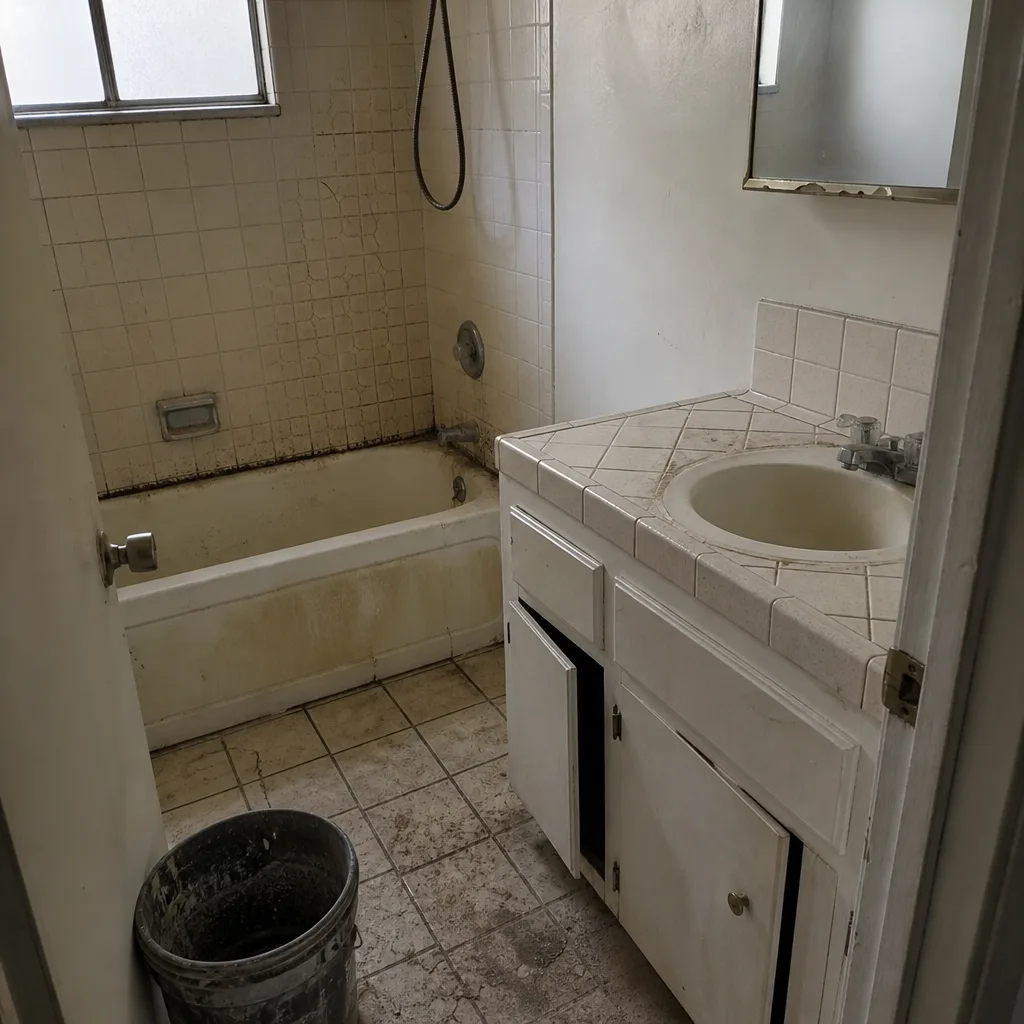 Before
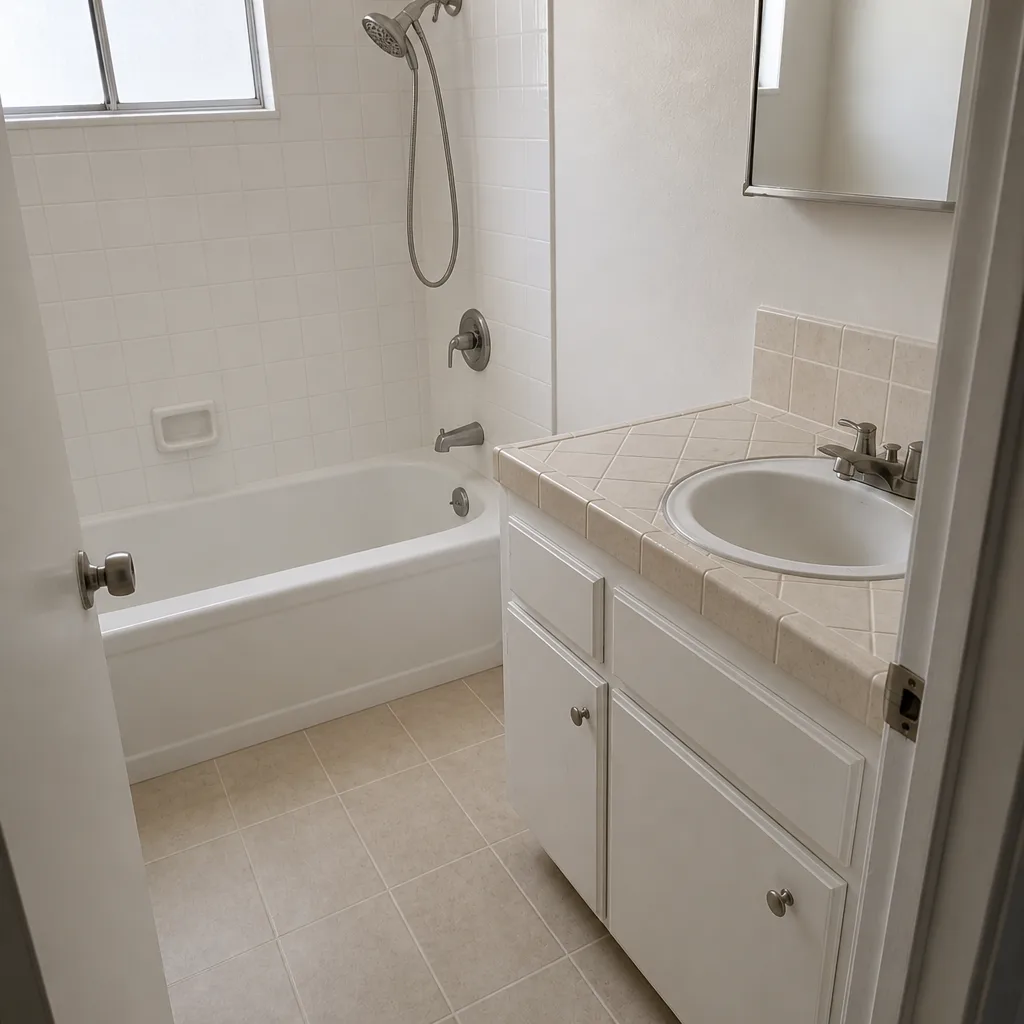 After
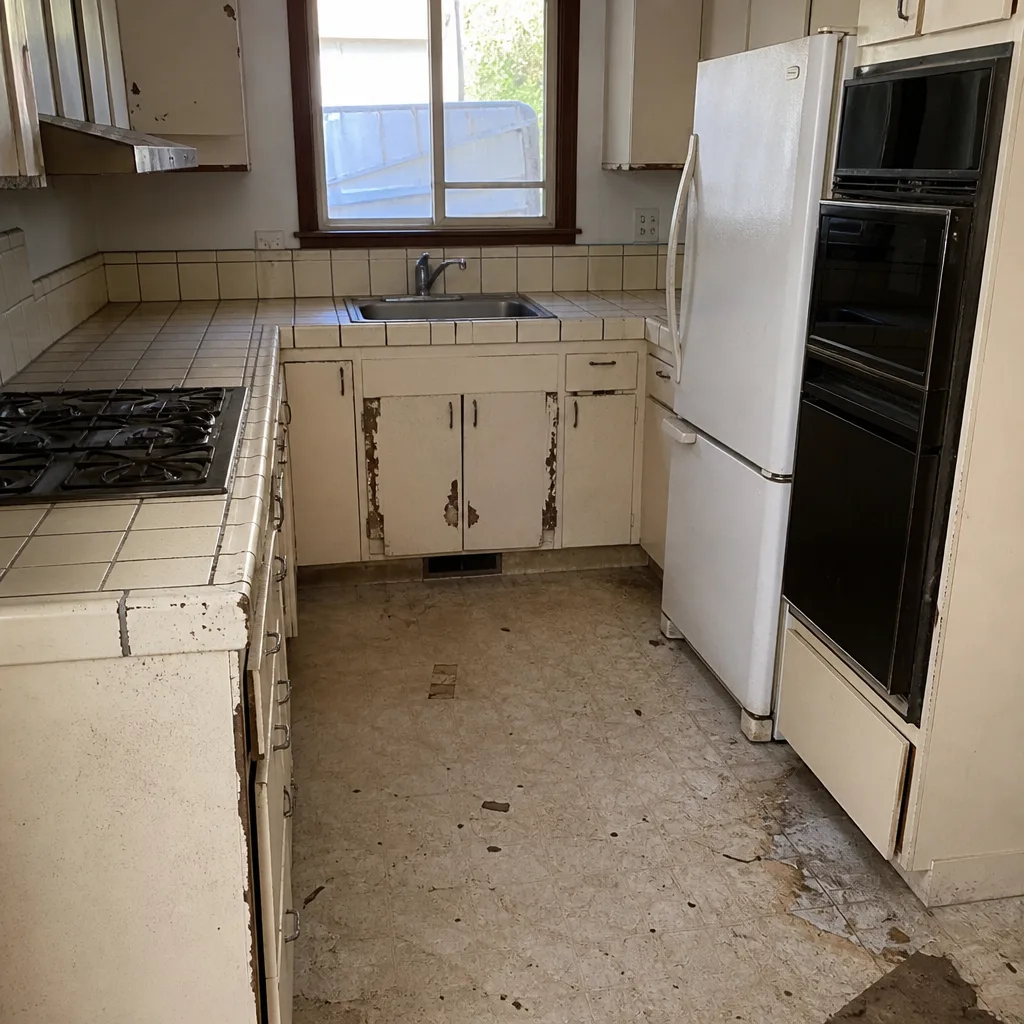 Before
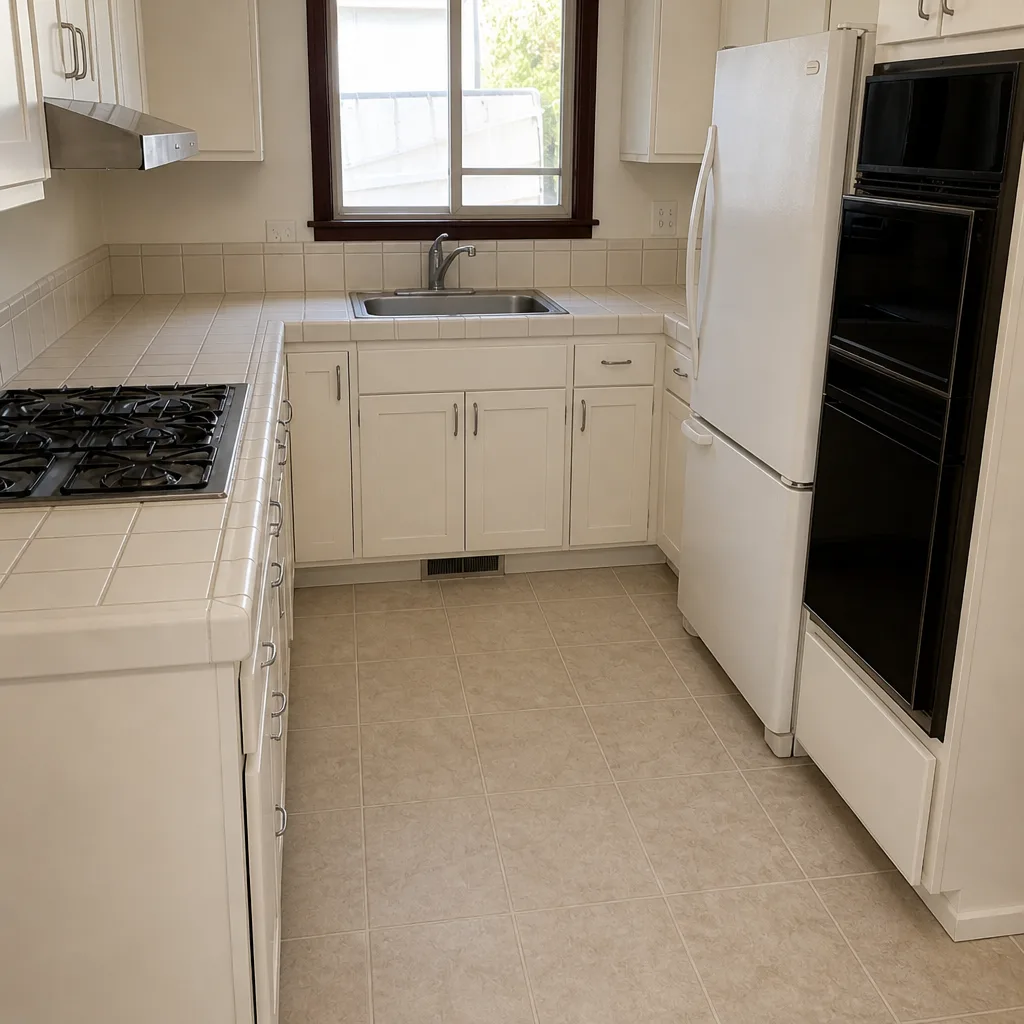 After
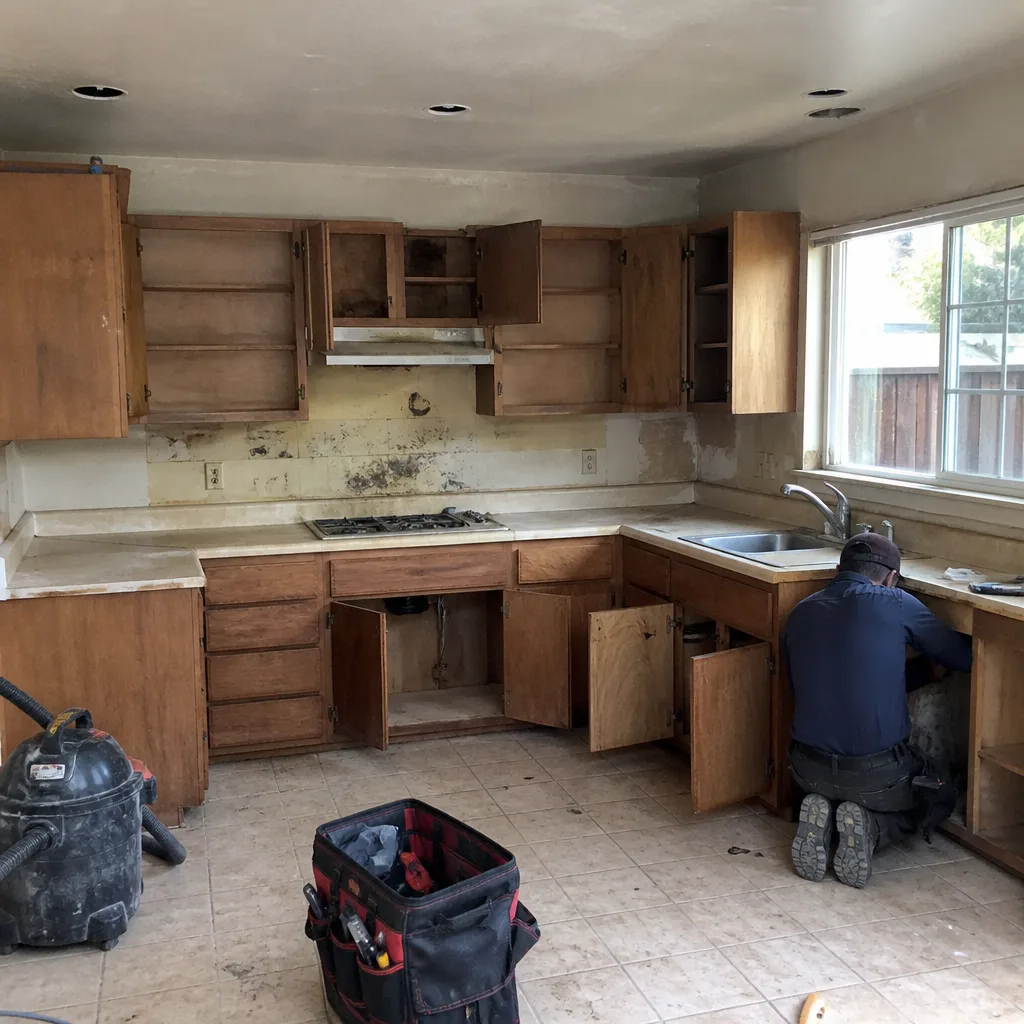 Before
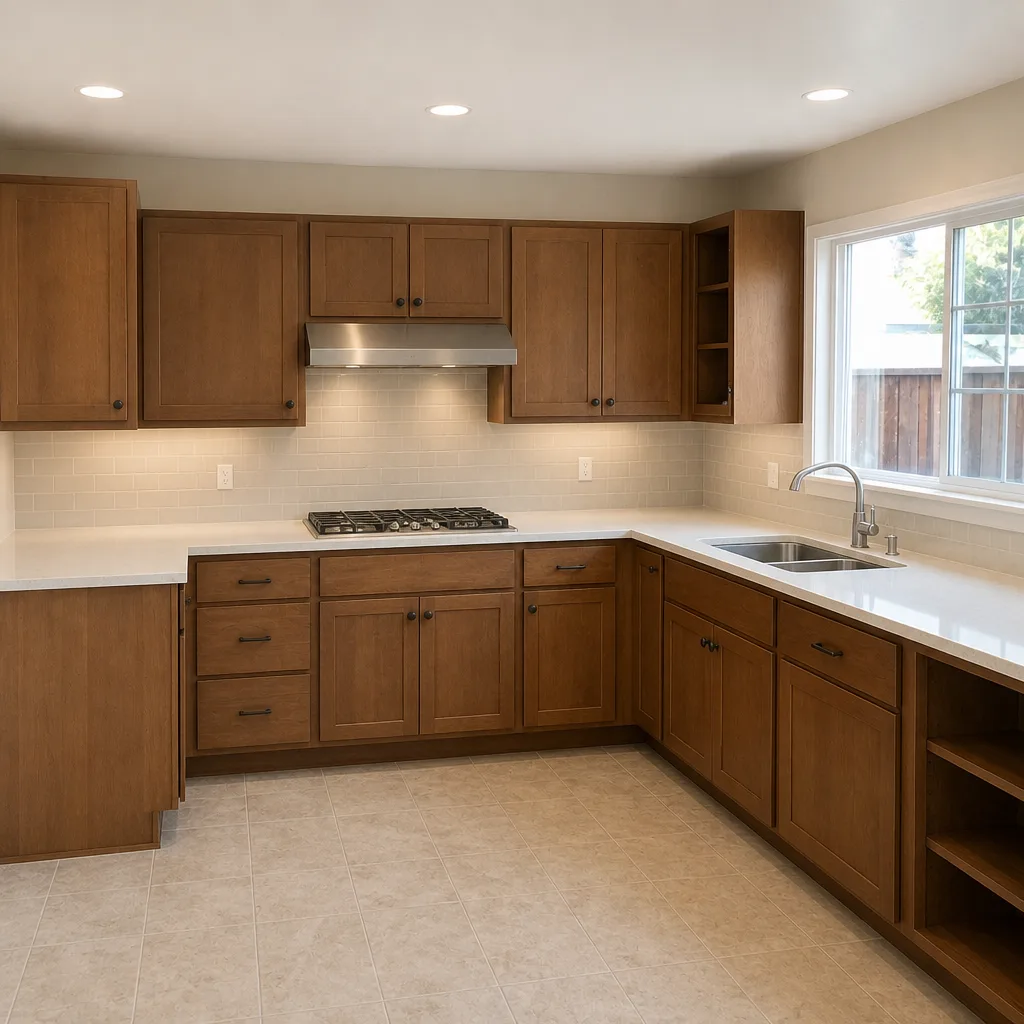 After
When to Call a Professional
Some kitchen problems you can handle with a screwdriver and a shim. Others will get worse the longer you wait, and some are genuinely dangerous if attempted without the right hands on the tools. Call a licensed contractor if any of the following are true:
Grout cracks running vertically through tile (not just along grout lines). A cabinet falling from the wall, or one that visibly pulls away from the backsplash. Any water leak at a fixture or under-sink shutoff. A range hood vent that isn’t actually connected to an exterior vent. Any opening, plumbing shift, or wiring work that involves the electrical panel or gas line. Structural questions about a load-bearing wall. These aren’t DIY territory; they’re licensed-work territory, and Santa Clara permitting usually requires it anyway.
Penhallow Remodeling Santa Clara offers free estimates in Santa Clara at (833) 400-6838. A live person answers that number around the clock. Every technician on every job is background-checked, arrives in uniform, and works from a written price before any tool is picked up. If you’re staring down a kitchen problem and aren’t sure which bucket it falls into, that call is the place to start.
Frequently Asked Questions

Refastening and re-shimming an existing cabinet in Santa Clara typically costs $180 to $450 for a single cabinet, or $600 to $1,400 to re-align an entire run. If the cabinet pulled out of the wall because the stud wasn’t adequate, expect the higher end plus a small drywall patch. If the work falls inside your written guarantee, the repair should cost nothing. Call (833) 400-6838 for an exact quote, and estimates are free.
Not for anything already in the written scope. The written price on day one is the number on the invoice, and that’s true across every Penhallow project. A change order is appropriate only when a genuinely hidden condition appears after demo (unpermitted framing, hidden plumbing, unexpected structural issue), and even then it should be presented in writing with a line-item price before the work continues. If a contractor adds cost without a written change order, question it.
Yes. Kitchen remodels that touch electrical, plumbing, gas, or structure require a permit from the City of Santa Clara, and we pull them before work starts. Inspections are scheduled and passed before the job closes. If a contractor tells you permits “aren’t needed” for a kitchen remodel with plumbing changes, ask them to put that in writing. Unpermitted work is the most expensive problem to fix later, because you end up paying twice.
A typical full kitchen remodel in Santa Clara runs 6 to 10 weeks from demo to final walkthrough, depending on layout changes, cabinet lead time, and whether walls or plumbing are moving. Cosmetic remodels (paint, hardware, new backsplash) can be 1 to 2 weeks. Once a written scope is signed, the timeline in that document is the timeline you hold us to.
The Penhallow 365-Day Done Right Promise runs one year from completion and covers defects in our workmanship, in writing, on every project. If a repair fails during that period, we come back and fix it at no charge, and the return visit is free. Product defects (Kohler fixtures, KraftMaid cabinet components, Cambria slab defects) are covered by the manufacturer’s own warranty, which typically runs much longer than ours.
Some problems genuinely aren’t workmanship failures: foundation movement from Santa Clara’s clay soil, water intrusion from a roof issue, or a code change that affects a previously compliant detail. Those aren’t covered under the guarantee, but they should still be documented and quoted in writing. Ask for a written bid to remediate, take time to compare, and expect the fix to be a negotiated scope rather than a warranty claim. If you also need tile, plumbing, or fixture work done alongside it, that’s where a separate bathroom or kitchen scope may make sense to combine, and you can see options on our Bathroom Remodeling in Santa Clara page if the same issues touch a second room.
The Bottom Line
Almost every kitchen remodel problem you’ll encounter has a paper trail that predicts it. Wrong SKUs and bad measurements trace to a vague written scope. Out-of-plumb walls and structural finds trace to the absence of a hidden-conditions clause. Cabinet shimming cascades and countertop seam disputes trace to missing layout drawings. The fix isn’t more skilled tradespeople; it’s more written detail before work starts. The written price tells you what you’re paying for. The written guarantee tells you what happens when it fails. Both belong in your file before the first cabinet is ordered, and any Santa Clara contractor who won’t put them there is telling you something about the job ahead. Start with a free estimate, from a company that answers the phone 24/7, arrives when it says it will, and stands behind the work once the crew leaves.
Ready to talk through your kitchen plan with someone who gives you a number before picking up a tool? Call Penhallow Remodeling Santa Clara at (833) 400-6838 for a free estimate. Every technician is background-checked, arrives in uniform, and works from a written price and a 365-Day Done Right Promise on every project.
Written by the team at Penhallow Remodeling Santa Clara.