Last updated November 17, 2026








Free written scope consultation - allowances, timeline, and change-order rules on paper before a single trade is scheduled
General Contractor Warning Signs Every Homeowner Should Know
A contractor who hands you a verbal estimate “to keep things flexible” is telling you exactly how flexible your final bill will be. California law already requires a written contract for any home improvement job over $500, so flexibility is never the real reason. The warning signs that actually predict a bad outcome are not the ones people warn you about at the barbecue. They show up on paper, at the estimate and contract stage, in the small procedural details an experienced contractor never trips over and an inexperienced one steps in every time. This guide walks through those tells from a Santa Clara vantage point, because our market has its own quirks and the paper trail is where jobs are won or lost.
Quick Answer
The most reliable red flags when hiring a general contractor are a vague scope of work, an oversized front-loaded deposit, an unlisted or unverified subcontractor roster, missing license, bond or workers’ comp checks, and guarantee language that promises feeling instead of a remedy. A high price is not a red flag on its own. An unclear price almost always is.
Styles & brands we work with
- Kitchen remodeling
- Bathroom remodeling
- Home additions & ADU
- Roofing
- Windows & doors
- Driveway & pavers
- Fence
Table of Contents
- Why a vague scope of work is more dangerous than a high price
- The deposit red flag: what a front-loaded payment schedule tells you
- What the subcontractor list and preliminary notice process reveals
- How to check CSLB complaints, bonds and workers’ comp
- Guarantee language: vague promises versus a written remedy clause
- Contract details that separate organized jobs from chaotic ones
- Santa Clara-specific warning signs most guides miss
Why a Vague Scope of Work Is More Dangerous Than a High Price
A $40,000 bid that lists twenty line items is safer than a $30,000 bid that says “kitchen remodel” and nothing else. The high price you can compare against another high price. The vague price has nowhere to go but up, and you cannot prove it said what it said. In our experience, the vague scope is where change orders breed, and change orders are the single most common reason a homeowner ends up paying more than the number they thought they agreed to.
Line-item specificity looks like this on a real estimate:
- Demolition scope, with what gets hauled away and what gets protected
- Cabinet line named specifically (KraftMaid or Wellborn, not “quality cabinets”)
- Countertop material named by brand and edge profile, not “granite”
- Fixture brands specified per item (Kohler, Moen, Delta)
- Substrate callouts, like cement board behind tile, named and priced
- Permit pulls, inspections and their fees listed as a separate line
- Allowances stated with a dollar figure and what happens if you exceed them
A Santa Clara kitchen remodel typically runs $18,000 to $55,000 depending on layout, cabinet line and countertop material. The reason that range is wide is not because contractors are secretive. It’s because the scope changes the price. If a contractor cannot break a Santa Clara job down to that level, they have not finished thinking about it, and you will be paying for their thinking during construction.
The Deposit Red Flag: What a Front-Loaded Payment Schedule Tells You
California Business and Professions Code section 7159.5 caps the down payment on most home improvement contracts at 10% of the contract price or $1,000, whichever is less. If a contractor asks for 30% or 40% up front to “secure the slot,” they are either unaware of the law or counting on you not knowing it. Either answer is a problem.
More revealing than the deposit itself is the deposit’s role in the contractor’s cash flow. A healthy contractor funds the early weeks of a job from operating capital and uses your progress payments to pay for the next phase. A contractor asking for $15,000 on day one of a $40,000 job is financing somebody else’s payroll with your money, and if that job costs more than expected, your project is the one that stalls while they scramble for the next deposit.
What a reasonable payment schedule looks like in practice:
- A small deposit at signing, under the legal cap
- A payment at material delivery or start of construction
- Progress payments tied to specific milestones (framing complete, cabinets set, tile set)
- A meaningful holdback until final walkthrough and punch list close
If a contractor cannot show you that skeleton in writing, ask why. If the answer involves the phrase “standard industry practice,” that is not an answer. Every job we take in Santa Clara comes with a written price before any work starts, and the number on day one is the number on the invoice. That is not a boast. It’s the only way a homeowner can compare bids honestly.
What the Subcontractor List and Preliminary Notice Process Reveals
A general contractor who cannot name their subcontractors at the estimate stage has not planned your job. That sounds harsh until you see the consequence: two weeks into a Santa Clara remodel, the tile setter is unavailable, the electrical sub is double-booked, and your kitchen sits half-finished while the GC tries to find warm bodies. A contractor who names the tile sub, the electrician and the cabinet installer up front is telling you the schedule already exists in their head.
Just as important is the preliminary notice process. In California, a subcontractor or supplier can file a preliminary 20-day notice to preserve their right to a mechanics lien against your property. This is a routine, protective step, not a warning. What matters is how your GC handles it:
- Good sign: The GC mentions liens and preliminary notices before you ask, and explains how subs are paid through them.
- Good sign: The GC has you collect lien releases with each progress payment.
- Bad sign: The GC becomes annoyed at the question or insists “we handle all that, don’t worry about it.”
- Bad sign: You receive preliminary notices from subs or suppliers your GC never mentioned.
That last one is the one to watch. An unfamiliar name on a preliminary notice usually means a materials supplier was paid by the sub rather than the GC, which is fine, or that the GC is not actually running the supply chain, which isn’t. A Santa Clara homeowner who understands this dynamic before signing is protected against the worst-case scenario where they pay the GC in full and still face a lien from a sub who wasn’t paid.
How to Check CSLB Complaints, Bonds and Workers’ Comp
The Contractors State License Board website is free, takes about five minutes, and is the single most informative check you can run on a general contractor. You want to look at three things: license status, bond status and workers’ compensation status. Each one protects you from a different failure.
- License status: Verify the license is active and check the classification. A B-General Building license covers residential remodeling; a C-39 covers roofing only. A Santa Clara homeowner hiring a B-General for a full kitchen remodel should not see a roofing-only classification.
- Bond status: California requires a contractor bond, and if it has lapsed, the contractor is not legal to operate. The bond is your fallback if the contractor damages your property or breaches the contract and then disappears.
- Workers’ comp status: If a worker is injured on your property and the contractor has no workers’ comp, you may be on the hook. This is the check homeowners skip and the one most likely to cost them the most.
Also look at the complaint history, not just the presence or absence of complaints. A single complaint from three years ago that was resolved is a different data point than six open disputes. Read the complaint descriptions. They tell you whether the pattern is about quality, communication or money.
What we tell Santa Clara customers who are doing the diligence: check the license number on the CSLB site, then check it again, because any contractor with nothing to hide will hand you the number without flinching. A contractor who deflects the question, says “we’re licensed and insured” without a number, or offers a business card with a license number you can’t verify is showing you something important.
Guarantee Language: Vague Promises Versus a Written Remedy Clause
“We stand behind our work” is not a guarantee. It’s a feeling. A real guarantee tells you three things in writing: what it covers, how long it lasts, and exactly what remedy you get if something fails. If the contract cannot answer those three questions with specifics, you do not have a guarantee. You have a slogan.
Compare the two:
- Vague: “We stand behind all our work. Customer satisfaction is our priority.”
- Specific: “Work performed under this contract is covered by a 365-day promise. If any work fails within 365 days of substantial completion, we return and correct it at no charge, with no service call or re-inspection fee.”
The 365-Day Done Right Promise is the standard we operate to, and it exists because the vague version is the one homeowners have already been burned by. “We stand behind our work” is what the contractor who never showed said right before they stopped answering the phone. A dated remedy clause with a specific return obligation is what you can actually hold somebody to.
The guarantee should also name the products it links to. A Cambria quartz countertop carries its own manufacturer warranty alongside the installation guarantee, and a written contract should list which warranties apply, from which manufacturer, and for how long. When you see a Santa Clara remodel bid that lists James Hardie siding with its own warranty next to a written installation guarantee, you are looking at layers of protection. When you see a bid that lists “siding” with no brand and no warranty, you are looking at nothing.
Contract Details That Separate Organized Jobs From Chaotic Ones
The contract tells you how the job will be run before the job starts. Three details separate organized contractors from the ones homeowners complain about later.
- A real arrival window. “Sometime next week” is not a window. “Tuesday between 8 and 9 a.m.” is a window, and a crew that gives you one has a schedule. A crew that doesn’t has a habit of calling at 10 a.m. to apologize.
- A named contact with a real phone number. If the only number on the contract goes to voicemail, the only answer you will ever get goes to voicemail. Ask who answers when the crew is on site. Ask what happens if you call after hours. The answer should be a human, not a prompt.
- A waste and site plan. Where does the dumpster go? Who protects the floors and the landscaping? A contractor who skips this section has not thought about your house as a place people live in during the job.
The Kingswell Way says it in three sentences: say the price before the work, show up in the window we gave, leave the place cleaner than we found it. Every one of those map to a clause in the contract. If a Santa Clara contractor cannot point to a clause for each one, ask which part they intend to skip.
Santa Clara-Specific Warning Signs Most Guides Miss
Santa Clara has quirks that show up at the contract stage and nowhere else. A contractor unfamiliar with the city will trip over them after the job starts, and you will pay the cost of their education.
- Permit familiarity. Santa Clara requires permits for most kitchen and bathroom remodels, and inspection schedules affect your construction timeline. A GC who has never pulled a Santa Clara permit will underestimate the inspection wait. Ask how many Santa Clara permits they have pulled this year and roughly how long the last one took.
- Structural changes in older Santa Clara homes. Many of the city’s post-war housing stock needs a structural engineer when walls come out, and that is a separate permit review. A GC who quotes a load-bearing wall removal without mentioning engineering has not priced the job.
- Soil and drainage. Santa Clara’s clay-heavy soil shifts with seasonal moisture, and it matters for exterior work, patios and hardscape. If a contractor proposes Belgard or Unilock pavers or a new ActiveYards or Tremron fence line without discussing base prep and drainage, the price is missing the part that fails first.
- The tech-adjacent schedule problem. Santa Clara homeowners often work from home, and a contractor whose schedule assumes an empty house during the day will collide with reality. Ask how they handle a busy household during demo and tile work.
- Neighborhood market pressure. In Santa Clara’s competitive remodel market, a bid that comes in dramatically under the others is not a bargain. It’s a signal that something in the scope was left out and will come back as a change order.
None of these are topics a generic warning-signs guide covers. They are the ones that show up in Santa Clara-specific jobs, and they are worth asking about before you sign.
Common Mistakes to Avoid
- Comparing bids on price alone. A $12,000 gap between two bids usually means one of them left the tile substrate, the permit and the cabinet install out of the price. Compare the line items, not the totals.
- Paying a deposit over the legal cap. Ten percent or $1,000, whichever is less, is the California ceiling on most home improvement deposits. If the contractor asks for more, the answer is no.
- Accepting “we stand behind our work” as a guarantee. Ask what it covers, how long it lasts and what the remedy is, in writing, with a date. If the answer is a nod, walk.
- Skipping the CSLB check because the contractor seems nice. Being pleasant and being licensed, bonded and insured are separate facts. Verify all four.
- Hiring a Santa Clara contractor unfamiliar with city permits. Inspection timelines and the structural-engineering requirement for wall removal are not optional in Santa Clara, and a GC who hasn’t built in the city will underestimate both.
- Ignoring who answers the phone. The phone behavior before signing is the phone behavior during the job, and it does not improve. Test it once while you are pricing.
- Signing a contract that doesn’t name the products. KraftMaid and Wellborn are not the same cabinet line. Kohler and Moen are not the same fixture tier. A contract that names “brands” instead of specific ones leaves the choice, and the cost, to the contractor.
See the difference
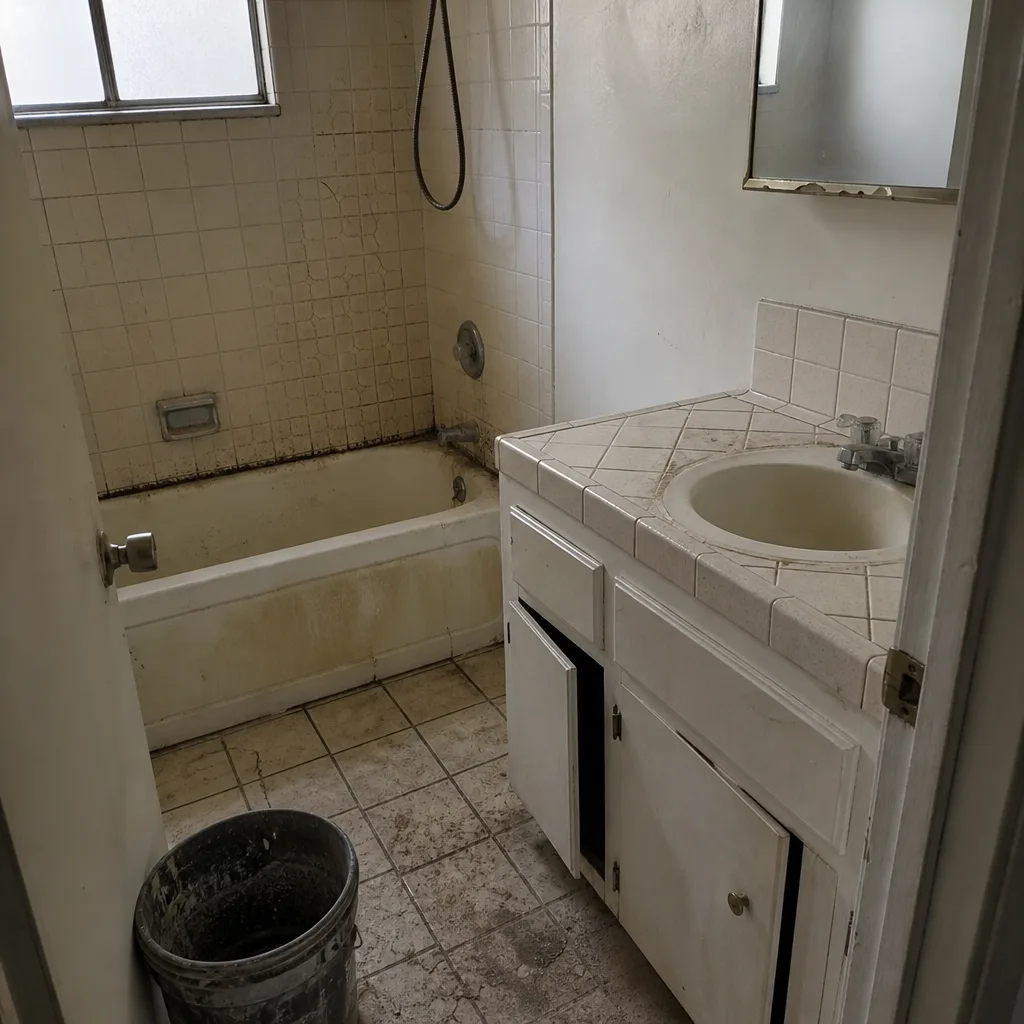 Before
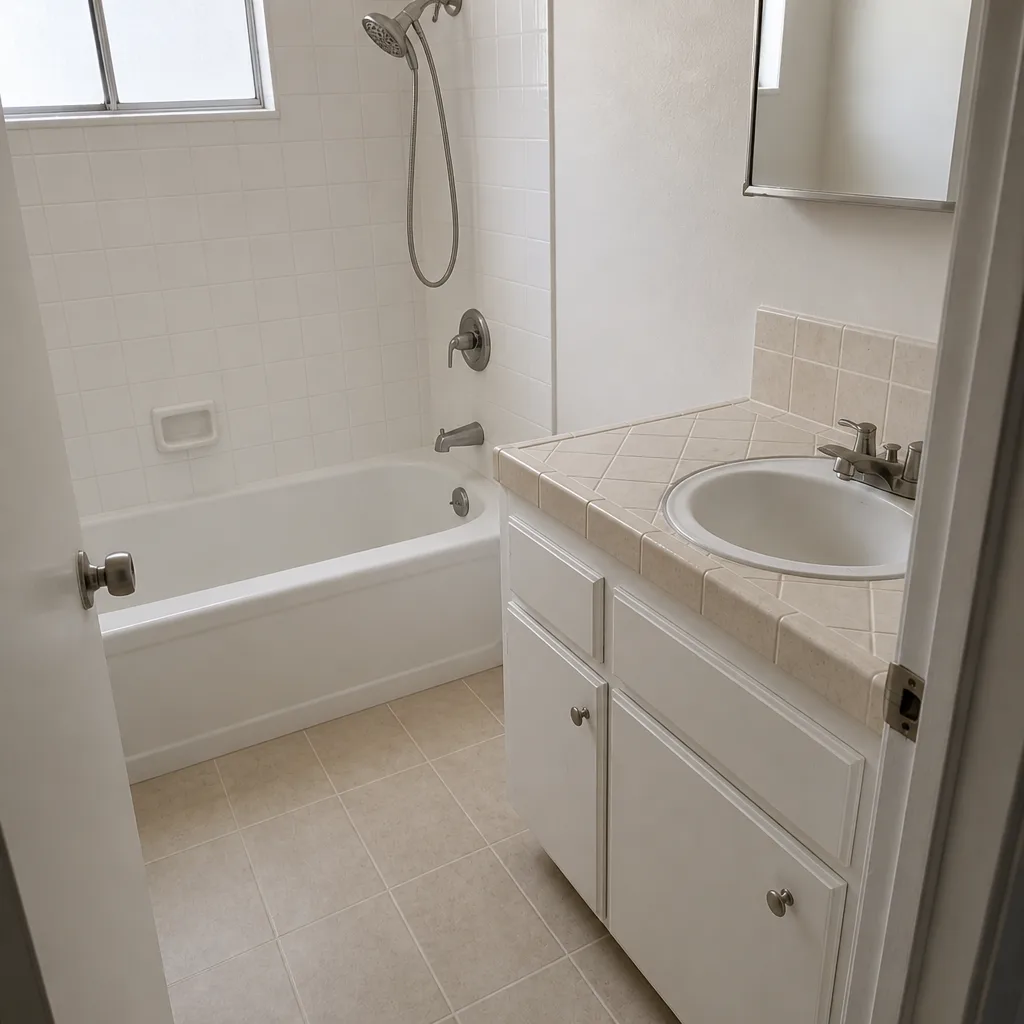 After
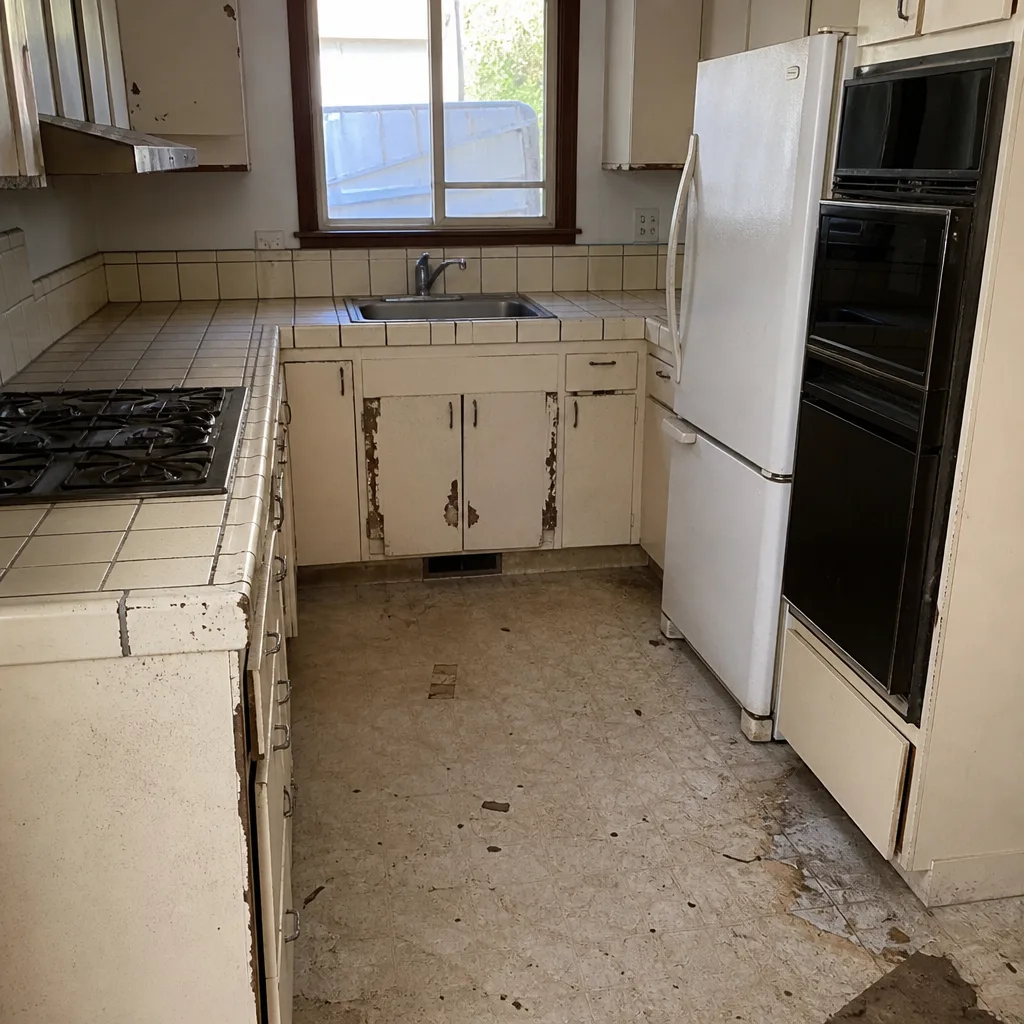 Before
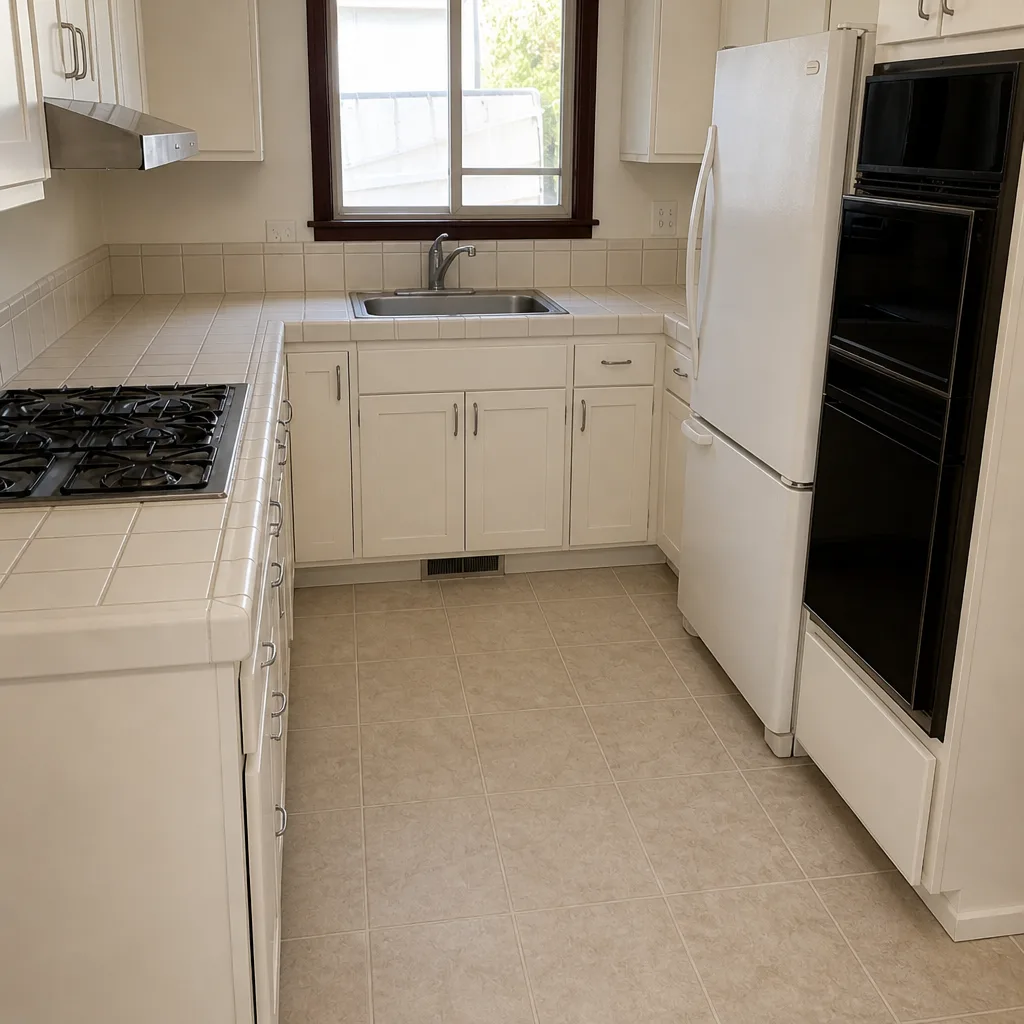 After
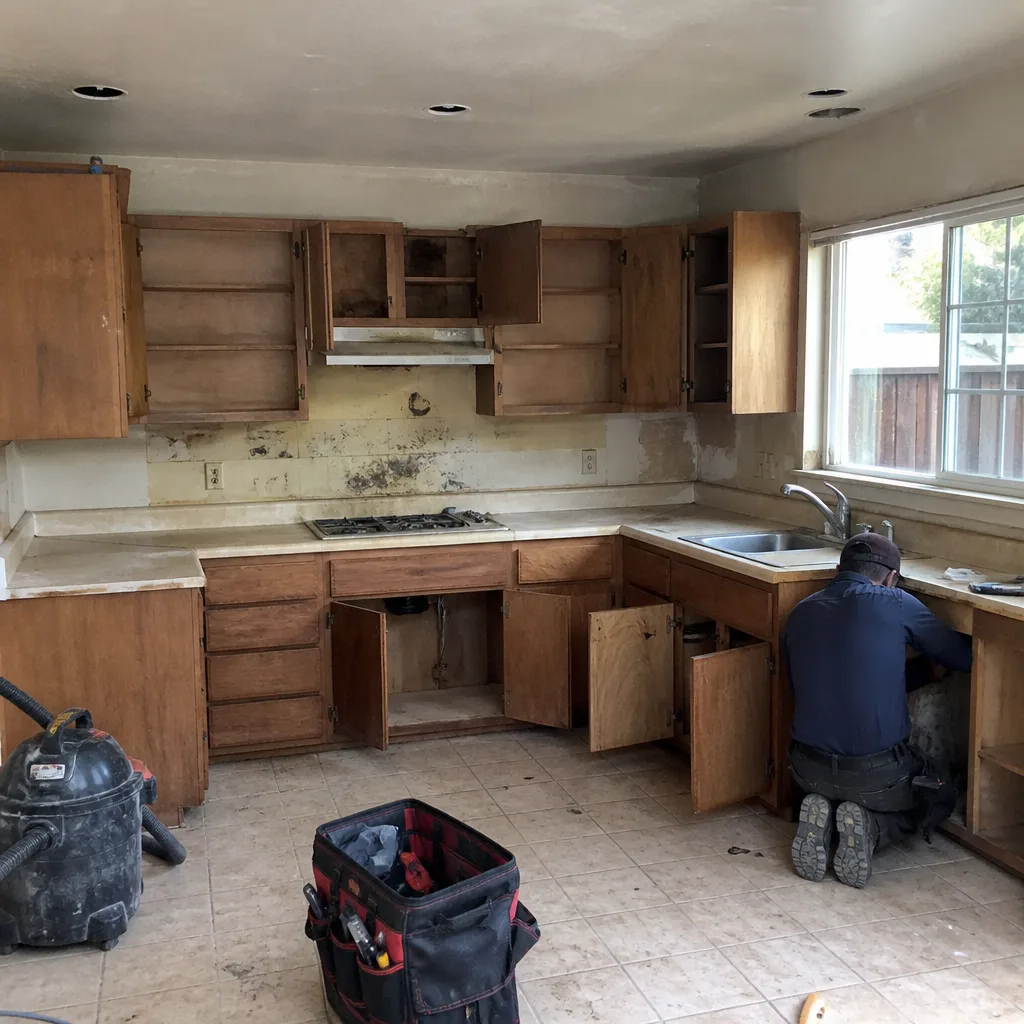 Before
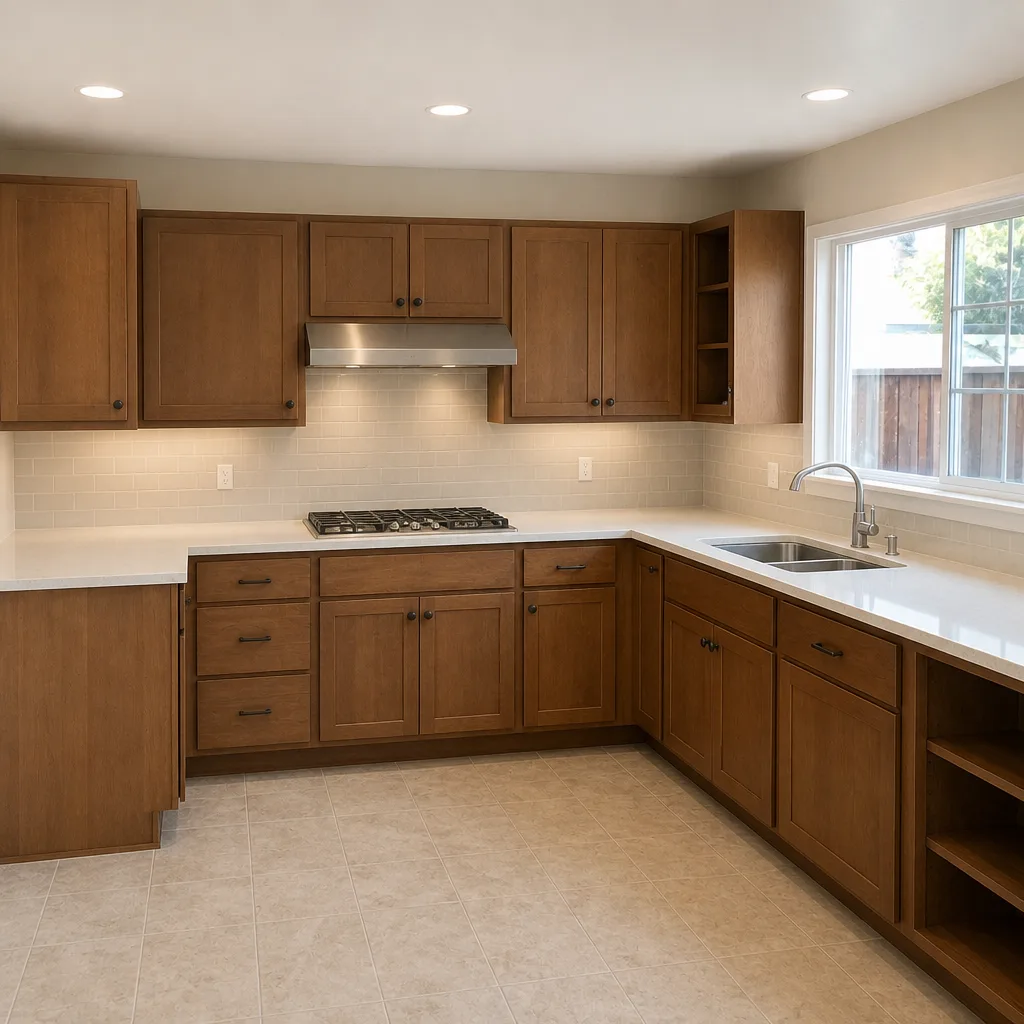 After
When to Call a Professional
If you are weighing a kitchen or bathroom remodel in Santa Clara, the warning signs on this page are the ones to check before you sign, not after. Call us when the bid you have in hand doesn’t explain its own numbers, when the guarantee is a sentence rather than a clause, or when you want to compare a written price against the one you’re being handed verbally. We give real dollar ranges because vague prices are how homeowners get surprised, and we’ve seen enough Santa Clara jobs come in over budget to know the surprise almost always starts at the estimate. Our technicians have up to 22 years of experience, arrive background-checked and in uniform, and every job comes with a written price before any work starts. Penhallow Remodeling Santa Clara offers free estimates in Santa Clara. Call (833) 400-6838 to schedule yours, or start with our general contractor in Santa Clara page for a fuller look at how we run a job.
Frequently Asked Questions

A vague scope of work should trigger an immediate red flag. If the estimate cannot break the job into line items with named materials, specific quantities and separate permit and inspection costs, you cannot compare it to another bid, and any price that is unclear will only go up. Ask for a written scope before you compare prices.
California caps the down payment on most home improvement contracts at 10% of the contract price or $1,000, whichever is less, under section 7159.5. A contractor asking for more than that up front is either unaware of the law or willing to work around it, and both are reasons to slow down. Call (833) 400-6838 if you want a second read on a payment schedule you’ve been offered.
Go to the Contractors State License Board website and search the license number. It shows license status, bond status, workers’ comp status and complaint history in one place. A lapsed bond means the contractor is not legal to operate, and no workers’ comp means an injured worker could come after you.
Usually nothing, unless it’s followed by a specific, dated remedy clause. Ask what the guarantee covers, how long it lasts, and what happens if the work fails. A real guarantee answers all three in writing. If it doesn’t, you have a slogan, not a guarantee.
Because a low bid usually means something was left out of the scope. In a market where a Santa Clara kitchen remodel runs $18,000 to $55,000 depending on layout, cabinets and countertops, a bid well below the others is not a bargain, it’s a change order waiting to happen. Compare line items, not totals.
You should know who they are before they arrive. Ask the GC for the name of the tile, electrical and cabinetry subs at the estimate stage. A contractor who can name them has planned the job. One who can’t is improvising. If you later receive preliminary notices from subs you were never told about, ask questions, and call (833) 400-6838 if you want help interpreting what you got.
The Bottom Line
The paper trail tells the truth about a general contractor before the first tool comes out. A vague scope is more dangerous than a high price. A front-loaded deposit signals cash-flow trouble, not priority scheduling. A missing subcontractor list means the job was never planned. An unverified license, lapsed bond or absent workers’ comp puts your property and your money at risk. And guarantee language without a dated remedy clause is a feeling, not a promise. If you want to see what the opposite of those warning signs looks like, our kitchen remodeling in Santa Clara and bathroom remodeling in Santa Clara pages show how a written price and a written guarantee fit on the same page. For a broader view of the company, start at Penhallow Remodeling Santa Clara home, and when you’re ready, call (833) 400-6838 for a free estimate.
Written by the team at Penhallow Remodeling Santa Clara.