
Last updated November 17, 2026








Free written scope consultation - allowances, timeline, and change-order rules on paper before a single trade is scheduled
Home Remodeling Troubleshooting: Common Problems and How to Fix Them
If your new floor is buckling, your new paint is cracking, and your new trim gaps are opening, you don’t have three problems. You likely have one: moisture that was present before the first nail was driven. This is the single most useful thing we can tell a homeowner, and it’s the reason this guide is organized by root cause instead of by symptom. Failures in a remodel cluster because the same underlying mistake – a vague scope, a sub who wasn’t licensed, an inspection that got skipped – shows up across multiple systems at once. Below, we walk through how to diagnose what you’re actually looking at, how to document it, and how to decide whether it’s covered by your contractor’s guarantee, your insurance, or neither. We’ve worked on remodels across Santa Clara long enough to know exactly which failures keep repeating here.
Quick Answer
Most post-remodel problems fall into three root-cause buckets: moisture (buckling floors, cracking paint, mold, grout failure), structural movement (cracks at corners, sticking doors, floor deflection), and workmanship (gaps, misaligned cabinets, plumbing that drips). Diagnose the cause before you accept a remedy, request the permit records and warranty terms in writing, and put your complaint in writing too. Around Santa Clara, the leading culprit is moisture from skipped vapor barriers and inadequate flashing, not “bad luck.”
Styles & brands we work with
- Kitchen remodeling
- Bathroom remodeling
- Home additions & ADU
- Roofing
- Windows & doors
- Driveway & pavers
- Fence
Table of Contents
- Why Remodel Problems Cluster: The Three Root Causes
- Moisture-Origin Problems: The Ones That Look Like Three Fixes
- Structural-Movement Problems: When the House Is Telling You Something
- Workmanship Problems: Gaps, Misalignment and Drips
- The Diagnostic Conversation: What to Ask a Contractor
- Is It Covered? Guarantee vs. Insurance vs. Neither
- Unpermitted Work That Now Triggers a Code Issue
- Your Written Problem-Report Template
Why Remodel Problems Cluster: The Three Root Causes
Every post-remodel complaint we hear in Santa Clara traces back to one of three origins, and naming the origin correctly is half the fix. Homeowners tend to describe the symptom (“the tile is loose”) while contractors who understand the failure describe the cause (“the substrate wasn’t properly waterproofed”). Those are two different conversations, and only one of them leads to a repair that holds.
- Moisture-origin problems: Water got where it shouldn’t – behind a shower wall, under a floor, behind siding. Symptoms appear weeks to months after the job ends.
- Structural-movement problems: The framing or foundation moved. Usually slower-developing, but visible as cracks, sticking doors and out-of-level floors.
- Workmanship problems: The materials were right and the house was stable, but the install wasn’t. Gaps, misalignments, leaks at connections.
When you see failures across multiple systems at once, sort them by cause, not by room. A single skipped step – say, no vapor barrier under a slab or a shower receptor installed without a proper pre-sloped pan – can produce all three “symptoms” simultaneously. That’s why a homeowner can spend money fixing a floor three times and still watch it lift again in six months. The fix belongs at the cause, not the surface. If you’re early enough to be planning rather than repairing, our bathroom remodeling in Santa Clara service page covers how the waterproofing layers should be sequenced so these problems never start.
Moisture-Origin Problems: The Ones That Look Like Three Fixes
Santa Clara’s climate is the setup. Dry summers and wet winters mean moisture tends to arrive from below (rising damp, slab wicking), from exterior penetrations (window flashing, door thresholds, roof-wall junctions), and from the wet side of a bathroom. Skipped or underbuilt waterproofing is the number one root cause we see.
Symptoms to look for
- Wood floor planks cupping or crowning along joints, especially near exterior walls or under kitchen sinks
- Fresh paint cracking in a pattern that follows stud lines or ceiling joints
- Grout cracking across a shower floor, or a hollow knock under tiles around the drain
- Trim separating from walls – not closing like a crack but swelling like a gap
- Baseboard darkening or a faint musty smell after a rain
How to diagnose it without tearing anything out
- Buy or borrow a pin-type moisture meter (under $50 at most hardware stores) and record readings on the floor, wall and trim in the problem area. Note the number, the date and the location.
- Note whether the problem worsens after rain – that points to an exterior or flashing path.
- Note whether it worsens after showering – that points to interior wet-area waterproofing.
- Check under the nearest sink with a flashlight for slow leaks and staining under the cabinet base.
- Photograph the readings and the visual symptoms together, dated, for the paper trail you’ll build later.
If the readings stay elevated for more than two weeks, stop remodeling on top of it. A proper repair means addressing the source (flashing, waterproofing membrane, vapor barrier), not repainting. In Santa Clara homes from the 1950s and 1960s, shower pans installed with a lead liner and no pre-slope are still quietly failing under brand-new tile. A proper replacement – with a bonded waterproofing membrane such as Schluter’s Kerdi system or a correctly sloped pan – costs more than a re-tile and lasts indefinitely. That’s the layer the guarantee should stand behind.
Structural-Movement Problems: When the House Is Telling You Something
Structural movement in a Santa Clara remodel usually relates to how the house was originally built. Crawl-space foundations with post-and-pier support, additions that sit partially on slab and partially on framing, and older homes on expansive clay soils all move. When that movement lands under a new tile floor or a new framed opening, something gives.
Symptoms to look for
- Stair-step cracks in drywall at door or window corners
- Doors or windows that suddenly won’t close or that scrape
- Floor deflection – a bouncy spot or a low point you can feel with a level
- Cracks running diagonally from the corner of a new opening
- Tiles that crack in a straight line across the floor
What to do
- Document each symptom with dates. Structural problems change slowly, and a time-stamped record tells the professional whether this is settling or ongoing movement.
- Check whether the finish work covers a new structural change (moved wall, new beam). Newly framed openings that crack within six months usually mean something wasn’t engineered correctly.
- Ask the contractor for the engineering detail, if there was one, for the framing change they made. On a legitimate job, that document exists.
- Do not accept “it just happens” as an answer. Movement in a Santa Clara home can usually be identified on inspection, and the right fix depends on whether the movement is stable or still in progress.
If the movement is at the foundation, we stop and bring in a structural engineer before we touch a finish. We can’t fix a sloping pier by installing ceramic tile, and no honest contractor should suggest it.
Workmanship Problems: Gaps, Misalignment and Drips
Workmanship failures are the easiest to diagnose and the most common source of complaint. They look obvious and, typically, they’re not caused by anything mysterious.
- Crown or base gaps opening where two walls meet or where cabinet meets wall
- Cabinet doors not sitting flush, drawer fronts out of alignment, or cabinet boxes out of level
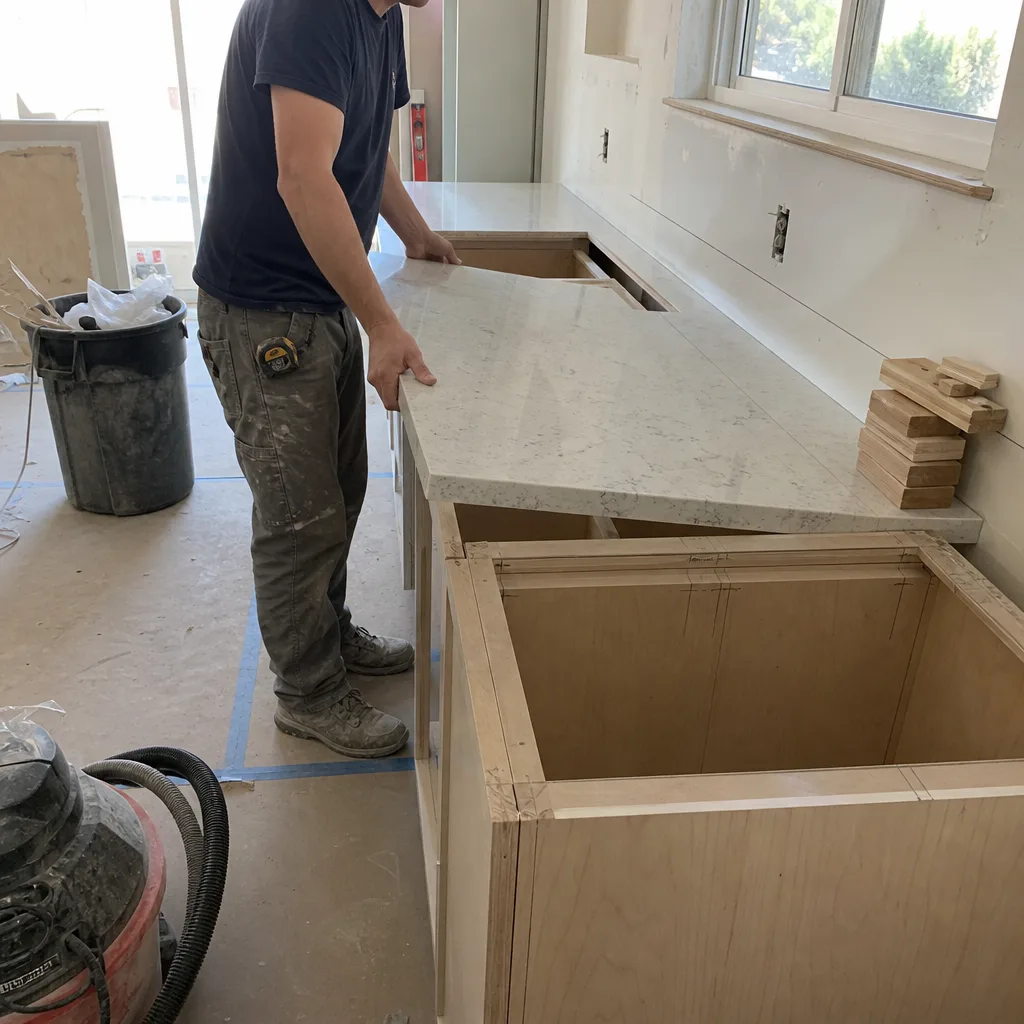
- Countertop seams that catch a fingernail or show a visible joint
- Slow leaks under sinks, at supply-line connections, or behind a fridge water line
- Trim miters opening within a season
Not every gap is bad work. Wood moves with the seasons, and a hairline miter crack that opens in dry Santa Clara summer heat and closes by December is cosmetic. That’s why we favor caulk joints at corner transitions and coping instead of tight miters – a coped joint can move and still look closed. On cabinet installs we set boxes level and plumb and shim so that a Wellborn or KraftMaid door swings without rub on the first adjustment. On plumbing, we use Moen and Kohler supply connections, and we pressure-test every line before the wall closes. A working plumber would call a drip at a supply line a “recall” and be back the same week. If your contractor’s answer to a drip is “that’s the way it is,” that’s a workmanship answer, not a plumbing one. Our kitchen remodeling in Santa Clara page shows how we sequence cabinet, counter and plumbing so these details don’t get rushed.
The Diagnostic Conversation: What to Ask a Contractor
When a problem appears, the conversation you have with the contractor tells you almost as much as the eventual diagnosis. A professional is calm, specific and asks to see the problem; a defensive contractor explains it away before visiting. Here’s the script we think every Santa Clara homeowner should follow.
- Describe the symptoms in writing first. Text or email: what you see, when you first saw it, and how it’s changed. That starts the paper trail before voices get raised.
- Ask the cause question, not the fix question. “What do you believe is causing this?” A professional names a cause. A defensive response describes the symptom back to you.
- Ask for the documents: the original written scope, the permit numbers, the manufacturer spec sheets for the products installed, and a copy of the guarantee terms.
- Ask for a written diagnosis: what they’ll inspect, what they expect to find, and the price (or no charge) for the return visit.
- Ask what triggers the guarantee. “If this turns out to be installation failure, is the return visit and the repair covered at no charge?” The answer should be an unqualified yes, and it should be in the written guarantee.
- Ask for a timeline for the inspection and the repair, in writing.
Red flags: “That’s just how old houses are,” “I don’t have the permit number on me,” “Write down what you need and I’ll get back to you” (and then no callback), or a rush to blame the products. Materials like Cambria quartz, Caesarstone, Grohe fixtures and James Hardie siding carry their own manufacturer warranties – a legitimate contractor will help you layer that warranty with their own, not hide behind it. If you’re vetting a contractor for a first job, the same questions apply up front; our general contractor in Santa Clara page walks through what a real written scope should look like before you sign.
Is It Covered? Guarantee vs. Insurance vs. Neither
Before you call anyone, work out which bucket the problem falls into. That determines who pays.
- Contractor’s guarantee: Covers installation failure and workmanship. The classic example: a shower that leaks within a year because the pan wasn’t sloped correctly. On a Penhallow project, the 365-Day Done Right Promise means we come back and fix it at no charge inside the guarantee period, and the free return visit applies if a repair fails – no service call fee.
- Homeowner’s insurance: Covers sudden accidental damage (a supply line burst, a fallen limb through a window) but not “long-term seepage” or maintenance failures. Slow leaks and mold that developed over months are usually excluded.
- Manufacturer warranty: Covers product defects – a fixture that cracks at a seam, a cabinet hinge that fails. Not installation errors.
- Neither: Pre-existing conditions the contractor documented in writing at the start of the job, or problems caused by something outside the scope (a roof failure from before the remodel).
Documentation is what makes this call possible. You need: the written scope, the photos dated before and after, the permit records, the moisture readings if applicable, and the written guarantee as delivered. If you don’t have these, request them. A contractor who can’t produce them for a job that just finished is telling you something. For the standard we hold ourselves to, the guarantee is in writing on every project before a single cabinet is pulled, and that document is your first stop. See the Penhallow Remodeling Santa Clara home page for what that looks like on our jobs.
Unpermitted Work That Now Triggers a Code Issue
This is the hardest situation, and it’s more common in Santa Clara than anyone likes to admit. Homeowners inherit a permitted-looking job that was never pulled – a bathroom done without an inspection, an electrical outlet added on a kitchen remodel without a permit. The failure surfaces during a sale, an insurer’s inspection, or a code enforcement visit, and now you’re deciding between retroactive permitting and redoing the work.
In general, you have three options:
- Retroactive permit (“as-built” permit): Requires opening up closed work so the building department can inspect it. In Santa Clara, expect opening walls around the plumbing or electrical, an inspection schedule, and a permit cost that can run into the hundreds to low thousands depending on scope. It works when the underlying work is correct and accessible.
- Partial redo to expose and correct: Often the right answer when plumbing or waterproofing is hidden and wrong. You pull a permit, open the wall, correct, inspect, close. Costs more than the retroactive permit alone but leaves you with a documented, inspected result.
- Full redo: Only when the underlying work is so nonconforming that exposing it means the whole installation has to come out. Usually the case for unpermitted structural changes.
When to choose which: if the underlying work is likely correct and just needs documenting, retrofit permit. If it’s plumbing, electrical or waterproofing in a wet area, expose and correct. If it’s structural, full redo. In our experience, correcting early is always cheaper than discovering it during a sale. A lender or buyer’s inspector will find it, and at that point you have no negotiating room.
Your Written Problem-Report Template
Verbal complaints are easy to forget and impossible to prove later. A written one is not. Here’s a short template you can copy into an email – it’s the exact information a contractor needs.
- Project address and project start date.
- Date and time the problem was first noticed and how long it’s been present.
- Description of what you see: “The wood floor in the front third of the kitchen has cupped along three plank joints, approximately 1/8 inch raised.”
- Photos, numbered and dated, with a ruler for scale where it helps.
- Moisture readings, if you have any, with the location and date.
- What changed nearby: “The dishwasher was replaced three weeks ago” or “This appeared after the first rain.”
- The cause question: “What do you believe is causing this?”
- The ask, in writing: “Can you inspect within seven business days and confirm in writing whether this falls under your written guarantee?”
- A deadline for a written response – one to two weeks is reasonable.
Send it to the same email or text thread as the original project. Keep every message. If the problem ends up in a guarantee claim, an insurance claim, or a permit dispute, that thread is your evidence, and it is decisively better than a phone call gone wrong.
Common Mistakes to Avoid
- Fixing the symptom before the cause. Re-tiling a shower that leaks, or repainting a wall that has moisture behind it, is money spent twice. Diagnose first – the Santa Clara homes we see most often have a flashing or waterproofing root cause that hasn’t been addressed.
- Accepting a verbal guarantee. If the promise isn’t in writing, it isn’t a guarantee. Ask for the written terms before anyone picks up a tool – that’s part of The Kingswell Way standard: say the price before the work, show up in the window we gave, and leave the place cleaner than we found it.
- Letting a contractor start without a written scope. “We’ll figure it out as we go” is how a scope grows, and how the price on day one becomes a different number on the invoice. Every Penhallow job starts with a written price before any work starts.
- Not pulling the permit. Unpermitted work is a silent problem until it isn’t. It surfaces during a sale, an insurance inspection, or a code enforcement visit, and it costs far more to fix retroactively.
- Using a sub who wasn’t background-checked. The technicians who come into your house should be background-checked and in uniform. If you don’t know who’s arriving, you can’t hold anyone accountable.
- Calling a company that won’t answer the phone during the problem. A voicemail maze when a shower is leaking is the beginning of a bad outcome. A live person should answer, 24/7, not just during business hours.
- Waiting to document. Moisture readings shift, cracks close, trim moves. Photograph and measure at the first sign – a paper trail loses value every week you don’t start it.
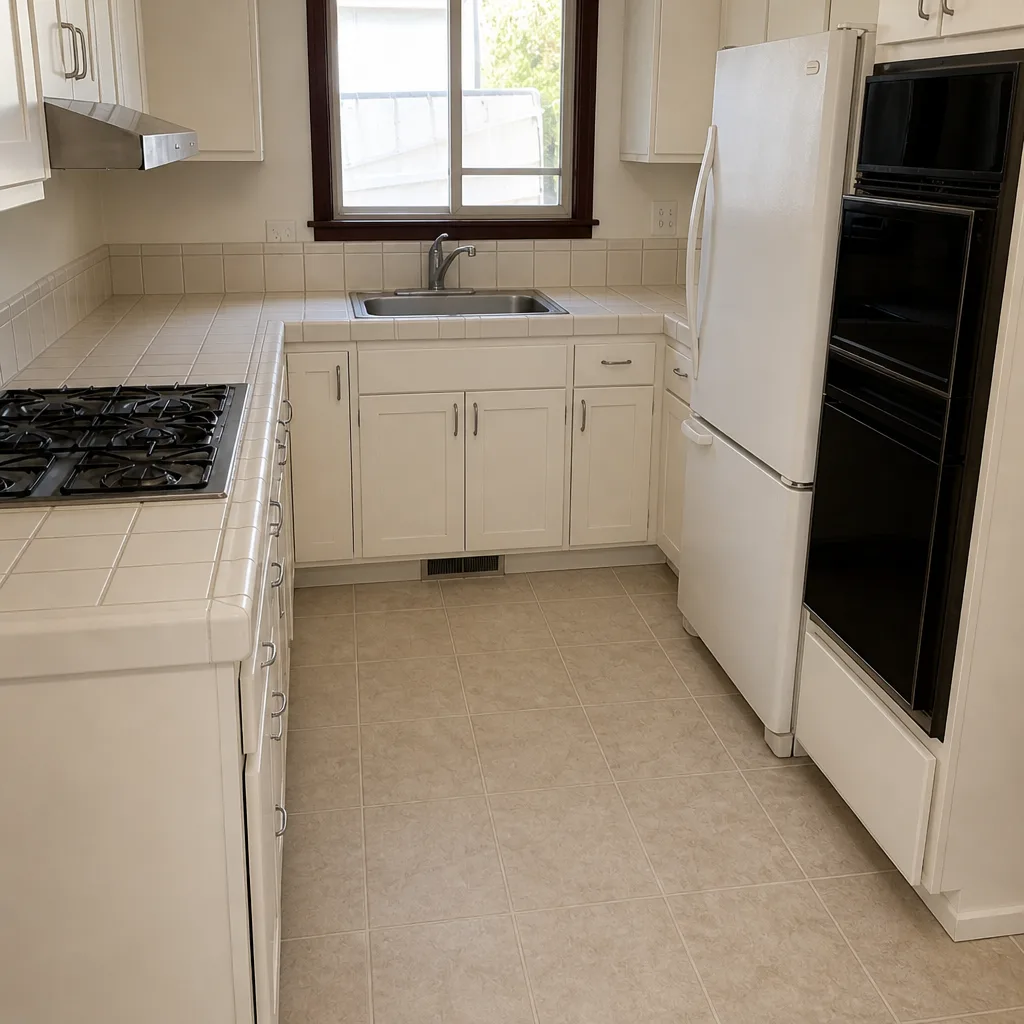
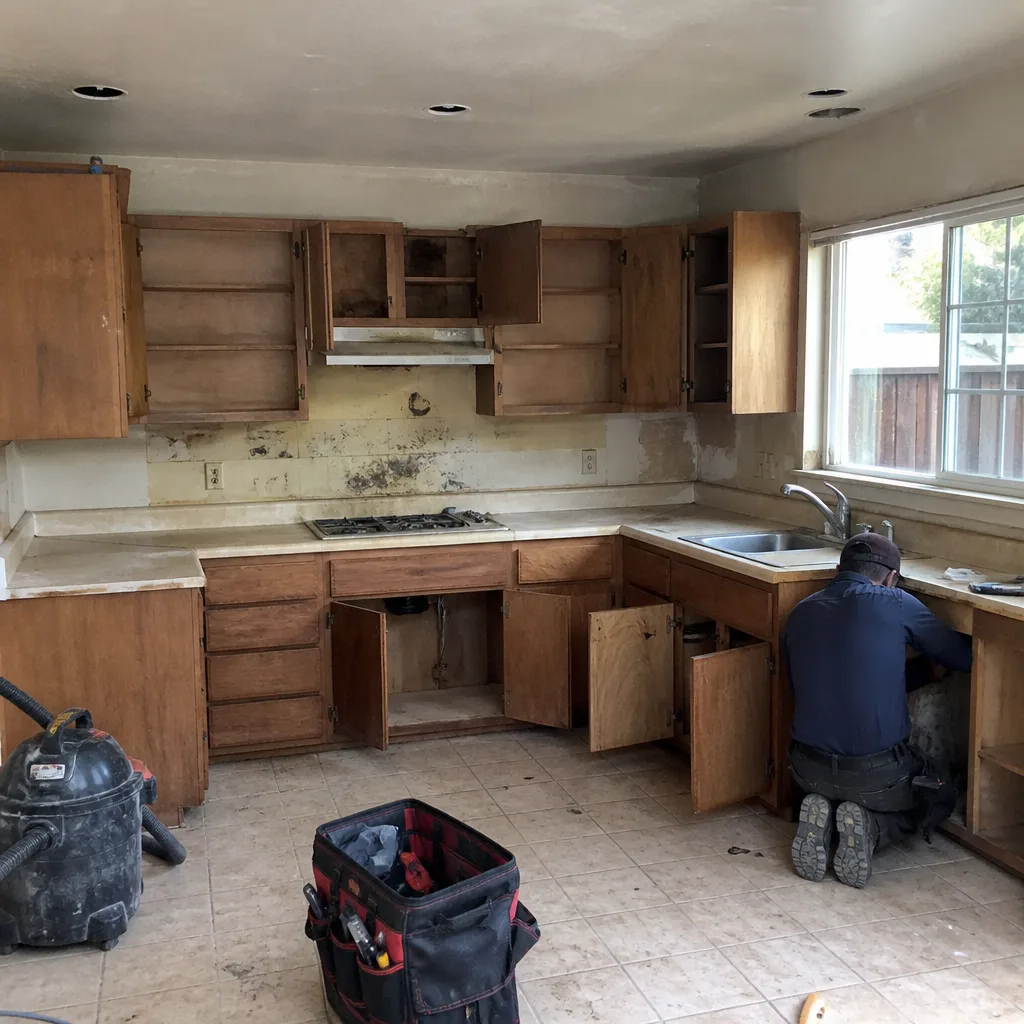
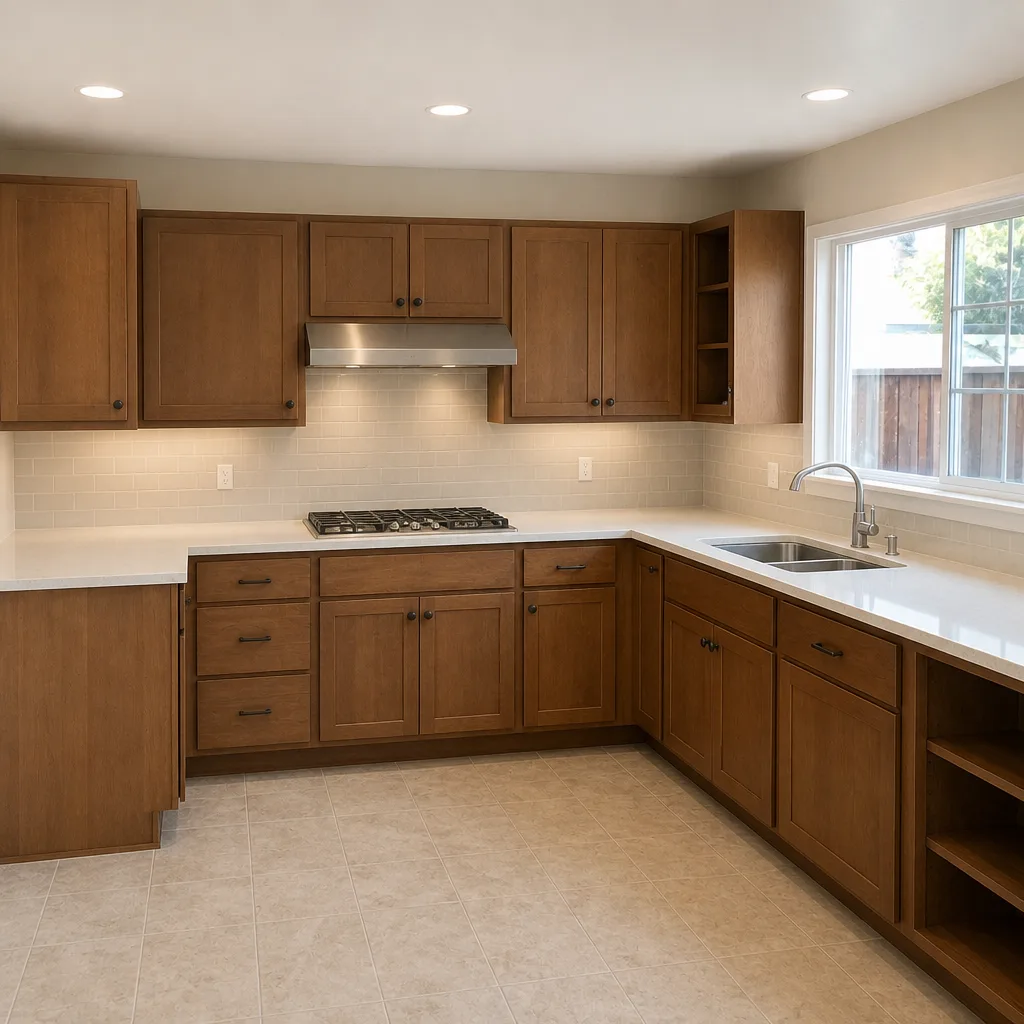
See the difference
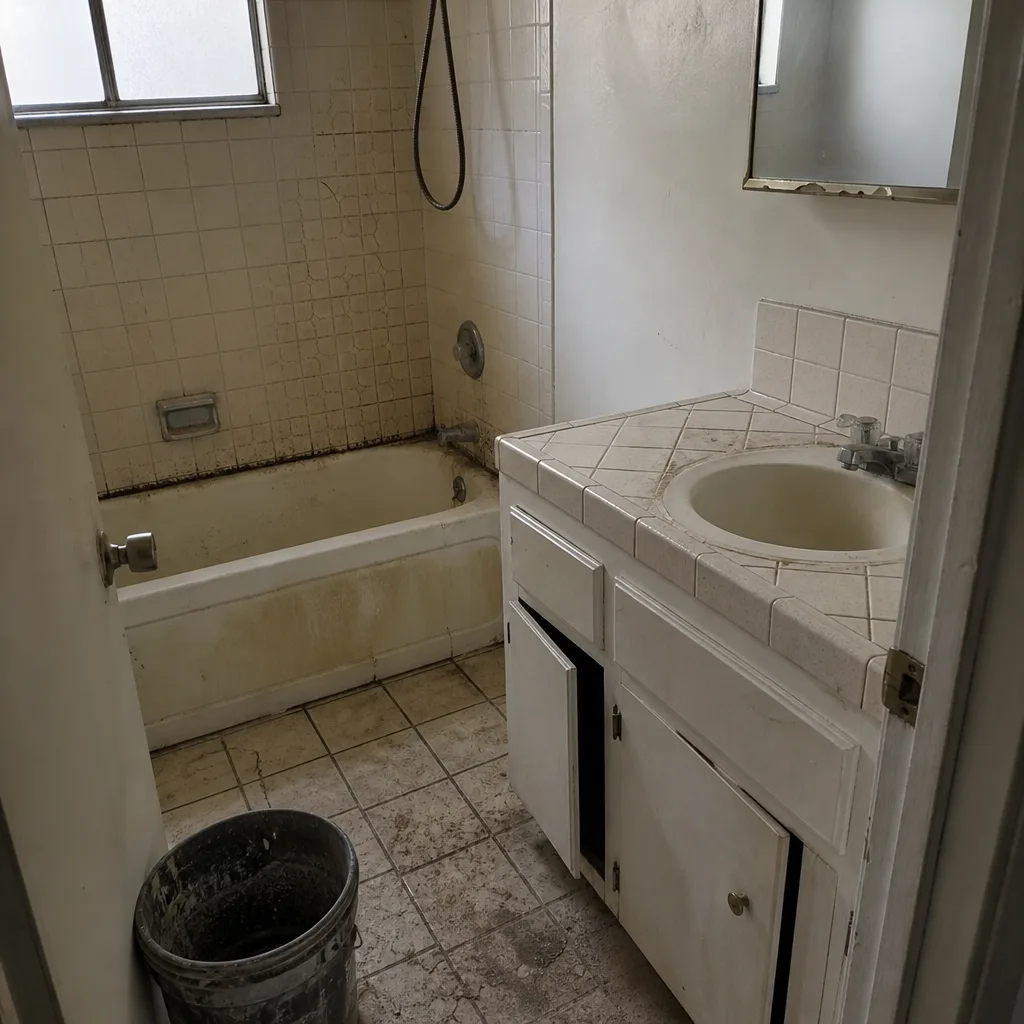 Before
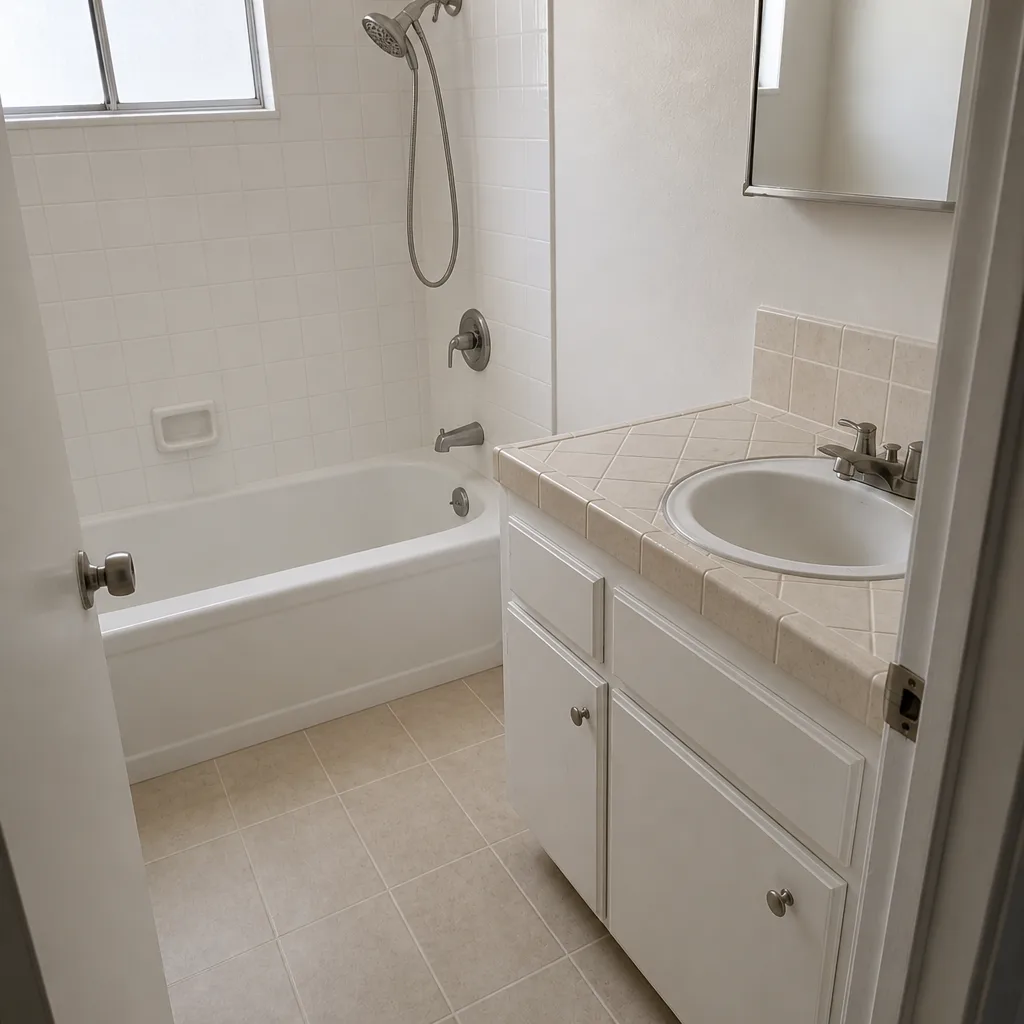 After
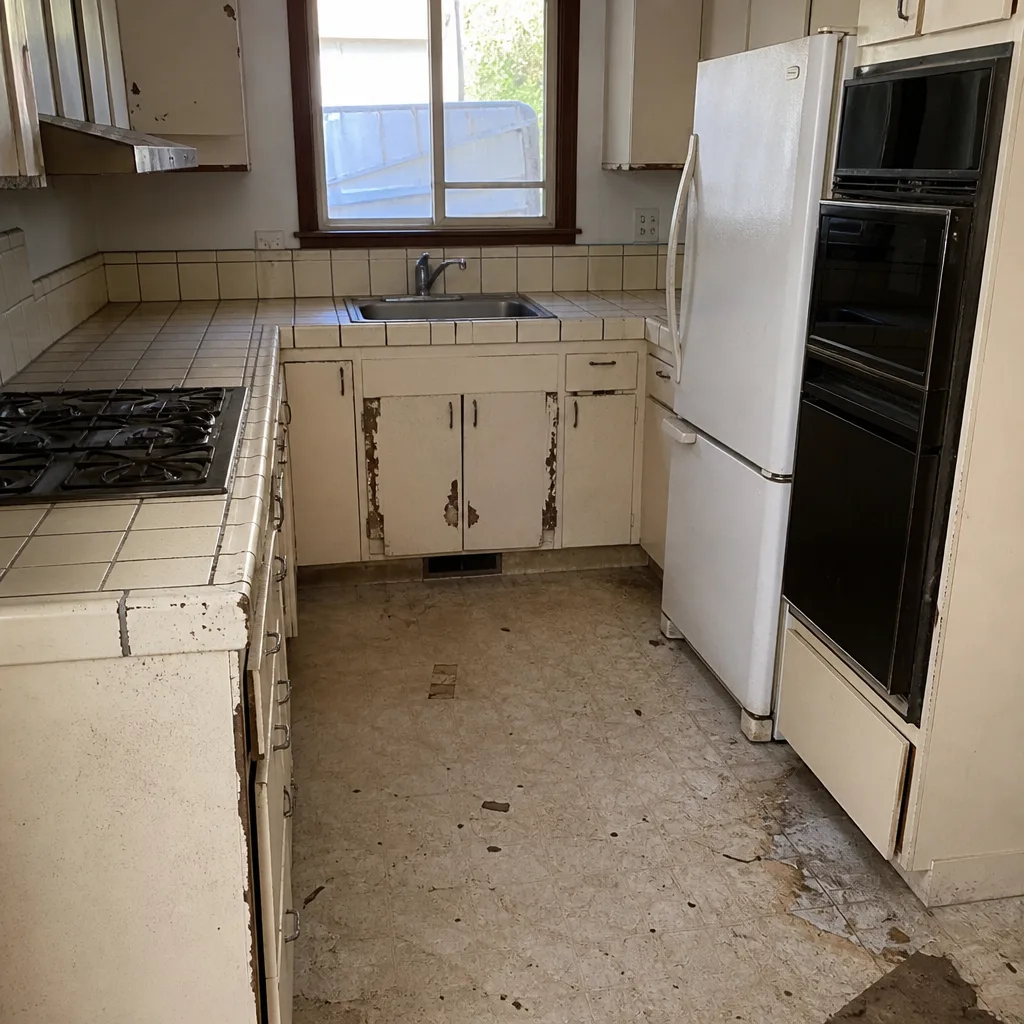 Before
 After
 Before
 After
When to Call a Professional
Call a professional when the symptom is in a wet area and has been growing for more than two weeks, when a door or window has suddenly stopped closing, when a new tile floor has any hollow-sounding tiles, when the same trim gap keeps reopening after two repairs, or when you’re facing an unpermitted job with a code issue. Those are the exact situations where guessing with a roller or a tube of caulk leads to a second and third repair of the same thing. If it’s plumbing or electrical hidden in a wall, don’t open it yourself – a licensed professional should be the one exposing and correcting it, and a permit should be on record. Penhallow Remodeling Santa Clara offers free estimates in Santa Clara – call (833) 400-6838 to have a written diagnosis before any work starts.
Frequently Asked Questions

If the symptoms appeared within a few weeks of each other, they’re usually one cause. Buckling floors, cracking paint and opening trim in the same area are the classic combination for a moisture problem, not three separate workmanship failures. Sort by location and timing first, then by cause (moisture, structural, workmanship) – the pattern usually points to a single origin. Call (833) 400-6838 if you want a professional to look at the pattern before you authorize any repair.
Photograph and date what you see, note whether it worsens after rain or after showering, and put the complaint in writing to the contractor the same week. Send the written report in the template above, ask the cause question, and request the written scope, permit numbers, and guarantee terms. A written problem report sent early is worth far more than a phone call at month six.
Usually not, and this surprises people. Standard homeowner’s insurance covers sudden accidental damage such as a burst supply line, but it typically excludes long-term seepage, hidden moisture, mold that developed over months, and installation errors. Those are what a contractor’s written guarantee is for. Read both: your policy’s exclusions and the contractor’s guarantee terms. Then call (833) 400-6838 with questions – we’ll help you sort which bucket a problem belongs to.
Retroactive permit costs vary with scope, but a typical bathroom or kitchen retrofit permit lands in the hundreds to low thousands of dollars before any repair work, and opening walls to expose plumbing, electrical or waterproofing adds significant cost on top. When the underlying work is wrong in a wet area, correcting it as part of the permit is usually cheaper than discovering it during a sale. Get a written scope before anyone opens a wall – call (833) 400-6838 for a free estimate.
It should say what’s covered (installation failure, workmanship), what isn’t (pre-existing conditions, damage outside the scope), how long it lasts, and exactly what happens if something fails – including whether the return visit and repair are free. If a promise doesn’t say those things, it’s a verbal promise with a typed heading. On every Penhallow project, the 365-Day Done Right Promise is in writing before work starts, and the free return visit applies if a repair fails.
Seasonal movement of the framing, or an install that joined two surfaces rigidly that need to move independently. In Santa Clara, dry summer air pulls framing joints apart more than most homeowners expect, and a tight miter between two surfaces will reopen within a season. The fix is usually coping and caulk at the corner transitions rather than a rigid miter – a small repair, but a different answer than repainting or recaulking repeatedly. Call (833) 400-6838 for a free estimate on a proper repair.
The Bottom Line
Remodel problems cluster, and that’s the most useful thing this guide can offer: when symptoms multiply, stop chasing them one at a time and look for the single cause underneath. Nine times out of ten, that cause is moisture or a scope that skipped a step. Diagnose before you repair, document in writing from day one, and know which of the three buckets – guarantee, insurance, neither – your problem lives in. If you’re facing a repair or a code issue in Santa Clara, don’t open a wall on a guess. Request the written scope, the permits and the guarantee terms, and let a professional give you the cause and a written price before any work starts.
Penhallow Remodeling Santa Clara is part of the Kingswell family of companies, operating to The Kingswell Way since 2004: written price before any work starts, a defined arrival window, a clean job site, and a written guarantee on every project. Every technician is background-checked and arrives in uniform, and a live person answers the phone 24/7 – no voicemail maze. If you’d like a written diagnosis and a free estimate, call (833) 400-6838 today. Our technicians have up to 22 years of experience, and every job is covered by the 365-Day Done Right Promise in writing.
Written by the team at Penhallow Remodeling Santa Clara.