Last updated November 17, 2026





Free written scope consultation - allowances, timeline, and change-order rules on paper before a single trade is scheduled
DIY vs Professional Bathroom Remodeling: What’s Safe to Do Yourself
Installing a vanity yourself is legal, low-risk, and genuinely DIY-friendly. But here’s the part most guides skip: if you connect the supply lines while the shutoff valve behind the wall has a slow drip, the water damage claim that follows may be denied, because an unlicensed person made the final connection. In Santa Clara, where older ranch homes around the Rose Garden and Buena Vista often hide decades-old galvanized shutoffs behind the vanity, that scenario plays out more than you’d think. This guide sorts the whole bathroom into three buckets: what’s truly safe to do yourself, what needs a permit, and what California law hands to a licensed pro. You’ll also learn how insurance really reacts when DIY goes wrong.
Quick Answer
Cosmetic work like painting, vanities, mirrors, and regrouting existing tile is safe to do yourself. Anything that touches water lines, drain plumbing, electrical circuits, or shower waterproofing requires a licensed professional under California law, and often a permit. The dangerous middle ground is shower waterproofing: it’s the task DIYers most often attempt and most often get wrong.
Styles & brands we work with
- Kitchen remodeling
- Bathroom remodeling
- Home additions & ADU
- Roofing
- Windows & doors
- Driveway & pavers
- Fence
Table of Contents
- Where the Line Between DIY and Pro Actually Falls
- Safe to DIY: The Cosmetic Layer
- DIY With a Permit: What California Allows an Owner-Builder
- Shower Waterproofing: The Task That Fails Quietly
- The Insurance Question You Need to Ask Before You Start
- Full DIY vs Partial DIY vs Full Professional: The Honest Cost Comparison
- How Santa Clara Permits and Code Apply to Bathroom Work
- Common Mistakes to Avoid
Where the Line Between DIY and Pro Actually Falls
The line isn’t drawn where it looks like it’s drawn. The bathroom reads as two layers: a visible layer of tile, paint, and fixtures, and an invisible layer underneath that has to be waterproof, vented, and code-compliant. Almost every DIY failure happens when someone working on the visible layer compromises the invisible one. We’ve seen finished tile jobs in Santa Clara that looked sharp for six months and then grew a soft spot near the drain because the membrane underneath was a paint-on product applied too thin over a substrate that wasn’t flat.
California frames the line legally too. Under the state’s contractor licensing law, any work over $500 in labor and materials that’s part of a construction project requires a licensed contractor. Homeowners can act as their own “owner-builder” and pull permits, but that status comes with real strings attached: you take on the liability of the general contractor, including worker safety and code compliance.
The practical sorting looks like this:
- Safe to DIY: painting, vanity replacement (setting the cabinet, not connecting drains), mirrors, lighting fixture swaps at existing boxes, trim, cabinet hardware, regrouting.
- DIY only with a permit and inspection: tile setting on new substrate, drywall replacement (especially in a wet zone), moving a vanity drain a few inches.
- Licensed professional required: new or moved plumbing supply lines, drain and vent work, adding or moving electrical circuits, GFCI installation, shower pan and waterproofing, structural changes.
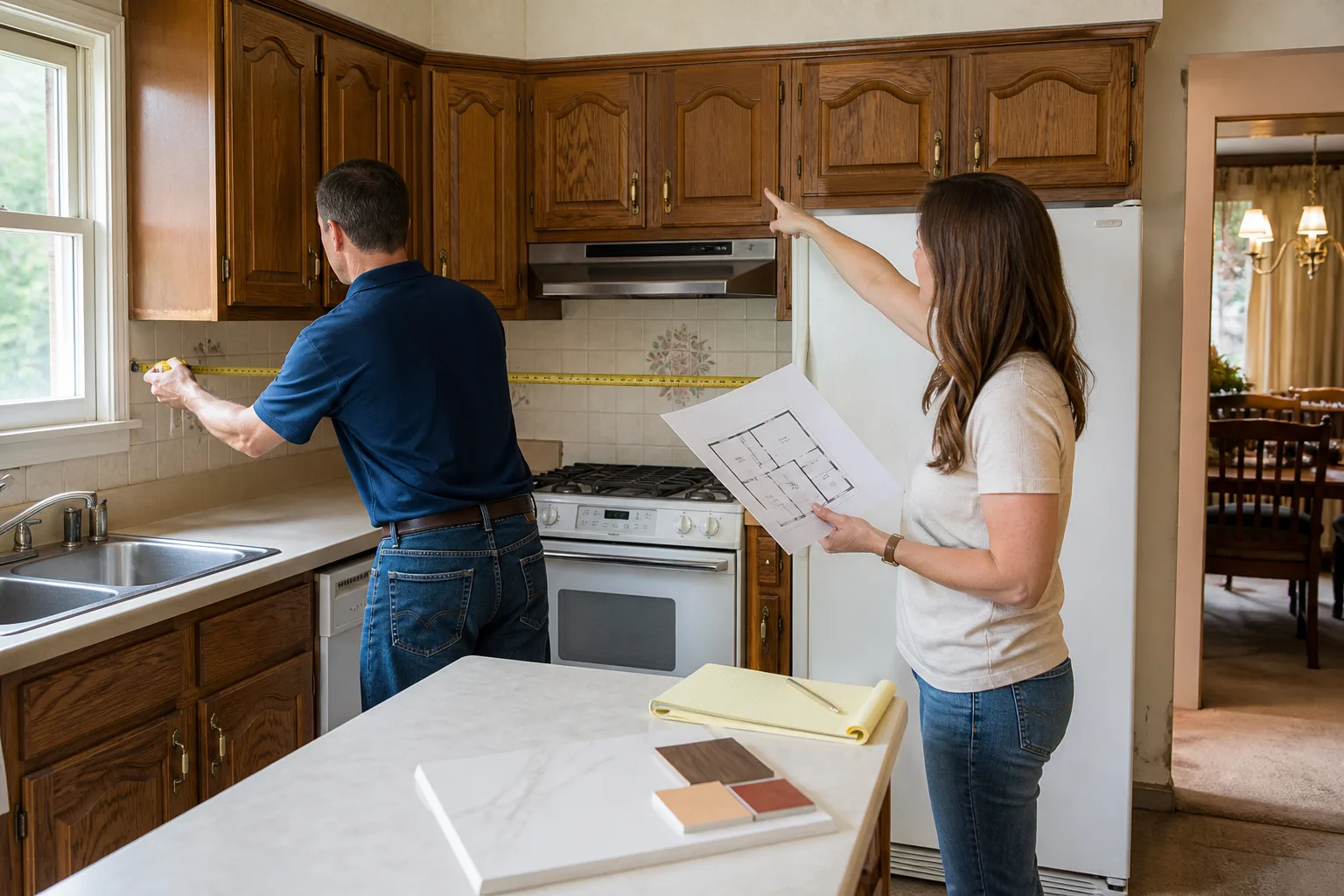
If your project is creeping toward a full rebuild of the layout, that’s really the moment to talk to a general contractor in Santa Clara rather than treating it as a one-room DIY job. Layout changes touch framing, plumbing, and electrical all at once.
Safe to DIY: The Cosmetic Layer
The cosmetic layer is genuinely yours to take on. Pulling a vanity cabinet, painting the walls and ceiling, swapping a mirror, hanging towel bars, replacing a toilet seat or faucet (yes, a faucet counts, because the water is already at the fixture and the shutoff is at the wall), and regrouting existing tile all fall into reach for a careful homeowner with basic hand tools and a weekend.
A few notes from the jobs we’ve walked into in Santa Clara, where mid-century tile bathrooms in the Old Quad and Santa Clara University neighborhoods are common:
- Test for lead paint first. Homes built before 1978 hold a real chance of lead paint on trim and doors. A $10 test kit from any hardware store settles it before you sand anything.
- Label every shutoff before you touch a vanity. In older houses, the cold shutoff often feeds something else in the bathroom. Close it, open the faucet, and confirm the water actually stops before you disconnect the braided line.
- Don’t skip the valve check. Braided stainless supply lines are fine. The valve they screw onto is what fails quietly. If the valve weeps when you turn it by hand, that’s a plumber’s job, not a DIY job.
- Keep the new vanity footprint. If the new cabinet is smaller, you’re patching flooring and drywall; if it’s larger, you may be moving a drain. Both edges of the size range turn a cosmetic job into a permit job.
Regrouting deserves a specific mention because it spans the DIY-and-not line. Sealing and cleaning joints is fine. If the grout channels behind your tile are crumbling and you can push a screwdriver tip into the gap, the shower is already wet behind the tile, and that’s a reconstruction problem, not a cleaning problem.
DIY With a Permit: What California Allows an Owner-Builder
California allows a homeowner to act as an owner-builder and pull permits for work on their own residence, so long as they don’t sell the property within a year without disclosure and don’t use the permit for a rental they rent out frequently. The permit path exists, and it’s not a loophole. It’s a formal declaration that you’re shouldering the general contractor’s responsibility.
What the owner-builder path realistically covers for a bathroom:
- Tile replacement over existing substrate when the substrate is sound and the layout isn’t changing. No permit needed in most Santa Clara cases, but waterproofing standards still apply.
- Drywall replacement in dry zones (the vanity wall, the entry wall). In wet zones, drywall must be paperless and moisture-resistant, and the paper behind standard drywall is where mold starts.
- Moving a drain or supply line a few inches if you’re licensed or hiring a licensed plumber for that slice. An unlicensed owner-builder can’t legally compress the plumbing work just because they’re doing the rest of the room themselves, and inspectors will ask for the licensed plumber’s name on the permit.
What the owner-builder path doesn’t legally cover: plumbing, electrical, and (in practice) shower waterproofing, because the inspector will want to see the membrane installed to the manufacturer’s spec and signed off. This is the point where a lot of Santa Clara homeowners end up splitting the job. They demo, frame, and tile; a licensed plumber roughs in the drain and supply lines; an electrician handles the GFCI and fan; and a bathroom remodeling company in Santa Clara takes the waterproofing and inspection-heavy slice.
Shower Waterproofing: The Task That Fails Quietly
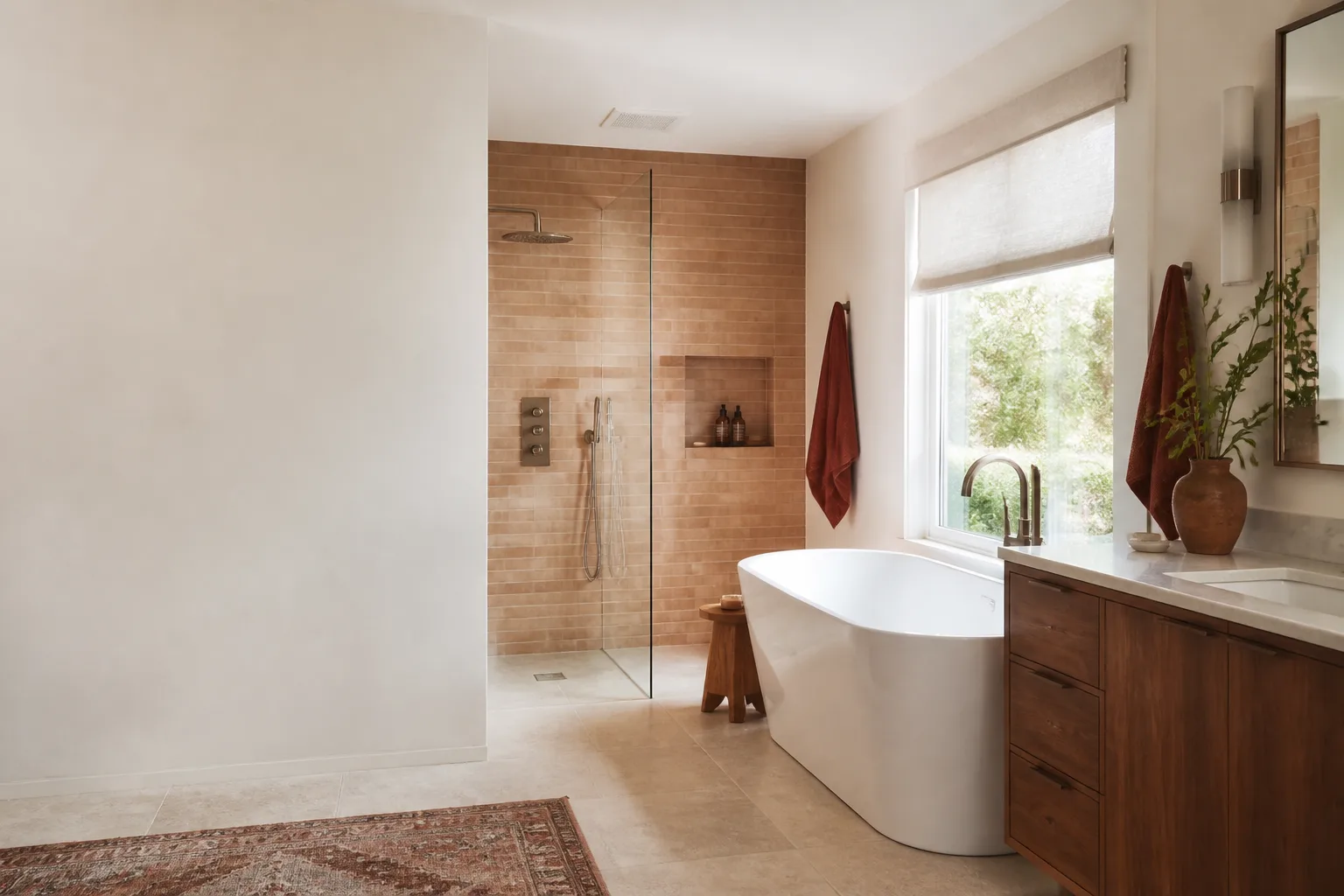
Shower waterproofing is the single task most DIYers attempt and most get wrong. The reason is simple: the finish materials (tile, grout, caulk) are not waterproof. Water gets behind them. The membrane underneath is the actual waterproof layer, and it has to be continuous across the floor, up the walls, over the curb, and around the drain flange. Misses of a quarter-inch at the curb corner or the drain bond flange are invisible once the tile goes on top, and they’re the exact spots where leaks originate eight to eighteen months later.
What a failed membrane actually costs, based on what we’ve seen in Santa Clara:
- Demo and rebuild of the whole shower: $4,000 to $9,000. You can’t salvage the tile, and you usually can’t salvage the substrate; it comes out in chunks.
- Reframing if there’s rot: another $1,500 to $3,500 in a typical 5×8 bath. A slow leak behind a shower wall near the Santa Clara Valley’s heavy winter rain cycles doesn’t dry out between storms the way it would in a desert climate.
- Mold remediation: $1,500 to $5,000 depending on how much wall has to come out.
- Water damage to the adjacent room or the floor below: $2,000 to $15,000 if the leak tracked down a floor line.
The membrane is also what the inspector is going to check, and modern tile substrates (like Schluter’s Kerdi or Wedi board) require the installer to follow the manufacturer’s installation sequence exactly. If the manufacturer won’t honor warranty on a DIY install that wasn’t inspected to spec, you’ve bought the materials and the risk. This is the part of a bathroom remodel where we don’t believe DIY should be attempted, and it’s the part Santa Clara clients most often ask us to take over after a previous attempt has started leaking.
The Insurance Question You Need to Ask Before You Start
Your homeowner’s insurance policy may exclude water damage from plumbing work performed by an unlicensed person. That’s not universal, and not every carrier enforces it, but it’s written into many policies and it’s the single most expensive thing most DIYers never check. A single claim denial on a slow shower leak can cost more than the entire remodel.
Before you pick up a wrench, do this:
- Call your insurer. Ask specifically: “Does my policy exclude water damage from unlicensed plumbing or electrical work?” Get the answer in writing, even an email.
- Read the exclusions section. Look for words like “faulty workmanship,” “unlicensed contractor,” and “negligent installation.” Those are the phrases that determine the outcome of a claim.
- Ask about the permit record. Some carriers check permit history on a claim. Unpermitted work that fails is often denied whether or not the work itself was done well.
- Document what you did. Photos of everything before it’s covered up, receipts for materials, and the permit number if there is one. If a leak happens two years later, you want a defensible story, not a shrug.
One thing worth knowing: the disclosure problem follows the house, not the year. When you sell, unpermitted bathroom work in Santa Clara shows up on the seller’s disclosure, and buyers use it to negotiate. That negotiation usually costs more than the permit did.
Full DIY vs Partial DIY vs Full Professional: The Honest Cost Comparison
Here’s the honest math, using a typical Santa Clara mid-size bathroom (5×8 to 6×10, moderate layout, no structural changes). The numbers are ranges we’ve seen, and they assume you’re not hiring the cheapest unlicensed labor, which is its own category of mistake.
| Scope | Realistic cost range | Where it goes wrong |
|---|---|---|
| Full DIY (cosmetic only, no plumbing/electrical/waterproofing) | $3,500 to $8,000 in materials | Low rework risk if you stay cosmetic; insurance exposure if you cross into plumbing. |
| Full DIY including shower and plumbing | $6,000 to $14,000 in materials, plus permit | High rework risk. Failed membrane or slow supply leak lands you back at a pro, and demo of your own work costs you twice. |
| Partial DIY (you demo, frame, tile; licensed plumber, electrician, and GC finish waterproofing + inspection) | $9,000 to $18,000 | Modest rework risk if the GC and your tile install meet cleanly; low risk if the waterproofing is done right. |
| Full professional (GC handles all permits, trades, and finishes) | $18,000 to $38,000 depending on tile and fixture budget | Lowest risk. The written price should hold, and the guarantee covers the work. |
A note on that last row. The cost of a full professional job is higher in the tile and fixture selection than in the labor. Cambria quartz and Silestone countertops, Kohler and Moen fixtures, and KraftMaid or Wellborn cabinetry carry real prices, but they also carry manufacturer warranties alongside the contractor’s written guarantee, and that stack of protection is part of what you’re buying. If you want the finishing selection help without the full GC project, a kitchen and bath remodeling team in Santa Clara can steer material choices separately from the construction scope, which is often where homeowners want the most guidance.
How Santa Clara Permits and Code Apply to Bathroom Work
Santa Clara’s building department follows the 2022 California codes, which include the California Plumbing Code, the California Electrical Code, and the California Residential Code. A few things that catch homeowners in this city more than they’d expect:
- Bathroom exhaust must vent outside, not into the attic. In Santa Clara’s mild climate, code still requires the fan to discharge outdoors. Venting into the attic is a common shortcut in older homes and a common inspection failure.
- All bathroom receptacles must be GFCI-protected. That includes the one behind the vanity, and it must trip on test. An ungrounded 1950s-era circuit in a Santa Clara ranch home often needs a dedicated 20-amp circuit run, not a GFCI slapped on an old wire.
- Water heater strap and pan requirements apply if your bathroom project touches the water heater closet. Most don’t, but a “while we’re in here” scope does sometimes reach it.
- Shower pans must be tested. The inspector will flood the pan and look for leakage, and that test happens before tile goes on. If you miss the test window, you may be asked to demo back to the pan.
Permit fees for a bathroom in Santa Clara usually land in the $400 to $1,200 range, plus the time cost of inspections scheduling. That’s real, and we won’t pretend it’s not. Compare it to the cost of a failed inspection at final or a claim denial after a leak, and it stops looking like a tax.
Common Mistakes to Avoid
- Skipping the moisture test before you tile. Santa Clara Valley winters are damp enough that a “dry” shower wall can be holding moisture. A $20 moisture meter read against the stud cavity takes five minutes and prevents a rebuild.
- Using standard drywall behind tile. Paper-faced drywall in a wet zone invites mold within a season. Cement board or a modern foam substrate (Wedi, Schluter Kerdi board) is the standard, and the cost difference is small.
- Assuming your insurance covers DIY plumbing. It may not, and the claim denial usually surfaces months after the work is covered up. Check the exclusion before the first cut, not after the first leak.
- Moving a drain without a licensed plumber. A two-inch shift in the drain location sounds cosmetic. It’s plumbing code, it needs a permit, and an unlicensed rough-in fails inspection on the first walk-through in Santa Clara.
- Skipping the permit to save time. Unpermitted bathroom work in Santa Clara comes back on the seller’s disclosure, and buyers negotiate the cost of bringing it to code twice over.
- Applying a paint-on membrane too thin. Manufacturer specs call for specific mil thickness and dry time. A rushed application fails at the curb corner, which is the hardest place to reach and the most common leak origin.
- Venting the exhaust fan into the attic. Old homes in Santa Clara’s Washington Park and Central neighborhoods have this shortcut from previous owners. It’s a code failure and a mold field.
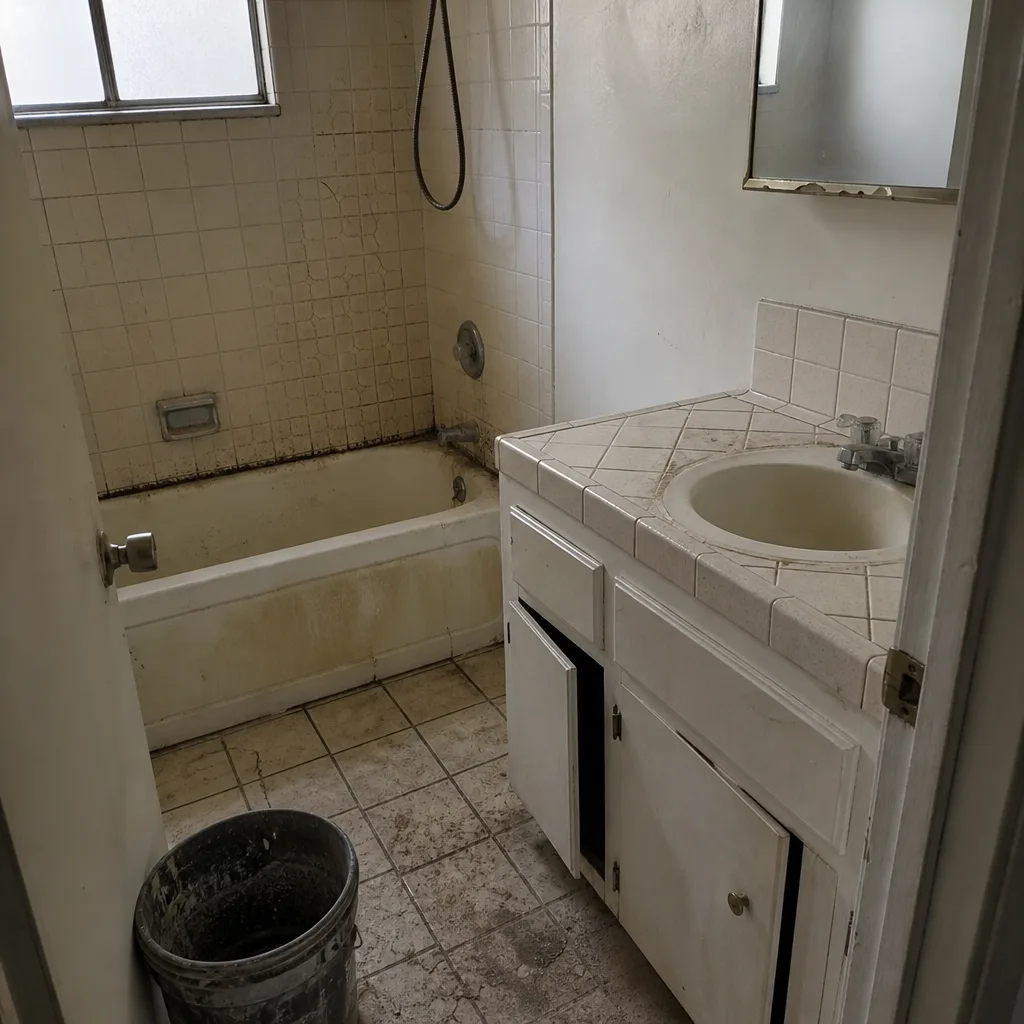
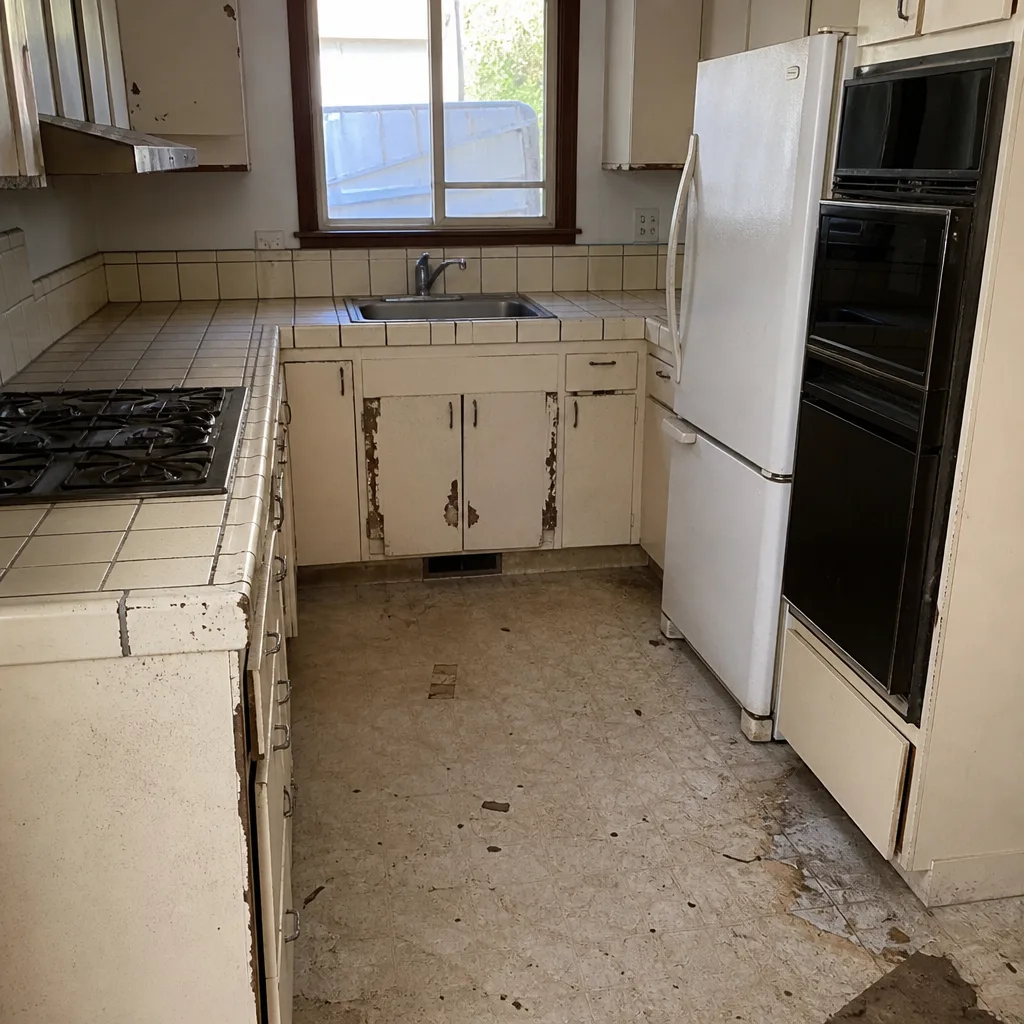
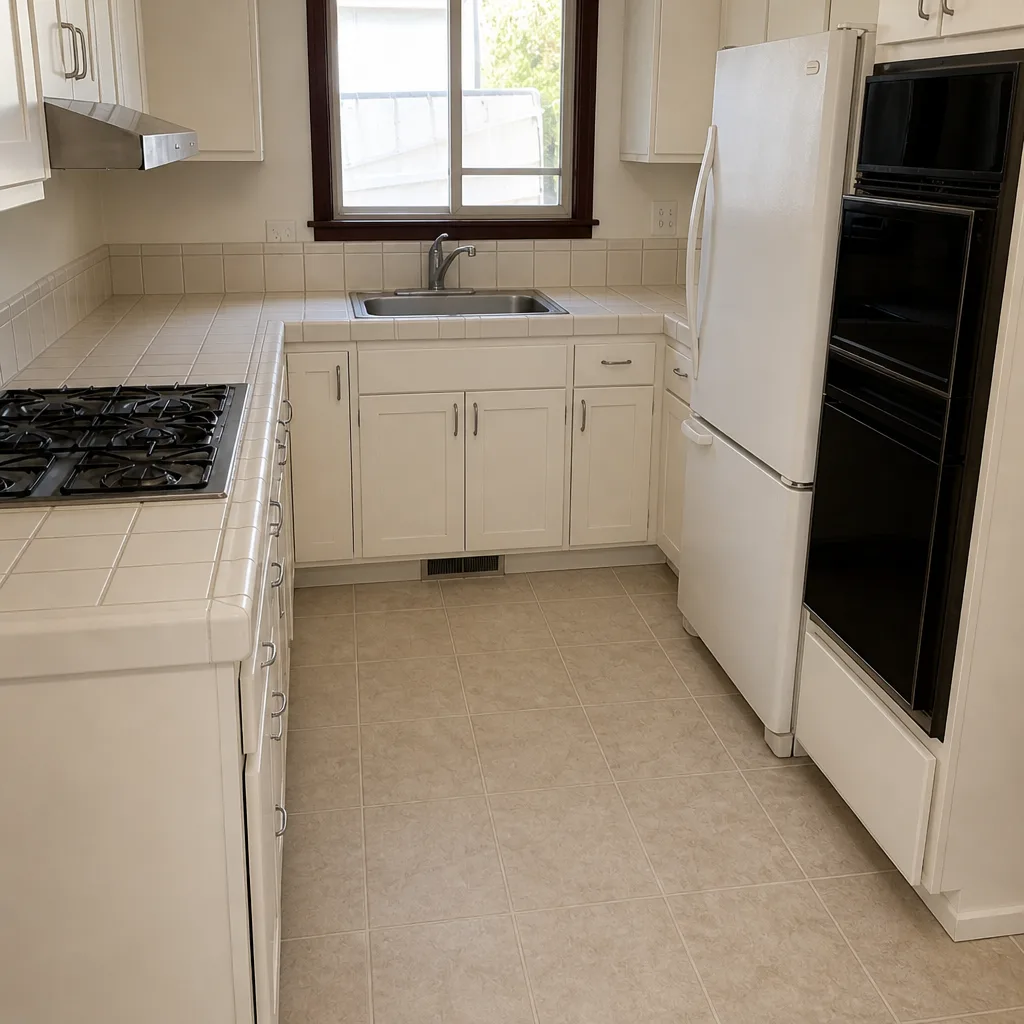
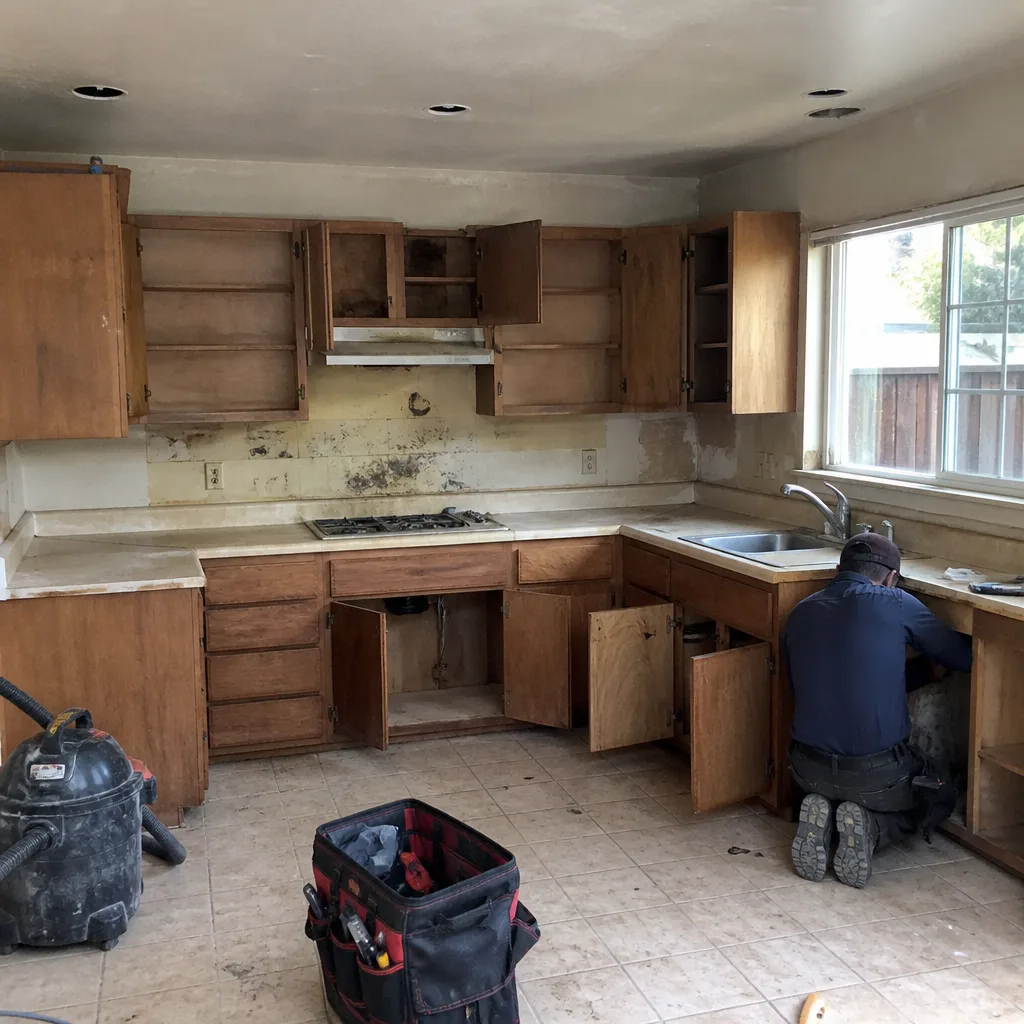
See the difference
 Before
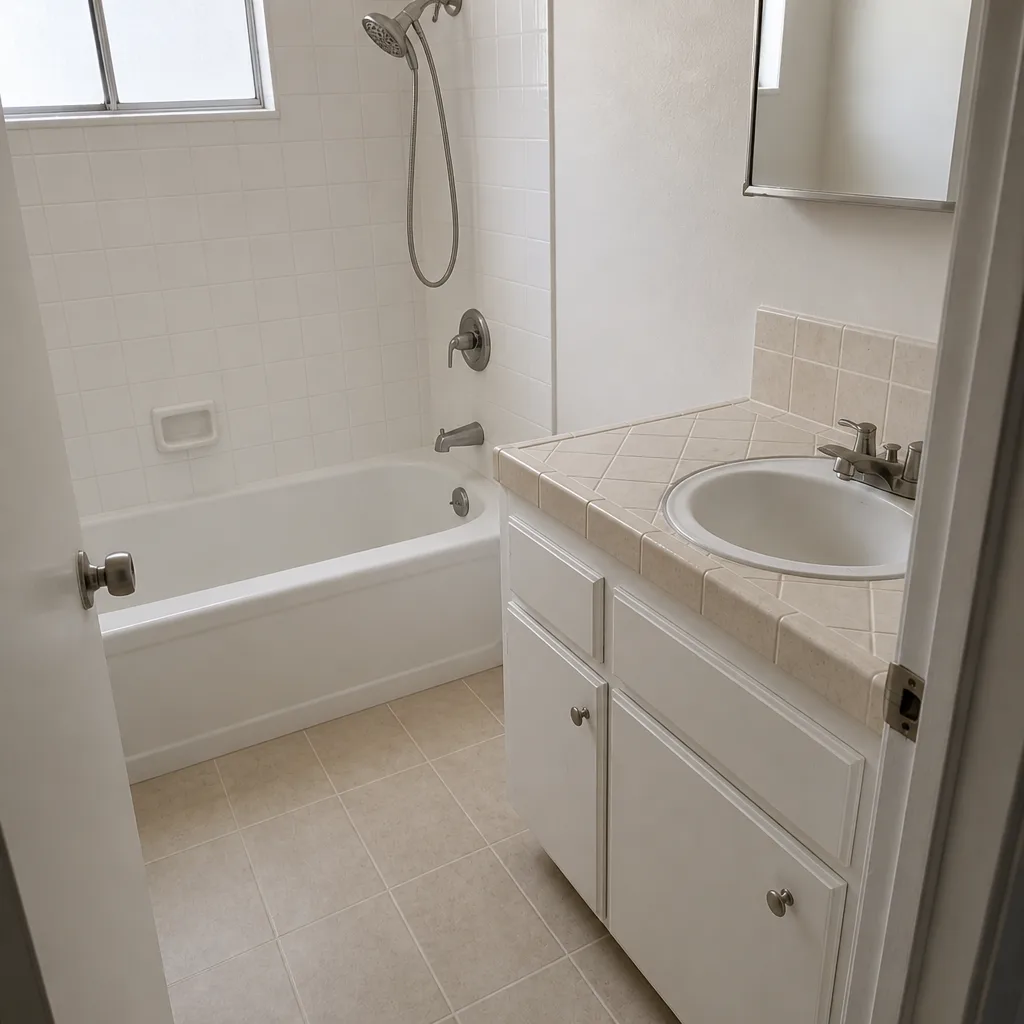 After
 Before
 After
 Before
 After
When to Call a Professional
Call a professional the moment your bathroom scope touches water lines, drain or vent plumbing, electrical circuits, shower waterproofing, or anything that has to pass inspection. In our experience, that’s the honest test: if an inspector would need to sign off on it, or if it could quietly leak inside a wall, it belongs to a licensed contractor. There’s also a subtler case. If you’ve already started the work and you’re now uncertain about the membrane or the rough-in, that’s the right moment to call, not the moment after the tile goes in. Penhallow Remodeling Santa Clara offers free estimates in Santa Clara. Call (833) 400-6838 to schedule yours.
Frequently Asked Questions
Yes, partially. California allows a homeowner to act as an owner-builder and pull permits, so long as they occupy the home and don’t sell within a year without disclosure. The owner-builder status doesn’t cover licensed plumbing or electrical work; those still require a licensed contractor under state law, even when you’re doing the rest yourself. Call (833) 400-6838 for a free estimate if you want the licensed portion quoted separately.
No, and this is the task we most strongly discourage. Waterproofing is the one layer of a shower that has to be perfect across every corner, the drain flange, and the curb, and every failure is invisible until it’s grown into a $4,000 to $9,000 rebuild. The membrane also needs to be installed to the manufacturer’s spec for warranty coverage, and a DIY install typically voids that. The 22 years of experience on our technician bench is largely insurance against this exact mistake.
It might not, and you need to ask before you start. Many policies exclude water damage from unlicensed plumbing or electrical work, and some check permit history on a claim. The check takes ten minutes with your insurer and can save a denial down the road. Ask the wording in writing: “Does my policy exclude water damage from unlicensed plumbing or electrical work?”
Partial DIY. Pick a cosmetic scope you can genuinely finish (paint, vanity cabinet set, mirror, regrout) and contract out the plumbing, electrical, and waterproofing to licensed professionals. In our cost comparison, partial DIY on a typical Santa Clara bathroom runs $9,000 to $18,000 compared with $18,000 to $38,000 for a full professional job and $6,000 to $14,000 for full DIY with the rework risk priced in. Call (833) 400-6838 for a written line-item quote on the licensed slice.
Yes for anything involving plumbing, electrical, or a shower pan replacement. Cosmetic-only work (paint, tile replacement over sound substrate, vanity swap without moving plumbing) typically doesn’t require a permit, but shower waterproofing and any rough-in work does. The permit inspection is also what makes the manufacturer’s warranty on modern substrates enforceable. Call (833) 400-6838 if you want to know which side of the line your project falls on.
Plan for roughly 4 to 6 weeks of calendar time on a partial-DIY approach, compared with 3 to 5 weeks of hands-on work if a professional team handles the whole job. The extra time is usually inspection scheduling and the coordination between your slice and the licensed trades, not the work itself. Our own scheduling uses written arrival windows so you’re not waiting an entire day for a plumber who shows at 4:30. Call (833) 400-6838 for a free estimate with a defined start window.
The Bottom Line
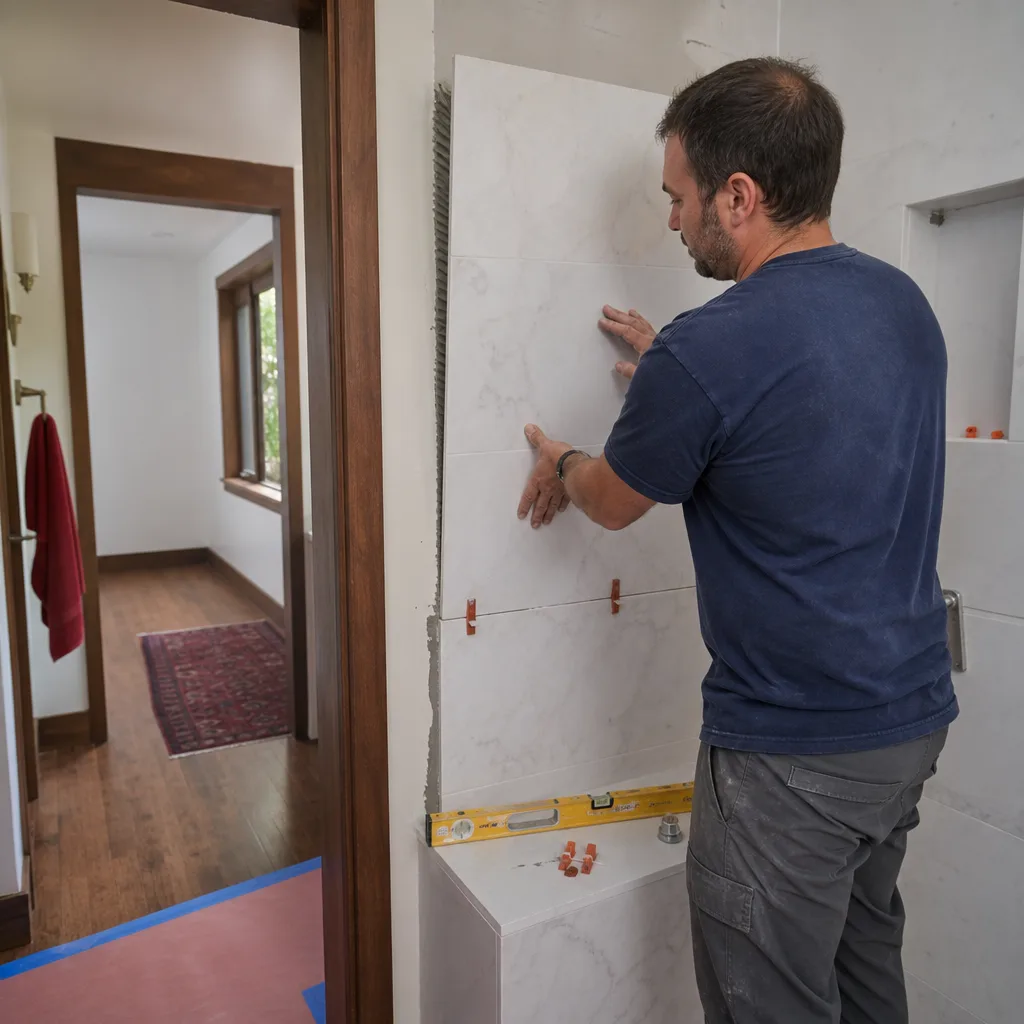
Do the cosmetic layer yourself if you enjoy it: paint, vanity cabinet, mirror, regrouting, hardware. Skip the plumbing, the electrical, and the shower waterproofing. Those three are where DIY bathroom projects in Santa Clara actually fail, and the failures are the expensive kind, quietly growing behind tile or inside a wall until the insurance claim gets denied. Partial DIY with a licensed slice is often the smartest path, and a written line-item price on that slice is what lets you compare bids honestly. If you’re looking for the team that hands you a written number before the first cabinet is pulled, that’s a conversation worth having. Our technicians bring up to 22 years of experience, our work is backed by the 365-Day Done Right Promise, and a live person answers the phone 24/7, so call Penhallow Remodeling Santa Clara at (833) 400-6838 to schedule your free estimate.
Written by the team at Penhallow Remodeling Santa Clara.